
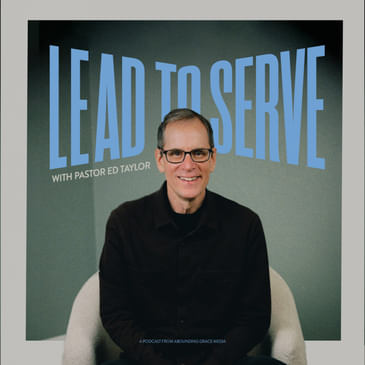
Have you ever had someone talk to you but all the while not give you their full attention, always looking over your shoulder or around the room for someone more important? It's wrong, it hurts, and it shouldn't be done by a servant leader. In today's episode of Lead2Serve, Pastor Ed and Bob discuss the importance of giving your full attention to those in front of you. This is crucial for effective leadership and ministry. It's easy to get distracted or look past someone for more 'important' people, but true service requires focusing on the individual God has in your life at the moment. There is no one more important. Master this and you will be used in greater ways than you have ever seen. Why? Because you're mastering Agape love in caring for people.
This principle extends beyond ministry into your personal life as well; being attentive shows value, whether it’s your spouse or children needing your focus. Remember how Jesus stopped everything when touched by a woman seeking healing - she became his priority among the crowds. To be more usable in God's kingdom means paying attention to each person God places before you as if they were the most important at that moment. Why? Because they are.
Key Words: church, ministry, leadership, podcast, collaboration, attention, presence, relationships, discipleship, love, compassion, marriage, family, discipleship, feedback, encouragement, leadership, ministry, servanthood, caring
[00:00:00] Welcome to today's broadcast of Lead2Serve, a leadership podcast with Ed Taylor. Welcome
[00:00:11] again to another episode of the Lead2Serve podcast. My name is Ed Taylor. I'm the pastor here
[00:00:18] at Calvary Church in Aurora, Colorado. By the way, Aurora is a Denver suburb. We're on
[00:00:24] the east side of town. If you're thinking, if you've ever flown into the Denver Airport
[00:00:30] we're directly below the airport south and I'm your host for the Lead2Serve podcast. This
[00:00:36] is season number five. A season that I think is going fantastic. The feedback's great.
[00:00:43] The input is great. The fruit has been wonderful so thank you for your response. Thank you
[00:00:49] for texting and emailing and calling and collaborating with us. The way you collaborate
[00:00:56] is you give us ideas. You give us good reviews so that the algorithm will get the podcast
[00:01:03] in front of the right people. You collaborate by praying for us, by mentioning it and sharing
[00:01:08] this on your social media, forwarding it, maybe a topic that you really minister to
[00:01:14] you. You might want to use a discipleship prize with your team. There's so many ways that
[00:01:19] you can collaborate with us and that's before we ever even talk. If you need help, you
[00:01:24] can email me at edtaylor.org. We have a team of men here ready to serve, ready to help,
[00:01:33] ready to encourage. Pastor Bob, he has even more time available to him. If it's possible
[00:01:40] he could even come out and help you at your church, maybe do an assessment or come and
[00:01:45] fill in for you. If you need a week off to teach, he's a part of something an organization
[00:01:51] known as point ministry. He has all this freedom when he's not scheduled. For a guy that
[00:01:56] has a lot of freedom, he also has a very full schedule at times. If you call him or email
[00:02:02] him, you can just contact us through the podcast. We'll get you in contact with them and
[00:02:06] you could talk to him as well. 50 years of ministry experience through a couple different
[00:02:10] generations. He's planted churches, he's been on the mission field. He served as a
[00:02:16] hippie because he was a hippie and had a live-in ministry at a house. It's just a wealth
[00:02:24] of ministry experience. Bob, welcome to the program. Yeah, absolutely great to be here.
[00:02:30] Here a voice, you're here because the feedback and you in particular, so it's two parts of
[00:02:36] the feedback of why you're here. One is people, a lot of people wrote in asking for the conversation
[00:02:43] style to continue. They like that. I do too because you never know where it's going to
[00:02:48] go, but another piece of feedback is they really appreciated you as part of the conversation.
[00:02:53] Of course, I haven't had really anyone else on, so they really, really do like you, and
[00:02:59] they do. They appreciate your input even as we do here. If you don't know the story of Bob,
[00:03:05] he's been a ministry for 54 years. He planted a church, handed it off to a young man in North
[00:03:12] Phoenix. He was there for 29 years. Had a little gap of ministry and then launched off into the
[00:03:18] mission field in Exeter England six and a half years. Then he came back and he's been serving
[00:03:23] here on our team in Aurora for four and a half years. But the way he lands in Aurora, part of
[00:03:29] the story is I was in our team here. I was just praying. On the way to the office and the way back,
[00:03:38] I felt like the team was hearing enough of my voice. They certainly do. A lot of discipleship
[00:03:44] goes on here. A lot of input goes on here. But I was praying for a particular person. It's
[00:03:51] interesting. There's two people that I prayed for, both clay camps end up being clay camps. One
[00:03:56] was Bob and one was his son. But for Bob, I was driving around really asking Lord, Lord, we need
[00:04:04] a grandfatherly voice on our team. We need a voice of wisdom. We need a voice, an austere voice
[00:04:12] in just like maturity. And like-mindedness, even though Bob and I didn't really know each other
[00:04:20] all that much, although we met in-I went to the mission field serve with his son. But that like-mindedness
[00:04:26] but a voice that we could all receive from, that we could all take in, that is different from mine.
[00:04:32] But it resonates with the Holy Spirit and through a whole series of events including a medical
[00:04:39] crisis, Bob ends up praying about leaving Exeter and he's praying about two locations in one of
[00:04:46] them's Aurora. And God has let him here and his wife, Genie, and they are such a great addition.
[00:04:52] Even more, you know how the Bible says Bob that God wants to do exceedingly abundantly above all
[00:04:57] we can think or ask? I mean it was even more. It's what prompted was that voice and you certainly
[00:05:02] have given us that voice. But you and your wife have brought so much to this church. It's unbelievable.
[00:05:06] We so appreciate you. And Genie is unbelievable how God has used your giftings. And you're a little bit
[00:05:14] older. You shared that in an earlier episode, your 73 in the latter season of your life. And
[00:05:22] what tell us just for the sake of maybe younger guys that wonder if there's a future for them or
[00:05:27] even older guys and gals? Tell us because I know it already but give us a real thumbnail of the word
[00:05:33] that God gave you for this latter season of your life. Yeah. I think it was in reading Alan Redpath's
[00:05:39] book on his devotional commentary on the book of Joshua. And just seeing Joshua and Caleb and
[00:05:45] their heart and their attitude. The whole focus was I've been we had been used a lot in the prior years.
[00:05:56] But we of the tendency is just to slow down and chill out and take it easy in your latter years.
[00:06:06] That didn't make any sense with Jesus command to lay up treasure in heaven.
[00:06:11] And so the prayer that became ours probably in the late 90s, it started that our latter years
[00:06:19] would be more fruitful than our former years. And don't try to figure out what that looks like. Let
[00:06:26] the Lord determine because it all has to do with his glory and not our doesn't mean a larger church.
[00:06:32] It doesn't mean anything like that. It just means it's up to the Lord on what that looks like because
[00:06:37] he is the one that's in charge and yeah, do you see God fulfilling that or do you think it's still
[00:06:46] elusive? Yeah, I can see a greater measure of how he's using us but yet I can't stop there.
[00:06:55] I can't land on that. I have to stop trying to figure it out because that's been my
[00:07:04] nemesis and that's what we were saying in the last episode about Pastor Chuck putting a place
[00:07:08] against presumption and really having this stop, this check to make sure I'm moving forward,
[00:07:15] moving forward, moving forward. I always like to remind you like I always like to remind you
[00:07:20] of the fruit that I see in your life and the abundance of fruit. Although I don't have a comparison
[00:07:25] to the previous, I don't need a comparison because I see what God's doing now. And one of them is
[00:07:31] this. Have you ever listened to a podcast before? Like let's say five years ago, have you ever
[00:07:35] listened to a podcast maybe four years ago? Like did you ever? Yeah. So then think about
[00:07:41] did you ever think about you'd be a prominent speaker on a podcast? No. And yet God knew that.
[00:07:47] Yeah, he did. And God knew he would multiply part of your ministry through this technology
[00:07:52] that you weren't even praying about in the 90s because it didn't exist. Yeah. I mean we had no
[00:07:55] idea. We'd be going to England. Right. It was never on our prayer list. Why would God do that when
[00:08:00] we never had it on our prayer list? And one of the fruitful if I'm speaking in order here,
[00:08:05] one of the fruitful parts of the ministry was not merely the church but all the young people
[00:08:10] you guys were ministering to in your house. Yeah. National students just look random. But
[00:08:16] then you look back and you see the it's kind of like you know those connect connect the dot books
[00:08:21] you know by the numbers, you know, the kids figure out what this is. That that's kind of how it is.
[00:08:25] Yeah. That's that's how it was over there. You know, it's just part of the adventure. And it's
[00:08:30] still it's always going to be that way. Yeah. Well let's get to the topic today. Great stuff.
[00:08:34] Just talking ministry and life together. We're an episode number six. And the title or the emphasis
[00:08:41] you want to be more effective. You want to be more usable. Here's a practical piece that is so
[00:08:45] important and that is you need to pay attention to the one that's in front of you. You need to pay
[00:08:51] attention to the person that is in front of you. There are a couple aspects of this but let me give
[00:08:57] you one of them and then I'll let Bob give another that we have jotted down here. But this is a
[00:09:02] Bob. I'm sure this has happened to you because you and I have been to a lot of conferences
[00:09:07] together. A lot of pastors conferences, a lot of leader conferences, a lot of a lot of gatherings
[00:09:13] of people and hopefully we haven't done this but there's a good chance that we have but certainly
[00:09:20] it's been done to us and that it's this. I and I'm going to use you as an example even though
[00:09:25] you didn't do it to me. Say hey Bob how you doing? What's going on? How's your life? How's ministry?
[00:09:30] How's Genie going? And you give me these quick answers but you never really look me in the eye
[00:09:36] because you're looking over my shoulder and you're waiting. Ed you kind of stopped me in the hallway
[00:09:42] here and I know you and we kind of know each other but I see pastors so and so about 30 feet behind
[00:09:50] you and that's the guy I really want to talk to. And so get done with your questions really,
[00:09:57] really quick here because I need to swim past you. It's so true because I'm going to try to
[00:10:03] connect with that guy and I don't even know if I can connect them because I don't really know
[00:10:06] but he's a lot more important to me right now than you are for whatever reason. It could be good,
[00:10:12] it could be bad. A lot of times it's not good and I don't think I'm being subjective here
[00:10:19] and you can correct me. I'm throwing it out there because this is a pet peeve of mine
[00:10:24] and it bothers me because I don't want to be like this because it's happening to me so like if it's
[00:10:29] more subjective I'm willing to hear from you. I really do think it's objective. This has happened
[00:10:34] countless times to me where I am in a conversation. Somebody asked me a question about my life or something
[00:10:41] I'm starting to give you my and they're not even paying attention to me. Yeah. And it happens all the
[00:10:46] time but conferences in particular. What are your thoughts about that? Well, it's true. I'm guilty.
[00:10:53] I've done it myself and it's just I look back on it. Think about it and what was the issue? The issue
[00:11:01] was my own need to be recognized. I mean, I'm guilty. I've done it but then I know what it's like
[00:11:11] on the other side when you come up to somebody. You have a real serious issue and they're looking at
[00:11:17] you and then they're looking over there and then they're looking at you and then looking over here
[00:11:22] and it just makes you feel like you're not so important. And I'm taking this guy's time. Why am I
[00:11:28] even here? It's not walking in love. Now, talking with someone who's communicating to you their details,
[00:11:37] sometimes I feel awkward just staring at their face for five minutes. And so I've got to
[00:11:43] kind of when I'm trying to talk I'm trying to think and so I'll look up or I'll look away
[00:11:49] and then I've watched them turn their turn their head and try to see who I'm looking at.
[00:11:55] Right. Which is not I'm not doing that at the time but I and so each individual's different
[00:12:03] and it really comes to the point where you just focus on the person in front of you and
[00:12:10] you're going to trust the Lord with all the rest of it. God sets up divine appointments and this
[00:12:16] person's come to you. Give them your full attention. And I would agree that there's a distinction
[00:12:21] between looking over your shoulder and really looking past you to want to connect with someone else
[00:12:29] or talk to someone else and just carrying on a conversation where you can't stare at somebody.
[00:12:35] And I think there's a distinction between that that if we pay attention,
[00:12:40] we can see the difference. But the reality is that the most important person in your life
[00:12:47] is the person that's in front of you as a pastor, as a leader, as a servant. It's not to get through
[00:12:53] someone it's to give full attention to to be fully present with the person. I'll give you an example
[00:13:02] as a parent that I've made massive failures at in the early days as a parent. I would take my kids
[00:13:09] to the park. I would push them on the swing. I would climb on the monkey bars with them while I was
[00:13:15] on the phone as a pastor, young pastor or even when I was working in the corporate world,
[00:13:23] when they introduced cell phones and there was some crisis. And I really did believe that I could do
[00:13:29] two things at once that I could be present with my kids and also take care of some crisis on the phone.
[00:13:35] But I couldn't and neither can you. You can't do two things at once and I don't mean that you can't
[00:13:41] literally do two things at once. What I mean is you can't do two things well at once
[00:13:48] and to be fully present with my kids. Yeah, it's true. I was pushing their back on the swings
[00:13:53] and in one way I was fulfilling that but is that all they really wanted was a mechanical
[00:13:59] pushing on the swing or did they want me to be there with them on the swing? Did they? And you know,
[00:14:04] we're not talking about my kids complaining or or even holding it against me later in life.
[00:14:10] But as I've grown up and now I get to disciple others, this is a key whether it's your kids,
[00:14:15] whether it's people in your church, whether it's someone you're serving, the person in front of you
[00:14:20] is literally the most important person. I think of Jesus. I have this painting in my office where
[00:14:27] the woman comes and touches the hem of his garment. He was thronged, the Bible says with people. He
[00:14:32] was there was a massively crowd. Nobody knew anybody. It was a pressing, pressing, pressing.
[00:14:38] But everything stopped. Who touched me? And she received all the attention in a crowd of hundreds
[00:14:47] if not thousands who knows how many people were there. She received because she was the most
[00:14:52] important person in the moment. It doesn't mean that again you're listening to this go well,
[00:14:57] what do you mean the most important person as my mom or as my wife? No, no, no, no, we're talking
[00:15:01] different categories here. This is not, we're not comparing apples to oranges. Of course there's
[00:15:06] value of people in your life in one category. But when it comes to serving in ministry, I'm just saying
[00:15:12] it's flat out pastor. Stop it. Stop looking over people's shoulders. Stop minimizing someone's
[00:15:18] value in front of you and pay attention to them. Get their name, get their story, pray with them,
[00:15:24] a minister to them, follow up with them. But don't look over their shoulders or over their head
[00:15:30] to somebody you think is more important. Pay attention to the one that's in front of you.
[00:15:36] Why? Well, like you mentioned, interruptions are often divine appointments. That's right.
[00:15:41] And sometimes, poor old gyros, timeless of the essence and Jesus took time with the woman
[00:15:49] which jeopardized his situation. And there are times when people will think wrongly about the fact
[00:15:58] that they'll walk by and they'll want our attention. And then they'll come to the wrong conclusion.
[00:16:06] You've got to be secure in yourself that they will think what they think. But
[00:16:12] I have a clear conscience before the Lord. Yes. And so you walk with that rather than the fear of man
[00:16:18] or what they'll think. I mean, I had people in Phoenix that came to me and said, how can
[00:16:23] you're so upset? I'm going to be talking about, he says, well, you walk by me and there's a
[00:16:27] scowl on your face. You know what? You mad at me and I'm going, no. Actually, at the time,
[00:16:34] I just heard this news and I'm trying to figure out how to process this news. And I just walked
[00:16:39] by you. I didn't even think about it as a leader devote your full attention to the person in front of
[00:16:45] you. I want to be careful here to clarify. We always want to be careful. Like it's not,
[00:16:50] we're not talking about every single action, every single eye movement. We're not trying to freak you
[00:16:57] out. This is the heart. When I'm disciplining the guys here and I want to serve with men here,
[00:17:02] I'm trying to get to the heart of the matter. The heart of the matter is if you care about the
[00:17:06] person in front of you, all the other things are going to follow. You can't fake this because it's
[00:17:10] very obvious, very obviously seen when you're faking caring and compassion. It's very obvious.
[00:17:17] When I'm talking about here, it's just one little example. But when I'm talking about here,
[00:17:22] it is obvious. Like it's even sometimes they go, you know, excuse me. And let's make room for the
[00:17:28] fact that maybe I'm on my way to see someone and you stop me and I've got to get over there. That's
[00:17:35] different. I mean, we're talking, hey, Bob, how you doing? Oh, it's great. And then I mean,
[00:17:40] I've had, I remember one, you just reminded me of one when we were at a Murray at a
[00:17:46] Calvary Chapel Bible College campus conference. And this pastor, everyone would know who he is.
[00:17:52] I'm kind of nervous because I don't really know him and we're talking and we start a conversation.
[00:17:57] And I mean, he just stopped talking and walked away and went to another person,
[00:18:03] another prominent guy that you would know. And I'm just like, okay, I guess I had that happen.
[00:18:08] It's like, you know, it wasn't even, he didn't even close the conference. It didn't even like
[00:18:12] wind it down or anything. It's like, I'm done with you. And how do I know you're done with me?
[00:18:19] Because I'm walking away without a word. Yeah. Oh yeah.
[00:18:22] Miss sentence. That happened fairly recently actually.
[00:18:25] And so when I think of that, I'm not, it doesn't matter what other guys do. They're not my servant.
[00:18:32] It matters what I do. And I want and I want to hit this more often than not. I want
[00:18:38] the person in front of me to be the most important one right now. Yeah. Now let's bring this around
[00:18:44] to the family because I've been guilty of this when my wife is trying to talk to me.
[00:18:53] I'm in the middle of something and I'm trying to figure it out. And she wants my attention.
[00:18:58] And if I lose this track, then I have to go back almost to the beginning and try to try it again.
[00:19:04] And so I get in trouble because I'm not a multitasker. I'm pretty much one thing by one thing.
[00:19:13] And I've had to learn to be careful how I transition.
[00:19:22] If I get upset and close the computer quickly, all of a sudden she reads it as,
[00:19:29] yeah, I'm interrupting you. I'm sorry. And it becomes an issue. It's my fault.
[00:19:36] We do have to communicate that how she, if she wants my attention, saying,
[00:19:42] Bob, I need to discuss some things with you. So when you have a break, can we talk?
[00:19:48] Okay, that's fair. But it doesn't always work out that way. But for me, I have to devote my full
[00:19:56] attention to her because it communicates more than words. It's nonverbals and they communicate
[00:20:03] more than your words, same with your kids like you were talking about. They are more perceptive
[00:20:09] than you think. They do. They're very perceptive and observant. I'm thinking of an example with Marie.
[00:20:15] I mean, these are topics I want to explore maybe in another season or later, but
[00:20:21] I have come to the conclusion there's no such thing as multitasking and there's no such thing as
[00:20:26] balance. And I have explanations for that and tell people's thinking even though we use the phrase
[00:20:31] and that'll be different topics I want to talk about them. However, this, I learned this the
[00:20:37] harder way of Marie. It happened here in my office here in the building. I'm doing exactly what you
[00:20:43] do. I'm answering email or writing something. My laptop's up like it is right now. I'm focused on
[00:20:49] my wife comes in on the other side of my desk with my laptop open. I'm typing and listening to her
[00:20:55] and all of a sudden, I hear it. You have an award award I've said. And I said, no, I did hear
[00:21:00] you know, and use and I gave back the words. I kind of like how I do with Spanish. I don't
[00:21:06] know Spanish, but if I pick up on every other word because I do know some words, I could figure out
[00:21:11] what somebody's saying for the most part. And I kind of was like that with Marie. I picked up a couple
[00:21:18] words and come to the conclusion. And she walked over and did something that nobody else would be
[00:21:22] willing to do. She just closed my computer. And she said enough of this. This was a, this was a
[00:21:28] really a moment in our marriage where I needed to risk if I hadn't respond the way I did, I think it
[00:21:34] would have been worse. And she just, she closed and she says, I need you to pay attention to me. You
[00:21:40] cannot pay attention to your computer. And she just, she rebuked me in a way that was risk, you
[00:21:46] that I needed. She was kind, but she was firm, which now I do it myself, whether it's her if you
[00:21:53] my laptop's open right now because I'm using it for my computer and we're having a conversation.
[00:21:58] But if you were in my office and you came in and you walk in my office and my computer is open
[00:22:02] and you're in my office, I don't need you to close it. I'm going to close it so that even if
[00:22:08] I didn't, even if I could train myself to look over, I want to communicate to you that you're the most
[00:22:14] important. You're in my office. So yeah, if what do you need? I can pick this up later. And like
[00:22:20] you said, there are different times like if it was office here and I couldn't be interrupted,
[00:22:25] my door would be closed. Although now we put big windows on our doors so now people can just stand
[00:22:31] at the window and look at me and I'm like, okay, come on in, but this is very important what you
[00:22:36] just shared whether it's our spouse, whether it's each other, like this vow, we communicate value by
[00:22:42] paying attention to someone by rearranging our life, by sacrificing and it really becomes a sacrifice
[00:22:48] where you know what, bomb for your wife, you're going to lose your train of thought. So just deal
[00:22:53] with it. And you're like, no, I don't want to deal with it exactly. That's my flesh in the spirit
[00:22:58] because there's a phrase, I know Marie's voice. Like I know I've been with her over a long time.
[00:23:04] I know her voice and I know this phrase in that particular tone means I'm not going to be able
[00:23:11] to sit down for very long wherever I'm out in the house. And it's just this, hey Ed
[00:23:16] and set a certain way she wants some action from me. She's going to want me to get up,
[00:23:21] go do something, I will need to give her my full and it comes from all over corners of the house.
[00:23:27] I didn't even know she was, I didn't even know our house was that big. It echoes through the house.
[00:23:33] But it's part of that. I mean, maybe there's again more episodes on marriage and ministry but
[00:23:39] it's dwelling with your wife with understanding. When I hear that voice, I need to
[00:23:45] die to myself and give her my full attention, not my partial attention because it is a
[00:23:53] gop-a-love. It is self-sacrificial. It is the way of Jesus. Who touched the hymn of my garment?
[00:24:00] That's what's most important right now. Who touched the hymn of my garment? Who needs my attention?
[00:24:06] And one of the hindrances that I see in my own life, Bob, and I'm sure you guys listening in,
[00:24:11] see it too is I measure that interruption by my needs and wants. And I don't value that it's
[00:24:19] important to you. I relegate whatever you need is less important than what I'm doing right now,
[00:24:25] which then is a value statement on you and you're not important to me. It's just unnecessary.
[00:24:31] It's practical things. It's part of discipleship. I think those are practical
[00:24:37] points of discipleship, even with our kids that in our discipling of our kids, we say, listen,
[00:24:45] this is how we work out issues here. We don't ignore it. We don't throw it under the carpet.
[00:24:51] We don't just yell at you and be quiet. We work it out. We do the confrontation, do the repentance
[00:25:00] and this full attention issue is also a discipleship issue. And because as a society,
[00:25:07] we are such a cancel culture. If I don't like you, if you offend me, you're out of my life
[00:25:12] and we're just a throwaway kind of a society and it so permeates,
[00:25:20] it's kind of like a barking dog in the back where you go, and I don't need this. I'm out of here.
[00:25:25] And that's not walking in love. You're called to walk in a guppy love, not just by what you say,
[00:25:31] but your actions, the non-verbals. Pay attention to the one in front of you. Make them the most
[00:25:36] important. You want to be more effective in ministry. The people that are in front of you.
[00:25:42] You don't do it superficially. It's the truth. The truth is the person in front of you.
[00:25:49] And one of the things that we try and we want to have a culture here among our leaders is,
[00:25:58] we don't make fun of people. We don't make fun of behaviors. We don't call names. And if we do,
[00:26:07] we repent like that is not from the Lord. The challenging situations, that's what they are. They're
[00:26:15] challenging. God has invited us into their lives. God has given us the privilege of serving them.
[00:26:20] And think back how you walked in, I remember I am unique and weird to people.
[00:26:29] And I don't need to be called that. I just am. I'm just unique. I'm not like anyone else.
[00:26:33] You're not like anyone else. And so for those challenging people, this is another thing.
[00:26:38] And again, just thinking about all these. It's so another people mine is when pastors will get
[00:26:45] up and go, I love the ministry but I hate the people. Get out of the ministry, bro, because
[00:26:50] ministry is people. And if you're really saying that I don't like the challenges people get,
[00:26:58] if you're really saying I don't like the difficulties, if you're really saying, then say that.
[00:27:03] Don't say you hate people or don't like people or I love the ministry. I love the easy part to
[00:27:08] ministry but I don't like paying attention to the one in front of me. I don't like the person that
[00:27:12] comes up all the time. I don't like the person with the, that sends me all those emails.
[00:27:16] Stop it because like you God is like you don't harden your heart toward them.
[00:27:23] Ministry is people situations we don't have to like difficulties. We don't have to like.
[00:27:28] But people like at the very least let's talk about them in a way that will facilitate us liking
[00:27:34] them, not distancing us farther from them. You know feeding my lambs feeding my sheep.
[00:27:40] That's easy. We can just throw out information. But tending is a messy work. Yeah.
[00:27:45] Tending is the hard work. Tending is the work that doesn't ever stop. That's right.
[00:27:50] So pay attention to the person in front of you as we come do another close of an episode. I hope
[00:27:55] this is helpful for you. It is for us whether it hits the home right now or it's for the future.
[00:28:01] Pay attention to the one in front of you. Don't look over the shoulders. Don't look to someone
[00:28:06] more important. They are God placed them there. Walk in a God pay love. This is the lead to serve
[00:28:12] podcast. My name is Ed Taylor. We pastor here at Calvary Church in Aurora. The website for Calvary
[00:28:18] Church is Calvary.co. Church. I don't think I mentioned it the whole season. Calvary.co. Church.
[00:28:25] My personal website, edtaler.org. Bob, do you have a website? You do, don't you? Yeah. Bob at
[00:28:32] bobclaycamp.com. Right. So his personal email, Bob at bobclaycamp.com also he was able to secure
[00:28:40] his dot com. So bobclaycamp.com. So all my messages since the late 90s and the Sorman notes
[00:28:47] are on that side. Fantastic. So if you want to connect with Bob and his ministry of teaching,
[00:28:54] you want to connect with him personally, please do our website at the church here Calvary.co.
[00:29:00] Church. Remember, send us info, email us, give us feedback, give us ideas for future episodes.
[00:29:07] You can text me directly 72060800012 or you can email me edtaler.org. It has to be .org. Until next time,
[00:29:18] the Lord encourage and strengthen and bless you as you seek to serve him.
[00:29:23] Thank you for joining us for this episode of lead to serve with pastor Ed Taylor,
[00:29:27] a leadership podcast from Calvary Church in Aurora, Colorado. If you have a leadership question
[00:29:32] you want to hear answered on a future lead to serve podcast, please email it to pastor Ed at calvaryco.ch.
[00:29:39] And if you like our podcast, please subscribe, rate or review us on iTunes and share us with
[00:29:44] your friends on social media. Thanks again for joining us and we'll see you next time right here
[00:29:49] on the lead to serve podcast.