
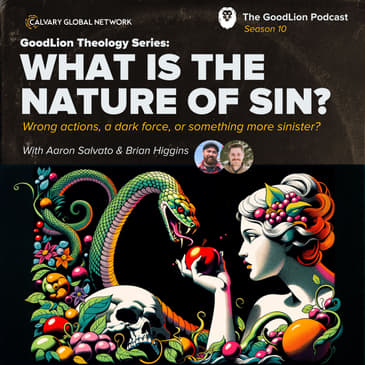


Aaron: In this episode, Brian Higgins and I dive into a topic that's foundational yet often elusive – the nature of sin. This isn't just another rundown of wrongdoings; it's a profound theological exploration that invites you to rethink what you know about sin.
We attempt at peeling back the layers to reveal sin not as a mere catalogue of missteps, but as a deep, underlying corruption that affects every part of our being. Drawing from the rich tapestry of Scripture, we start in the Garden of Eden, uncovering insights about God’s intentions and mankind’s fall.
We then navigate through the complex terrain of the Seven Deadly Sins, seeing them as symptoms of a much deeper spiritual ailment.
This episode is designed to challenge and deepen your understanding, bridging the gap between ancient biblical texts and our contemporary struggles. It's an invitation to engage with one of the most pivotal concepts in Christian theology and to discover the radical necessity of grace in our lives.
#BiblicalTheology, #UnderstandingSin, #ChristianDiscourse, #FaithExploration, #ScriptureInsights, #SpiritualJourney, #TheologyTalk, #DeepDiveFaith, #GenesisContext, #SevenDeadlySins, #SpiritualCorruption, #FallenNature, #GraceAndSalvation, #ChristianPodcast, #SinAndRedemption, #GardenOfEdenAnalysis, #FaithfulReflections, #ChristianLifeChallenges, #DiscipleshipFocus, #ScripturalWisdom
---
(00:00:02) Introduction to the Nature of Sin
(00:00:53) Welcome to the GoodLion Podcast
(00:02:55) Understanding Sin: A Deeper Dive
(00:05:53) Sin as a Dark Destructive Force
(00:07:55) Sin as Rebellion: The Genesis Account
(00:19:59) Sin as a Symptom: The Seven Deadly Sins
(00:29:24) Sin as Rebellion and Personal Responsibility
(00:36:13) Conclusion and Farewell
[00:00:00] As we grapple with big questions of faith, scripture and what it means to follow Jesus
[00:00:08] in today's world, every single one of us will find ourselves venturing into a topic that
[00:00:13] says ancient as humanity itself. And that is the nature of sin. What is sin? Where did
[00:00:21] it come from? What does it do? What is its nature and essence? What is its purpose? What
[00:00:27] are its dangers and why does it even exist? How does understanding its true nature affect
[00:00:33] our relationship with God and with others? Today Brian and I will explore how this ancient concept
[00:00:40] is still shaping our lives and our faith today. We're glad you're here with us. Let's dive into
[00:00:46] our episode on the nature of sin. Here we go. Hey everybody, welcome to The GoodLion Podcast.
[00:00:55] I am Aaron Salvato and I'm Brian Higgins. And we are jumping into the first part of a series on
[00:01:03] all of the deep dark things. Sin, hell, why are we doing this, Brian? Because these are
[00:01:13] important overlooked aspects of the Christian faith. We are very quick to talk about
[00:01:20] we are saved by Jesus. We are part of His kingdom. We are free from the bondage of slavery and we
[00:01:28] use all of these different positive attributes to describe what we have in Christ. But if you were freed
[00:01:37] from a room full of puppies and sour patch kids, being freed from that isn't exactly a great thing
[00:01:45] versus if you were being freed from a room filled with snakes and carrot top. That's the room
[00:01:51] you want to get out of. We want to talk about what exactly is the dark in the picture of God's light.
[00:01:59] Wow, that I just want you guys to know that was completely unscripted. I just threw Brian
[00:02:07] the opportunity to craft the intro for us and that's a gift. That's talent. That all just came
[00:02:12] straight from your head man. Well done. I agree. I think we've grown up in the church and I think
[00:02:18] when you grow up in the church, you hear words like sin, you hear words like hell. And a lot of times
[00:02:24] you're asking the question, what do these actually mean? And a lot of times were passed down weird
[00:02:29] baggage about what that stuff means that isn't actually biblical or true. And honestly our
[00:02:37] faith around that issue can be really shallow at times. We can have a really overtly simplistic
[00:02:43] view of sin and of hell and of darkness and of spiritual forces. And so this is a series we've
[00:02:50] been wanting to do for years. The question of just, hey, let's start with sin. What is sin?
[00:03:07] So let's go ahead and start with that question. What is sin? What is it actually? How can we move it
[00:03:22] out of theory and into tangible reality? Brian, let me ask you when you were growing up as a young
[00:03:29] Christian in the church, what was your view of sin? To me, sin was pretty much exactly the same
[00:03:38] as doing the things your parents told you not to do. Only Jesus was the parent. That was kind
[00:03:45] of the way that I framed it in my mind. And I want to run with that analogy for a second because
[00:03:52] when you think of just doing what your parents tell you, for the most part,
[00:03:58] you don't really think about is what they're telling me to do good or not. You don't see an
[00:04:05] intrinsic link between cleaning my room is a good thing for me as a person. Or making sure I don't
[00:04:14] eat on the couch is a good thing for me as a person. That link just isn't there even though there are
[00:04:20] a lot of helpful principles that are sitting behind all of that. I'm not saying that what that's
[00:04:25] what actually was happening, but what felt was happening was my parents have a bunch of things they
[00:04:30] like and a bunch of things they don't like. And they're more powerful than me. Yeah, and they're
[00:04:36] bigger and they can take away my phone. So I guess I just kind of have to go with whatever it is
[00:04:42] they're giving to me. So I kind of grew up with the thought of God has a bunch of stuff that he
[00:04:48] likes and thinks is good and how things should go. And a bunch of stuff that he doesn't like.
[00:04:54] And if I do the good things, that is righteousness, that was in my mind. And that will make him happy
[00:05:01] with me. And if I do the bad stuff that is sin and then he'll be mad at me. That was my general
[00:05:08] framework. Yeah, yeah, yeah. No, totally. I feel like I had that exact same framework and it was
[00:05:13] almost like, you know, your view of God is, you know, Santa at the North Pole. And he's making
[00:05:19] goodness, you know, in the goodness workshop, the angels or the elves. And then there's this rival
[00:05:25] workshop downtown, you know, that's Satan's workshop. And he's like, oh, God's going to make good
[00:05:30] deeds. I'm going to make bad deeds. I'm going to make the deeds that are not what God likes. And it's
[00:05:36] just this very clear cut list, a very deeds based. And that's, that's the question I want to wrestle
[00:05:43] with is, you know, what is sin? Is it, is it merely a bunch of deeds? Is it merely a list of
[00:05:49] deeds that we're not supposed to commit or is it something different? Is it something more like a
[00:05:54] force, a dark destructive force or a military power? Or is it something like a poison, something
[00:06:01] that corrupts humanity from the inside out and corrupts creation itself? Is it a weapon? Is it a
[00:06:07] military strategy? Is it something that Satan and the forces of evil wield against us? I want to
[00:06:14] go deeper into this question. I think very often our typical understanding is sin is a verb,
[00:06:26] right? Sin is something that you do. Wrong deeds that you do disobedience rebellion. And that's
[00:06:32] really the extent of it. Would you say that a lot of people, I mean, you are a youth pastor just
[00:06:36] like me. Do you feel like a lot of people grow up with that mentality? I think they do and I think
[00:06:41] this is the primary use we have of the word sin. I mean, just think about the way that it gets
[00:06:47] thrown around. It's don't sin, avoid sin. Make sure you, you know, if you do that, that will be sin,
[00:06:55] something along those lines. It's always seemingly linked to a specific action that we're assigning
[00:07:05] moral badness to in the sense of what you're saying of some kind of disobedience or some kind of
[00:07:10] rebellion. Yeah, and I get why people believe that because to an extent it is very biblical like you've
[00:07:18] got the 10 commandments, right? You've got Bible verses that say, you know, do not lie to each other
[00:07:23] since you have taken off your old self with its practices, Colossians 3.9 or, you know, stealing,
[00:07:29] let the thief no longer steal but rather let him labor doing honest work with his own hands.
[00:07:33] That's just there's there's imperatives all over the Bible that tell you not to sin.
[00:07:39] We're not trying to start off this series by saying that you should just not care about not sinning,
[00:07:46] but I just I want to get to the deeper roots of this. So let's let's take a moment and jump into
[00:07:52] the source of sin, the roots of sin.
[00:08:02] So like we said, sin is often viewed as a verb, but I think we have to talk about sin as a noun.
[00:08:08] Sin as an entity. You can't fully understand sin without knowing where it came from just like you
[00:08:16] can't fully understand Star Wars if you don't watch the prequels, even if you hate the prequels,
[00:08:21] even if they're annoying, even if you know, Anakin, Hayden, Christian, since acting is so bad
[00:08:27] as Anakin Skywalker, you still have to wrap your head around those if you're going to understand
[00:08:32] the original trilogy and the sequel trilogy. And so the story that we have talked about often on
[00:08:38] the show, but it's central to understanding who we are as humans where we came from what life
[00:08:43] in existence and humanity is all about. You have to talk about the war in heaven. You have to
[00:08:49] talk about how at one point you had Yahweh, a god who created spiritual beings, angels as his
[00:08:56] servants, and then he has a plan to create humans and love them and make them a part of his
[00:09:02] family and care for them. And then there's a rebellion. You have some angels who go, hey,
[00:09:08] we don't like what Yahweh is doing. We could do it better. We should be in power. And then you
[00:09:15] have this great rebellion. And a sin is something that is connected intrinsically to this rebellion.
[00:09:23] It is a dark force. It is a corrupting disease when Adam and Eve eat that fruit in the garden.
[00:09:31] It's not God saying, hey, you broke my rule. How dare you? Now I'm going to make everyone's life
[00:09:37] miserable. I believe that in accepting the fruit from the serpent who wasn't just a snake, it's
[00:09:45] a demonic being. It's a part of the enemy's military forces by accepting his offer of not just
[00:09:54] fruit, but saying, hey, define good and evil on your own terms. Listen to us instead of Yahweh.
[00:10:02] Let us influence you. Let us speak into your life. What happens is I believe the very foundation
[00:10:10] of the earth, you know, the human genome, like the DNA structure of humans, everything becomes
[00:10:16] corrupted. And so I look at sin not just as a verb, something that you do. It's an entity, a dark
[00:10:23] force, a corrupting disease, a military strategy. And that bleeds into the verb. It bleeds into what
[00:10:30] we do because of the source, because of the dark forces, it leads to us doing wrong actions. It
[00:10:37] leads to disobedience and rebellion, but that disobedience and rebellion does not just exist in a
[00:10:42] vacuum. Do you get what I'm saying? Yeah. And so this is kind of a big shift in thinking for a lot
[00:10:48] of people. Can we point to places in scripture where sin is discussed as some kind of entity? I would
[00:11:00] say yes. One verse in particular that stands out to me where it speaks of sin as a corrupting force
[00:11:08] that is looking to advance in somebody's life, is the story of Cain and Abel where in Genesis chapter 4
[00:11:15] both of them present offerings to the Lord and Abel's is pleasing to God. And it says that the Lord
[00:11:21] looked with favor, unable and his offering but did not look that way on Cain's. And so Cain is very
[00:11:29] angry because of that. And God in verse 6 says it says the Lord said to Cain, why are you angry?
[00:11:36] Why is your face downcast? If you do what is right, will you not be accepted? But if you do not
[00:11:42] do what is right, sin is crouching at your door. It desires to have you but you must rule over it.
[00:11:52] That's not the way you would talk about in action. You wouldn't say, be careful, Cain.
[00:11:59] Murder is crouching at your door. That's not how you would normally talk about any kind of
[00:12:04] particular deed but rather the idea is there is a malevolent force that wants to have control over
[00:12:14] you and you must deny that force. You must push that away. So that's one place in particular I can
[00:12:20] think of where the Bible talks about sin in this way of not just you better decide not to sin Cain.
[00:12:28] I mean, obviously it doesn't say like I just do what you want. It's very clearly anti-sin in
[00:12:32] this passage but it speaks of sin as more than just a wrong thing he might do but speaks of a
[00:12:38] wrong way of thinking, a wrong spiritual force that sits under these wrong deeds that might come
[00:12:46] later and that is also what needs to be pushed away. It's not you must avoid its deeds, it's you
[00:12:54] must rule over it. You must put that force in submission to living a righteous and acceptable life
[00:13:02] before God. Yeah, no, that's really good. That's the perfect verse to go to and I think it's
[00:13:08] interesting because there's other parts of scripture where we get a description of the enemy,
[00:13:14] and this is something that I've learned from my seminary professor Gary Rochiers. He talks about
[00:13:21] when we talk about the enemy, we always think of this one guy named Satan or his name's actually
[00:13:28] Lucifer and Gary points out, actually his name biblically you're not going to find Lucifer as
[00:13:33] his name and Satan isn't his name either. It's actually just a title. The hilarious thing is that
[00:13:39] Satan doesn't actually get a name. The enemy, the chief demon, the guy who started the rebellion,
[00:13:44] you won't ever really find his name in scripture which Gary says is probably a dis by God,
[00:13:50] saying he's not important enough to give him a name but you'll find descriptions of the enemy
[00:13:56] right either the chief demon or the demonic forces as a whole and he'll say the enemy is like a
[00:14:03] roaring lion seeking who he will devour. So it's personifying the demons right but then the scripture
[00:14:11] also goes on to personify sin itself like you just read saying hey it's not just the enemy,
[00:14:16] it's not just the demons that crouch at the door like a lion it's sin itself waiting to devour you
[00:14:24] and the place that my brain goes to Brian honestly in this I feel like sometimes the way that we
[00:14:30] talk about scripture can be so rigid and systematic because we're afraid of saying anything that is
[00:14:37] kind of outside of the the bounds of what we know but the thing I've said over and over again
[00:14:42] is if you're a Christian you're literally a mortal trying to understand spirit beings from another
[00:14:48] dimension you know. And so in that when I think of sin I think I think of all of the classic movies
[00:14:56] where basically you have like a good kingdom right and you have a good king and his family
[00:15:02] and everything's great and then you have an evil enemy like a dark wizard and then they use
[00:15:09] their evil magic to like curse the land and oppress people and again magic is not real but I think
[00:15:18] it's it's an analogy even just think of the lion king like when scar takes over the pride lands
[00:15:24] what happens the the rain stops and everything withers up and dies and there's bones and skeletons
[00:15:31] everywhere because everything is dying off nothing's growing and and that analogy scars not even
[00:15:37] doing it it just happens but what I'm trying to say is did you get when I'm getting with like that
[00:15:41] magical analogy like a wizard saying I'm going to use my power to create something evil that will
[00:15:48] oppress you. I think there's something going on behind the scenes in the spiritual realm when
[00:15:53] it comes to sin where sin is much more tangible. It's this evil oppressive dark side star wars
[00:16:00] style force that is doing something to humanity that's that's my theory. Well it's interesting
[00:16:06] to make this comparison I think when we think about being faithful followers of Jesus and promoting
[00:16:15] his righteousness in the world. The Bible talks about how we are called to be his image bearers
[00:16:20] and we're talked about as being ambassadors of reconciliation you know that we we are promoting
[00:16:29] the person of Jesus and the character of Jesus. What we are bringing forward into the world
[00:16:36] is examples of who Jesus is and what he is like versus what we talk about when we talk about
[00:16:45] sin is not just Satan's character like it's not that sin flows out of him like he is the inventor
[00:16:54] of it yeah but it's rather a cause that he has gotten behind. I've got a verse on that so first
[00:17:04] John 3.8 he who does what is sinful is of the devil because the devil has been sinning from the
[00:17:12] beginning. The reason the Son of God appeared was to destroy the devil's work so that and that
[00:17:19] that's a strange passage to me in the sense of we know that there was a fallen angel so when we
[00:17:26] talk about from the beginning what do we mean from from the moment God created him or
[00:17:32] from the moment he chose to first rebel and then did that rebellion just cause some dark destructive
[00:17:39] cosmic force to enter into our reality that's the mysterious questions I I wonder about.
[00:17:45] It seems to me like sin is something Satan joins in on not something that he invents goodness
[00:17:56] is who God is and that's why it's very easy to point like we often point to Jesus as our example
[00:18:04] because if it is like Jesus it is good because Jesus is creating good Jesus is making good and all he
[00:18:13] is is good and he is the owner of good if that makes sense yeah sin kind of the concept of rebelling
[00:18:22] Satan may have been the first one to do it but he didn't create it he's simply twisting and
[00:18:29] corrupting and that kind of bent towards corruption is what he's joining in on not something he
[00:18:39] is inventing and then pushing out into the world does that idea make sense yeah it's not the analogy
[00:18:44] that we talked about of you know the the sin factory where he's coming up with you know like like
[00:18:50] Satan's not inventing new forms of sin it's it's the effect of that dark destructive force that
[00:18:56] is corrupting humanity leading them to new ways to sin you know there's ways that you can
[00:19:01] send with a smartphone that you couldn't you couldn't do a thousand years ago it wasn't like
[00:19:05] Satan you know got the the demon marketing team together saying hey kind of like how Steve
[00:19:10] Jobs you know has Apple it's not like Satan has these meetings where it's like hey let's develop
[00:19:15] new methods of how to sin it's more of humans have been corrupted to the core by this dark
[00:19:23] destructive force and the enemy is constantly leaning into that and manipulating that and
[00:19:28] working it into his military strategy is how that's how I put it because the whole reality like
[00:19:36] everything we experience is it is in the middle of a giant cosmic battle four souls and between
[00:19:46] good and evil you know and that's why most of our movies and stories are based on that very concept
[00:19:51] you know the epic battle between good and evil they're you know they're aping
[00:19:56] what is actually going on behind the scenes
[00:20:07] let's talk for a minute about some prime examples of sin there is a list of sins called the
[00:20:21] seven deadly sins and it's not actually like a biblical list where god says hey here's the
[00:20:27] seven sins to watch out for this is actually a church history thing people throughout the centuries
[00:20:33] of Christianity have looked to these sins and identified and said hey these are the sins that
[00:20:37] seem to mess you up the most and actually cover the widest range of types of sins so you've got
[00:20:44] pride or vain glory you've got greed or covetousness you've got lust or you know wrongly ordered
[00:20:53] sexual desire you've got envy gluttony wrath sloth these are the sins that have been identified
[00:21:02] as ones that are very destructive and I look at that list and I go yeah I can look at how each of
[00:21:08] these things in my life have caused massive hurt and pain to myself and the people around me
[00:21:16] and I think it's so helpful to recognize again these it's not just a list of hey here's seven
[00:21:21] deeds you shouldn't do or seven types of deeds you shouldn't do it's here's seven different
[00:21:28] symptoms of a really deadly disease if you see these symptoms in your life you need a doctor
[00:21:37] don't just go oh yeah I'm lasting boys will be boys it's just a part of you know it's just a
[00:21:42] part of human nature yeah that's the point human nature is corrupted by a disease we need a doctor
[00:21:51] yeah the broadness of those categories helps a lot in terms of being able to see how we can
[00:22:01] sin in new specific ways but not in new general ways I think about the idea of catching it just
[00:22:09] to catch something you can catch a ball in a ton of different ways you can use two hands you
[00:22:16] can have one arm way out but if you catch it in a new kind of like interesting position like
[00:22:21] you didn't invent the idea of catching you know and so it's like one thing can be done in a bunch
[00:22:26] of different ways and you use the example of there are all these ways we can sin with smartphones
[00:22:33] now new specific ways like people 200 years ago could not be prideful on social media yeah but they
[00:22:44] were certainly prideful we just have new outlets for doing those same things they couldn't be lustful
[00:22:51] on a porn website but today we can but they certainly were lustful and like in that way when
[00:22:58] Solomon says there's nothing new under the sun there's no new wrongdoing or anything like that
[00:23:05] we we found all sorts of new specific ways but the heart of man has remained the same and we've
[00:23:11] been bent and broken in the same direction for all of human history right you're you're never going
[00:23:18] to encounter you know you're reading the news and you'll see some horrible sin and go whoa that's a
[00:23:23] new sin you know that's that's something I've never seen before no you'll be able to trace the roots
[00:23:29] probably to one of these seven things and so I think that's interesting that sin seems to have
[00:23:33] limitations but within those limitations I mean just so many of those things I mean I'm just
[00:23:40] going through the list like lust oh my gosh the sex trafficking trade you know child sex trafficking
[00:23:46] like that that is such a gnarly manifestation of lust you look at greed you know just exploitation
[00:23:52] of people and and and and just robbing from people and and you know greedy corporations and CEOs
[00:24:00] like just just putting people down because of their own greed you know pride like just the the
[00:24:07] original sin as many say you know that the the idea was that the the demon you know the the angel
[00:24:15] that rebelled had a thought of I can do this better than Yahweh it's it was his pride that literally
[00:24:23] started everything and you know wrath and anger you look at that and that's that's where wars come
[00:24:29] from it's it's people not being able to move past their differences but instead just boiling over
[00:24:37] to the point of rage and then to the point of violence and death um I think for a minute let's talk
[00:24:44] about sin as rebellion and and you know Brian why don't you give us a quick recap in that framework
[00:24:51] of what happened in the Garden of Eden yeah when we think about the Garden of Eden we think about
[00:24:58] humanity being created in a perfect state with perfect relationship with God
[00:25:05] with seemingly boundless opportunity just every arrow is pointing up like things are great
[00:25:13] work is fun relationships are unencumbered with lies and shame and confusion and misunderstandings
[00:25:22] like everything is just lights out perfect 10 out of 10 no notes would eat at Eden again
[00:25:29] like they just have that kind of perfect five star rating going on yeah in everything
[00:25:35] and part of what God creates is what we refer to as the tree of the knowledge of good evil
[00:25:42] and in part what it seems that God is doing with that is he is giving something of an opportunity
[00:25:53] to opt in or opt out of life with God as uninterrupted king yeah so though the only rule that God
[00:26:03] gives to Adam and Eve is do not take from this tree and it seems that what he is saying when God
[00:26:11] says don't partake of the fruit of this tree is hey let me be the one who remains rightful king
[00:26:20] let me be the one who remains in charge and look because I'm extremely generous and because
[00:26:25] I'm extremely loving if you don't want that arrangement anymore you don't have to have it
[00:26:32] this tree will stand here as the opt out button tech stop to unsubscribe you can do all of that with
[00:26:38] this tree if you so choose but know that if you do opt out of my leadership what you are bringing
[00:26:47] into your world is death and destruction and chaos so he he lovingly creates the option because
[00:26:55] he is not one that purely forces are obedience and forces our relationship with him yeah but also in
[00:27:04] love he tells us if you do decide to walk away from me here is what is going to happen and not like
[00:27:11] a spooky like who kind of like big like scary show but just here are the cold heart facts this is
[00:27:17] what you will get if you choose to rebel against my leadership and what we end up seeing the story
[00:27:25] that we very famously know Adam and Eve choose rebellion and choose to be the definers of good
[00:27:31] and evil on their own yeah man it's a great breakdown yeah when you were talking through that it got
[00:27:37] me thinking about again how easy it is to go back to that framework of rules and breaking rules
[00:27:46] and and it can almost seem to a lot of people growing up in the church like God is petty I think of
[00:27:53] this one math teacher I had he's a great guy now but he was young and he was the assistant math
[00:28:00] teacher I don't know how normal that was but he he was so like I was like a power trip thing you
[00:28:06] know where these freshman high school kids and he was like obsessed with make sure you bring your
[00:28:12] ruler make sure you bring your protractor and if we forgot one of those things he would be like
[00:28:17] you broke my rule you get marked down you're gonna lose points your grades going down
[00:28:22] and that that kind of pettiness is how we can view the tree of the knowledge of good and evil God
[00:28:27] just being like I'm gonna make this perfect paradise but then I'm gonna just have this rule and
[00:28:32] if they if I swear if they break my rule I will destroy the world to the point that I have to
[00:28:40] go and die to fix it like that that's just so strange right to frame it in that way but that's
[00:28:45] how that's how a lot of people think of that that's how for one that's how atheist think of it
[00:28:50] you know you'll go on Reddit and read through threads of people making fun of Christians
[00:28:56] because that's how stupid they view it as like why would God even do that and
[00:29:01] I view it as if I have a seller and I know that there's like wolves with rabies in the seller
[00:29:09] my rule to not open the seller isn't me being petty it's me saying I know what will happen
[00:29:16] if you open that door and that's that I think is the proper framing God knew what would happen
[00:29:24] and you can get into the ethical and moral question of why would God allow the tree to be in the
[00:29:29] garden and we're not gonna touch that here but it's a very good question to ask but it does beg
[00:29:38] one misreading to be cast away one of the things that happens is we read the book of Genesis
[00:29:48] and because it begins with the literal words in the beginning we assume that everything in Genesis
[00:29:57] happened before everything else in the Bible and that kind of chronology isn't necessarily true
[00:30:05] and it's not the best way to view the book of Genesis or really to view many books of the Bible there's
[00:30:10] a lot of interlocking that's happening of the timing of different things if you read the Bible
[00:30:17] from beginning to end the way that we currently have it here in America or here in modern day is
[00:30:23] maybe a better way to say it we are that would not be reading chronologically that doesn't get
[00:30:30] you from beginning to end in that order so it is very much worth pointing out that when we get to
[00:30:36] Genesis chapter three which is what contains the story of Adam and Eve choosing against the
[00:30:41] leadership of God the rebellion of Satan and the other angels that have fallen with him has
[00:30:49] previously happened to that point so rebellion is already a thing very much in motion on the spiritual
[00:30:59] level by the time we get to Adam and Eve choosing rebellion opting out of God's leadership so to speak
[00:31:08] that is not the beginning of rebellion we read about that in our structure of the Bible much earlier
[00:31:15] than we seem to get indications of angels choosing to turn away from God when exactly before
[00:31:23] the fall of man that happens very much up for debate but very clearly there is already a serpent
[00:31:31] yeah who is not not quite a serpent not quite a serpent but standing in some kind of demonic
[00:31:38] representation who is saying join the rebellion come be against God with us so to speak
[00:31:46] so they're not the ones inventing the concept of rebelling they're joining something very much in
[00:31:53] progress so when I bring that up simply to say the way that I often hear it phrased a very common
[00:31:59] criticism I hear of Christianity is God is doing to me what he did to Adam and Eve
[00:32:08] he made us foolish finite dumb curious tells us not to eat this one thing and then expects us not
[00:32:18] to eat it and then we fast forward to today and it's you made me this way and then I go off and do
[00:32:23] all of these bad things and now you're going to be mad at me forever and it's not that God purely
[00:32:30] created humans in this place of rebellion has never existed and now you might be the one that
[00:32:38] starts it it's rather that there is this destructive force moving as an undercurrent throughout all
[00:32:46] of human history stretching back all the way to Adam and Eve yeah that that is a very very good
[00:32:55] assessment and a really good reminder because I agree with everything you said I think it's easy
[00:33:02] to almost view it as Adam and Eve were the ones that broke everything instead of seeing them as
[00:33:10] victims of this war that was going on before they ate that fruit you know and that's not to minimize
[00:33:17] our responsibility when it comes to sin that's not to just say oh the devil made me do it
[00:33:22] we we play a part in our sins a massive part that we make our choices absolutely but we have to
[00:33:31] especially this is helpful when it comes to judging others when you see others sinning
[00:33:37] when you see others making horrible horrible choices when it comes to their family or their marriage
[00:33:44] or their addictions it's so easy to just see them as a sinner right and I I think going all the
[00:33:53] way back to Genesis three we need to see humanity as a victim of the true enemy people are not the
[00:34:01] enemy they're victims of the true enemy and it's important it's important to remember that
[00:34:16] I do think I want to harp on that idea of personal responsibility for a second I know that when I
[00:34:32] give gospel presentations of here is what it means to believe the gospel will you choose to believe
[00:34:39] that today or not one of the things that I like to say that I think is a helpful way to frame it
[00:34:45] is that Adam and Eve have chosen rebellion and we have all ratified their decision
[00:34:54] that our rebellion is kind of agreeing with Adam and even saying yes you were right
[00:35:01] it was good for us to push away the leadership of God and that's ultimately I know we're going
[00:35:08] to talk about this more as the series goes on but that's one of the things we need to grapple with
[00:35:15] when it comes to our sinfulness and it's why this idea of sinfulness is worth exploring on a
[00:35:22] deeper level because if sin is just did you do the bad things or not then that can feel very petty
[00:35:29] that can feel very simplistic that can feel like God is just kind of mean sometimes but if we view
[00:35:36] our sin as deciding we don't want God's leadership and proving that decision by opting to become
[00:35:46] our own leaders now it begins to make a little more sense why God deals with sin so sternly and why he
[00:35:57] makes such a big deal out of whether or not we move towards sin because once you're in the category
[00:36:04] of rebellion rebellion is an extremely tricky thing to manage and a really really difficult thing to stop
[00:36:17] and that brings us to the end of today's episode I'm Aaron Savado I've been here with my co-host
[00:36:22] Brian Higgins and it's been a privilege to explore the depths of sin and grace with you all
[00:36:27] I really hope today's discussion not only provided a deeper theological understanding but also
[00:36:32] a personal reflection on how this impacts your daily walk with Christ as we part ways I encourage
[00:36:38] you to think on the profound need for grace in our lives and how understanding our fallen nature
[00:36:45] can actually draw us closer to God's love and redemption remember theology isn't just about knowledge
[00:36:51] it's about transformation of our lives and relationships thank you for joining us on the Goodline
[00:36:57] podcast if you found this episode enlightening or insightful or helpful don't forget to share it with
[00:37:02] friends or hey leave a review that would help so much and also if you listen on Spotify you can
[00:37:09] actually leave a comment on this episode man we would love to hear from you guys we would love
[00:37:15] to hear how this episode blessed you or spoke to you or if you've got pushback or follow up questions
[00:37:20] man we would love that stuff so even if you don't listen on Spotify you can go over to Spotify find
[00:37:26] the episode and drop your comment there until next time keep seeking keep questioning and keep
[00:37:32] growing in your faith in Jesus Christ God bless