
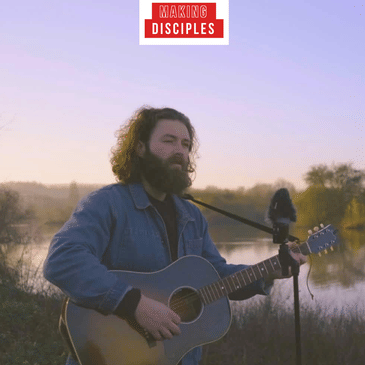
287. Interview with the inspirational Samuel Jackson-Reed on worship and discipleship
In this week’s episode, Cris is joined by worship leader, poet and creative Samuel Jackson-Reed. Together they explore the relationship between worship and discipleship, and how a life of worship shapes us as followers of Jesus.
https://www.youtube.com/@samueljacksonreedmusic
Listen to his new single: https://wingsmusic.lnk.to/TheHush
Subscribe to his Substack for poems, short essays and updates: https://samjacksonreed.substack.com
Support the podcast with a coffee.... https://www.buymeacoffee.com/crisrogers
To get a copy of The Bible Book By Book head here...
https://www.eden.co.uk/christian-books/bible-study/bible-study-reference-books/bible-background/the-bible-book-by-book/
Rev Dr Cris Rogers is a church leader at allhallowsbow.org.uk and Director of Making Disciples. Chair of the Spring Harvest Planning Group. For more information, check out wearemakingdisciples.com #Heart #Hands #Heart
[00:00:08] Hi friends, welcome to another episode of Making Disciples. My name is Chris and I am your host. I hope you're doing alright. I hope you are very well. I am pretty excited to share with you today's interview. It's an interview with Samuel Jackson-Reed and you'll hear this in the podcast episode. We had never met before this interview but I'd been on YouTube. I love listening to worship whilst I'm working.
[00:00:36] Obviously you'll have to get YouTube in the background just playing and it kind of drifted into playing a video of a guy, Samuel Jackson-Reed, on his guitar, in his garden, early hours of the morning, birds in the background, leading worship. It was like morning worship. I was like, I love this. Oh, this is great.
[00:00:59] I subscribed to his channel. It was very early days. I think he was maybe two videos in at that point and next week the next one come out, next week the next one come out and a few of them I was just, oh, I love how he just sings that particular old hymn or something and I would send it to a friend. I go, this is great. I love this guy. Who is he? I could not for the life of me work out who this guy was. You know, he started doing a little bit of searching online. I can't track him down.
[00:01:25] And eventually I put on Facebook, does anybody know who Samuel Jackson-Reed is? And I posted a video of him leading worship. And within minutes, it was, it was fast. Pops up, Samuel Jackson-Reed. He went, hello. And literally, apparently it turns out somebody who I'm friends with on Facebook knew his mum, messaged his mum, his mum messaged him.
[00:01:49] And he came on and went, hello. And we made contact. And it was just wonderful to be able to interview him, bring on to the podcast, interview him about worship, discipleship and all that kind of stuff. And he is amazing. So I'm going to put some links to some of his worship in the show notes. But friends, let's just dive in because it's such a lovely conversation with him. Conversation about worship and discipleship from the worship leader, Samuel Jackson-Reed. Do check him out on YouTube, but he's somebody who's really blessed me with his worship leading.
[00:02:29] Samuel Jackson-Reed, welcome to Making Disciples. Oh, thank you very much for having me. It's a joy to be here. I'm really excited about this episode because, I don't know when it was. Was it two months ago on YouTube? I'm normally watching rap videos. And what else do I watch? Lego videos and that kind of stuff.
[00:02:55] And this video pops up with this guy in his garden, leading worship with the birds in the background. And I was like, oh, I love this. So I stuck it on, played it while having breakfast. Following week, there was another one. There was another one. Then I ended up sharing them to my small group. And two months ago, I was like, I am loving this intimate worship time in creation. And I was like, I need to find out who this guy is.
[00:03:25] So I put it on Facebook and you responded within moments. So I'm really excited to meet you because it feels like I want to ask you about your creative process and what made you do that. But just tell us a little bit about yourself before I jump in. Yeah, yeah. So I'm a poet and a singer-songwriter and a worship leader.
[00:03:52] And I also work full-time in human rights for a charity called CSW. And I'm based in Nottingham. I grew up in the South, though, so I'm a Southern softie for my sins. And, yeah, I grew up in kind of charismatic evangelical church, big old church down a town called Bracknell, which kind of made no sense just to commute a town. But there was like a thousand of us or something ridiculous like that.
[00:04:19] And a youth group that just exploded and was about 500 people, I think, at one point. And started leading worship from the age of 12, writing songs. I was in theater. I was doing gigs. I played in thrash metal bands. I played in folk duos. I did all sorts of stuff. And then went off to uni and studied politics, philosophy, religion. Deconstructed my faith. Reconstructed my faith.
[00:04:46] Played in a Bruce Springsteen style kind of rock and roll band. We were called Sam Jackson and the Struggles. Which the music is still out there somewhere if you're curious. I'm not going to tell you where. But if people want to listen. That's what Google saw. Yeah, exactly. It's not my best, not my favorite stuff. But it is there. And it was a fun time. And yeah, and sort of through many different ways, found myself as a worship pastor full time for a period of time.
[00:05:14] And now kind of trying to walk the wild way of Jesus and kind of be obedient to what I feel like he's asked me to be, which is a songwriter, a poet and a worship leader. And Samist is probably the best word to describe what it is that I feel called to be. The reality is YouTube is not.
[00:05:43] I'm sure you didn't wake up and go, oh, I'm going to go on YouTube. I've got to go on YouTube. No, no, no. But there's something about that communication device that is really incredibly toxic and incredibly beautiful at all at the same time. Yeah. What, what, you know, what made you go, do you know what? I think I just want to put something into the world that may be helpful for someone and
[00:06:09] particularly something in the sense of really stripped back, authentic. Yeah. What was, what was that process like? Yeah. So I think it's been, if I, if I think about it, honestly, it's been quite a long process. I think I've always tried, you know, if you're an artist of any description, there's a reality of wrestling with the technology of the day and what the technology of the day is asking you to do, right?
[00:06:35] Like you, you can't just be, I mean, you can, you absolutely can just be playing gigs in your local area and writing songs in your local area and, and, you know, doing all of that kind of stuff. But if you want to reach and connect with a larger group of people, you've got to work out how you, how you can utilize those, those, those means of technology because they, they can be really useful and really beautiful. So I'd say, you know, tried 10 years worth of different things trying to figure out how
[00:07:05] do I be myself authentically on this? And to varying degrees of success, mostly not successful. But back in November, well, actually this time last year, I had these worship songs. So I write non-worship stuff actually as my main thing is, it's kind of like indie Christian singer songwriter, folky, whatever. And, but I had these worship songs that I'd been playing at David's tent, which is a worship festival.
[00:07:34] Um, but also when I was a worship pastor, we played them in the church and people would be like, I want to listen to them. And I didn't really want to spend any money on them. And so, um, we actually decided to do what we called an iPhone EP. So we literally just put my iPhone in the middle of the living room and my wife and I sang these songs through and I put it out in November. It's called a liturgy of the hours volume one. And, um, the feedback we got was amazing.
[00:08:00] And, um, a friend of mine who does kind of social media stuff and YouTube stuff was basically like, you should do this on YouTube. And I was like, no, I'm a serious singer songwriter. Like the worship meeting is just like, it's a part of who I am. It's obviously something that you really care about, but no, like I want to be seen as this cool edgy indie artist thing. He was like, man, I think you really should think about it. And essentially through a number of different conversations and actually God then speaking
[00:08:28] quite clearly that this was something that he wanted me to do. Um, I started and I originally was like, okay, I'll do one video a month. And my friend was like, no, I think you should do more. I was like, I'll do two. He's like, no, I think you should do more. I was like, okay, I'll do three. He was like, no, I think you should do one a week. And I was like, one a week. Like, that's crazy. Um, but as I got into the rhythm of it, I think I began to, I've, you know, there are, there are weeks where I wake up on a Wednesday morning and it's, you know,
[00:08:57] quarter to six in the morning and I need to get out and get the recording done. And I'm like, I would rather be doing anything else than, than getting out and doing this. Um, but there are the majority of the time I'm like, wow, I get to be out in nature, praising the Lord in this kind of simple way. And, um, and so that, that was kind of the Genesis was really a friend of mine saying, I think this would really bless people. And I think it, he was like, I think it, you, you, you see it, Sam is like separate to all
[00:09:25] the other work that you're doing, but I actually think it's a core part. And he was right. And I think it's kind of these, these two parts of my creative life that I have often felt were separate have actually begun to merge together. The way I've been describing it is there's this part of me that felt like David, you know, in the, in the temple, in the tabernacle, leading the worship, that kind of the Psalmist David. And then there's this part of me that felt like John the Baptist out in the wilderness,
[00:09:51] kind of make way for the way, make way for the coming of the Lord and a bit more kind of out on the edge. And I never knew how those two things fit together. And as I've been doing this, realizing that it has. Um, but I think the idea to do it so stripped back partly was a necessity. I had no budget and I don't know how to do production. And so I was like, what do I have in my hands? I have a simple camera that only records for 10 minutes at a time. So I have to like keep really, really on edge.
[00:10:21] It's like this 10 minute slots. And then I have to kind of like keep an eye on the clock on the, on the microphone and go, okay, I'm coming close. I probably need to like wrap up what I'm doing. I have to stop, go reset the camera, come back and carry on and then edit it all together. Um, the microphone I had as I don't want to be dragging around laptops and all of that kind of stuff. Um, so it's, it's called a zoom H2M, uh, and it's a field recording microphone and it runs with AA batteries. So it's literally the most portable thing.
[00:10:50] I can pop it up anywhere. Um, and I think I was thinking about this this morning. I think there was this part of me that's feeling a little tired of what, what I jokingly, and I mean, I don't mean this harshly, but what I jokingly call the crash bang wallop aesthetic of worship sound and worship music. And I was just feeling a bit tired of that whole aesthetic, a bit worn out by it all. And I was finding in myself, though, I, you know, grew up in all of that and I know how to do it.
[00:11:20] And I, you know, have, you know, and I'm part of places that do that really well. I just wanted this, the way I was worshiping was much quieter and actually introduced a lot more silence and kind of more poetic language or written prayers. But then on top of that, I was finding that being out in nature was a really important place for me to connect with God. And so it was kind of, can I draw these things together?
[00:11:45] And the kind of way I was thinking about this morning was, um, so much of our lives feel like sliding your, your finger across a glass screen, right? Like, so everything is iPhone, right? It's textureless. And, um, sometimes I feel like my worship experiences in the larger spaces were tech, though it's kind of just felt very kind of almost synthetic. And that's not to be down on anybody doing that. Not at all. It's just the kind of sometimes the nature of the models or whatever that's going on.
[00:12:13] And I just wanted it to be full of texture. So you've got the birdsong, you've got, you know, the sound of the river running next to me, the wind coming through, sometimes cars in the background, sirens going off, helicopters overhead. Like I just, there was this part of me that wanted to go, Hey, look, you can actually worship in the middle of your ordinary life. And it, you don't have to remove all the distractions in order to worship.
[00:12:38] In fact, sometimes those distractions can texture the, the experience of the worship and actually lead you into a really interesting place with God. And, um, I, I felt that for a long time before I was doing the, the worship, the YouTube. And I felt slightly vindicated that I was maybe my, my impulse was right. Um, because of the way people have responded to it going like, Oh, I actually found it, you know, it was really helpful in a weird way that that siren went off in the middle of the, of the set.
[00:13:06] And you didn't decide to cut that out. And, and actually that would help me to remind myself to pray for others and to pray for things going on in my city or in the world or all this kind of thing. Although the bird song in particular seems to be a, a favorite kind of part of things, but I've always, you know, dogs barking, neighbors chatting. I just had this sense of like, you, you can, you don't have to go to a special place necessarily. Special places are great, you know, and thin spaces and pilgrimages and all that kind of stuff that I'm all for that.
[00:13:35] Um, but you can also worship in the middle of distractions and, and making mistakes. I, I fluff the lyrics up all the time and I just go, ah, whatever, you know, like you just carry on. It doesn't matter. So, um, I minister, uh, on a housing estate in East London. And one of the things we've really struggled with is a lot of hymns or songs often talk about, you know, on the forest glade, I wonder. And my congregation are going, well, where's a forest glade? I've never seen one of those. No, you haven't.
[00:14:05] So I said to my worship pastor, let's write worship that comes from our housing estate. And he wrote a song called Flourish and Bloom. And it's all about the kingdom of God in the housing estate. And, uh, I have a book coming out next month. Uh, shameless plug. And I said, Ben, I want that song in the book because the song says something about what I've written about the book. And we were like, we need to record it. So when people get to that point in the book, they can zap the QR code and they can then listen to the song. Well, how'd you do that?
[00:14:34] You start thinking about how you could record it. And I said, I'd really love it. If we could just go into the middle of our estate, plug in a microphone and record you singing it with the dogs barking, the fire ambulances, fire ambulances, fire engines and the ambulances going by. Because then it's worship in the midst of a place. And place is so central. It's one of the things I loved, uh, listening to your, um, videos is that, you know, it is
[00:15:02] the birds creation is crying out. Uh, I also loved it when you led, you did one where you were in your kitchen. Yeah. And what was fun about it was, um, I think there was a mug or something on the washing, on the draining boards. It wasn't tidy. You're not going to, oh, I need to tidy this up and record it for you actually left it as it was. And, and even visually there's something there about worship in the midst of everyday chaotic, just life. Yeah.
[00:15:33] So the, the birds are doing something, but also visually there, there was something that I just thought that for me, you know, that would never be, you would never do that on hit with Hillsong. You'd never do that with Bethel. You'd never do that. You don't mean it would be fair. And I think it's that authentic nurse that has just been really appealing. Um, have you had much response? Yeah. Yeah. I mean, it's been crazy.
[00:16:01] Um, to be honest, uh, you know, I thought I committed to doing them for a year as I'll make 52 videos. Um, and maybe towards the end of that year, it will feel worth continuing. I think I was, I was fully anticipating that it would be very, very small, very, very niche. And, um, I, I, as I talk now, it's like 45,000 people are subscribed and watching every single week.
[00:16:28] Um, and it's reaching millions of people in the, uh, and it's reaching millions of people in terms of kind of how YouTube is pushing it out.
[00:16:34] And the comments that I get, uh, and the comments that I get, or people kind of finding their way.
[00:17:03] I have to sing into this. I can't, I can't just do a happy, clappy, joyful, which isn't, isn't always my, my disposition anyway. Um, but as I need to sing some songs that help me come face to face with this reality. And there's a song by a guy called Andy Squires called you bring the morning. Um, and, um, you know, there's the lines in that are pretty, pretty phenomenal, but, um, the comments that I was getting on that post, there were people from Ukraine. There were people from Iran.
[00:17:32] There were people from all over the world who are going through what it was that I had been witnessing and working on in the week, actually then responding and saying, thank you. This was really helpful. And this brought me hope and hope is a big theme for me. I think hope, um, you know, space to kind of reflect on hope and feel a sense of hope, not in this kind of, um, triumphant hope. I think for me, hope is, is much subtler.
[00:17:58] The kind of the, the, the, the way I've been understanding it in recent years has been this idea of like despair is, is actually quite a sweet poison and it's easy. You can drink it and it goes down quite easy because if you despair about the world, it's just confirming everything that you already thought was true. Right. Like world is terrible. Everyone's out to get me, you know, there's no redemption for any of this, but hope is almost like a more bitter draft.
[00:18:26] And, um, at first it's a little harder to swallow because it feels like you're having to deny what you're seeing in front of you, but it's actually, no, it's to look beyond what you're seeing in front of you and, and, and, and move towards that. So hope with a bit of grit in it, hope with a bit of salt, um, and, and earthiness to it. And so, yeah, so that response has been, that's kind of what I, I long for, you know, you, you get, you get loads of people who are just, they just like the songs. Right. And, and that's good.
[00:18:55] I'm glad that that's working. I'm not that interested in the, in, in the songs, in worship songs as much as I am in creating kind of a space for people. You know, the songs are a means to an end really. And they are when you're, when you're in church on a Sunday morning, it's a means to an end. Um, I think God has, God delights in our singing. I think he really enjoys it. I think that's why there's something unique about it, but on the whole, there are a means to an end.
[00:19:24] And so for me, that end is like, are you able to find a place to abide with God, to wrestle with God, to lament with God, to do something with him, um, in the middle of what is actually happening in your life, rather than seeing it as like, oh, if I can just, if I sing goodness of God, maybe I'll escape my life. It's like, no, no, no, no, no, no.
[00:19:49] Like sing into your life rather than trying to use singing to, to escape from it. So yeah, when, when, when that was, when that's the response, um, and that has been the response in many, many, many, many cases that that's been the reality, you know, people struggling with their kids, people with, with neurological conditions that mean they can't access church, um, non-Christians, people who just go, I really like the vibe. Like there's all sorts of stuff. People who are really tired.
[00:20:17] I think that's another thing for me, people who are a bit worn out on faith, a bit worn out on church, finding, you know, I would want people to ultimately find a community that they can belong to. And I don't think that's what, you know, I believe in person to person. Um, flesh and blood, um, brick and mortar stuff. But if this is the beginning of a conversation for people who are a bit worn out on stuff to get you back into some sort of, of, of community, that's my story.
[00:20:45] And that's what I hope it continues to be my story. Um, that kind of trying to get back into the flesh and blood thing from a, from a bit of a place of like, man, I'm worn out on all of this. Um, trying, you know, wanting to believe that there's something good and true and beautiful, beautiful, actually wanting to believe that there's something beautiful about the church and that I can access it. Um, that, that's, that's a little bit of think of what I'm trying to do as well. Yeah.
[00:21:10] So yeah, the response has been out, out kind of beyond what I expected by, by, by a long way. There was, um, you see, I have actually had them on. Um, there was one where you said, Oh, I'm just tired. I don't really want to be here, Lord. Yeah. I know it's good. Hmm. And I was, I must've been watching the, you know, I had it on in the background a few days after it had gone out and I'm in the kitchen, I'm doing emails.
[00:21:41] Just, I was exhausted. And I was like, that's the first time a worship leader in any time of worship stood there and said, I'm not sure I want to be doing this. Yeah. But I know it's good. Yeah. And that's how I will. Yeah. And I was like, thank you. Somebody who's being honest. I mean, I mean, I'm a church leader. So, you know, every Sunday I'm in church, 8am getting ready. And there are many Sundays where you're like, Lord, I don't want to be here.
[00:22:10] I would much rather be at home in bed right now, but I'm here because yes, I'm here to serve my people, my family, but I'm here cause I know this is a good thing. Yeah. And, you know, leaning in even when you feel like your body wants to lean out. Yeah. So that really, that really got me theologically thinking about worship in terms of that whole posture thing of what does, I mean, you've just kind of touched on it.
[00:22:40] Does worship bring me into the Lord or does worship take me out of myself? Yeah. And the danger is saying, actually, I enjoy worship. I have this incredible experience, almost like the whirling dervishes. You know, they spin themselves into a frenzy. Yeah. It takes them out of their heads. It's actually worship should never take us out of the world. It kind of helps us lean into God's presence in the midst of, which has an interesting link then with, you know, talking about justice.
[00:23:08] And I'd love to just hear some thoughts that you have that interplay between worship and justice. Romans talks about it, isn't he? Living sacrifice, living lives. Micah 6a, act justly, love mercy, walk humbly. Like, worship is always meant to be an interplay between, yes, music, yes, liturgies, psalms, but also how we live. Yeah. And, you know, have you got any thoughts on how those things come together? Yeah.
[00:23:37] One of the most, if there's any worship leaders listening, I would encourage them to go and read Amos. In particular, a particular line that everyone loves, everyone loves quoting the second half of, you know, so it's like, let justice flow like a river, mercy like an ever flowing stream. Just before that is away with the noise of your songs. I will not listen to the music of your harps, but let justice roll like a stream.
[00:24:03] And so, and, you know, Isaiah 58, is this not the fasting I've chosen to lose the bonds of oppression, to break off every yoke? Like, you know, there is such a thread and a clear command that we, as people who are following Jesus, should embody what it is that we believe in a way that actively helps the poor, the marginalized, the oppressed, those who are suffering injustice. So my wife works with refugees and asylum seekers.
[00:24:30] I work in, in, with freedom of religion or belief, but we've, she grew up in, in South America as a missionary kid. And so has, has grown up in and around so much of this and a lot of thinking. And I, I grew up, my dad was the director of social justice at our church. And so kind of both of us have grown up with this kind of, this part of this understanding and the phrase and the language that we have is worship and justice are partners in the same dance. Cause I think if you do two sides of the same coin, you can just choose to look
[00:24:59] at one side of the coin or the other and prefer one side of the coin or the other. But if it's a dance and it's in motion, then both are required to have the dance be effective and actually to, to have it be beautiful. If one of you is trying to take over too much and be dominating it too much, the dance won't work. And so you have to submit to one another. And the way that that sort of looks like for me is if you focus too much on worship, it can become about that escape. Sometimes it can become a bit navel gazing. It can become a bit self-indulgent.
[00:25:30] And actually it can become just noise and it becomes kind of a bit shallow ultimately after a while, if you're not careful. If you focus solely on the justice, my experience and what I've seen, you can get very angry and bitter and vengeful. And actually you begin to see the, the kind of fulfillment of justice as your responsibility rather than God's. And so the idea is that if you're,
[00:25:56] if you know, wherever you are on that spectrum, it's like, you need to make sure you're regularly moving in and out of those other things. Um, and so I think that that's a main, a really, really core idea for me is that the sometimes in worship circles, we talk about horizontal worship and vertical worship. So this idea of you have some songs, which are just kind of like straight up, I'm just praising you, God, like me and God connecting thing. And then there's the kind of like
[00:26:23] horizontal, which is like going out or like it's us as a collective. And, um, I think it's helpful to separate those things to get a sense of what they are, but I actually think they're the same when, when it comes to God, they're actually the same movement. So to, to praise him is to then also go and embody that and, and be doing works of, of justice, works of shalom is the, is the word in,
[00:26:48] in the, in the Bible wholeness. So go and be part of the bringing of the kingdom of God. And, and I, as the older I get, the more I feel like it's kind of a non-negotiable, the more I'm kind of like, guys, it's actually like, this isn't just an optional extra for people who feel particularly compassionate. You know, it's like there is something very, very clear about Jesus saying, you will find me in the eyes of the poor. You will find me like standing side by side
[00:27:15] with those who are oppressed and are finding injustice. You, that's where you will find me. So if you seek me, you need to go, if that's what you want, if you want the presence of God, you need to learn how to, to, to love, to love those who are deemed unlovable. Um, a lot of them, and that's really hard. It's not, you know, it's not easy. Um, but I think your worship for it to be
[00:27:39] really, really truly beautiful. Um, I think it should flow out into some, some sort of embodied action of, um, serving, serving your communities, serving the, those on the, on the outside. Um, it cannot just become about how loud we can be and you know, all of that kind of stuff. So yeah, for me, they are, they dance together. Um, and I think sometimes you could switch worship with beauty.
[00:28:08] Um, I think beauty is really important. I think that's one of the, one of the goals of, of, of singing and worship is to, to make something is to make it beautiful. Um, as well, uh, you know, because it's not always about singing, right? But yeah, that, that, that's that kind of a core dynamic for, for, for my life. Um, is this interpulist movement between the two of those things. Amazing. We're going to run out of time pretty fast. I'd love to talk to you about poetry.
[00:28:38] Yeah. And you can already see in your language, the poetic use of words and you aren't somebody who, I mean, I've got a very small vocabulary, um, being a Yorkshireman, the way you see things and the way you articulate things, there's a poetry to it. Where does all of that come from for you? What, you know, where did you start?
[00:29:05] Yeah. Yeah. What a good question. Uh, my mum was an English teacher. Helps. Um, and my dad loved to read and, um, and loves to read. He's still with it. Um, but we talked with my, my dad went from being a lawyer when I was quite young to then working for, um, Christians against poverty.
[00:29:26] Mm-hmm. And so we, we went from being kind of like upper middle class salary to sort of like, but, but my parents, you know, gave us a cultural education. Like they, they loved literature and they loved it.
[00:29:42] So I think we were kind of surrounded by stuff anyway, and, and surrounded by story and surrounded by language kind of growing up, you know, my, we read, remember my dad reading the Hobbit to us and just being obsessed with, with, with, with good stories. And so I think I've always loved language. I've always loved songs. So like well-written songs and the lyric has always been the important part to me. I realized, you know, and, um, I did musical theater.
[00:30:09] So I think there's also this degree of like the language is the language and the music interplaying together. Um, but just like anybody else, I think, you know, you study poetry at school and it just gets robbed of all of its beauty and its power because it's just kind of pulling it apart to try and get at the, the sense so that you can, you can win a, you can get a good grade. Um, but it was a few years ago and he's, he, this guy, he's kind of having a big moment in the sun now, but a friend of mine introduced me to Malcolm Geitz. I don't know if you've come across Malcolm.
[00:30:39] He is a hobbit. He is. Yeah, yeah, yeah. And he's, his pipe is incredible. He's absolutely marvelous. But I think listening to him, engaging with him, I watched a lecture that he gave where he talked about how he, he did, um, he, he did a poem for every single song. Where the end of one poem was the first line of the next. And so the whole book essentially is a crown. Yeah. It kind of circles back around itself.
[00:31:05] And in that listening to that, I think he, he just awoke this kind of latent love of poetry. And I realized that whenever I'd been writing lyrics, I'd essentially been writing poetry. Um, this is about five, five or six years ago now when I first kind of entered into that. And I think, you know, you, you, you just noticed that I think there was something in how I just spoke, how I speak, how I see that was just engaging with the poetic imagination already.
[00:31:32] I'm very right brain rather than left brain, like I'm kind of type B. I'm not very good at one plus one equals two kind of stuff. I see things metaphorically, symbolically. And so poetry just kind of speaks to me in that sort of way. And so I think, you know, six years ago, I just started to, to re-engage and re-explore, um, kind of the heritage that we have in this country. You know, I was thinking about, there's that line, Margaret Thatcher being like, we're, we're a nation of, what do you say?
[00:32:00] We're a nation of shopkeepers. And, um, there's this part of me. And I think Malcolm says this as well, like, well, we're, we're a nation of poets. We're a nation of artists. We're a nation of writers. We're a nation of makers and crafters and all this kind of stuff. And so I think I just became awake to this sense of being part of a larger tradition. Um, and that, that it was something that was already happening within me, but I would never have given myself that title of poet.
[00:32:29] Um, and then in the last few years, as I've been writing more and finding that actually the lyric is always where I start when I write a song. The thing that gripes me the most when it comes to worship music even is like, is the lyric, like, what's the lyric here? Could, could, could we be more, is there another way of saying this? Is there a way of witnessing to that truth in a more beautiful way? Um, but also the, the kind of.
[00:32:54] The depth of poetry is that it encourages you to, to come back and read again and again and again and again and again. And actually so much of the Bible is poetry that it's kind of like, if you can understand poetry or understand what poetry can kind of produce in you. So much of the Bible kind of opens itself up to you, I think, because you kind of go like, oh, he's not, it's not being literally that. Like there's something deeper going on here.
[00:33:21] And, um, I think Seamus Heaney said something about that. When you first read a poem, don't worry too much about trying to make sense of it. Just listen for the words that speak to your soul. And so I think for me, poetry is soul stuff. Um, and, um, that's kind of what I'm interested in. I find is I'm interested in what goes on people's souls and how can you wake somebody up to the fact that they have a soul? Because a lot of our life kind of is, is, is without that.
[00:33:49] So yeah, it's, it's, I'm kind of still on the journey of it. Um, but I, it was this kind of realization of, oh, this has always sort of been in me and around me and I've always loved this. Um, but I didn't, I didn't realize it. And then, um, yeah, I'm still, still learning a lot, I think in that space, but, um, yeah. Love it. Well, I'm going to ask you in a minute where people can find some of your stuff. I think I just want to honor you.
[00:34:17] So as someone who, I know we don't know each other, but as somebody who, um, I interviewed a lot of people, spent a lot of time with church leaders, often just pull people in who are interesting. It's very rare. I pull somebody in that's really moved me. Hmm. And I think, you know, we are about to transition to Birmingham. Uh, we've been here 16 years on this estate. I absolutely love it here.
[00:34:48] Served and grown something that's really trying to change the neighborhood. And, um, with all of that, there's the grief of moving on. There's the tiredness of ministry. And to find something that has really spoken to me and fed me. Now, I mean, even just, I love the word. So scripture is for me like that. There's just been something about, uh, what you've put out that has just, I remember that, you know, the, the particularly, you know, the particular episode where you sang wake up
[00:35:18] myself. Um, it, it was what I needed. Yeah. And I just want to thank you because it's so lovely to find a, find something that at the time I thought nobody else has found this. It's like, and I'm going to keep this to myself cause it's so brilliant. But then as I've shared it with my small group and shared it with my mates at Spring Harvest, I'm like, no, this is beautiful. It's just so authentic.
[00:35:43] And it's really been something I've loved, um, having you on loop while I'm writing. Uh, so, you know, I have really loved it. And I'm really grateful that your friend said to you, no, I should do four a month. Uh, because it's lovely to find something that really moves you and connects with you. Uh, and it's got nothing to do with anything that you're involved with.
[00:36:09] It's got nothing to do with, uh, and the big stage worship is lovely, but it's not where I'm at and it's not where I've, I've been. And for a long time, there's something about finding God in the everyday. It's really what is sustainable in me. So massive. Thank you. I'm looking forward to seeing like what else you, what else you end up doing because there's something wonderful. And I love how you just talked about, you know, wake up the soul.
[00:36:36] There's something about the things that you're doing that is soul waking. Uh, so, so thank you. Where can people find, um, you know, your poetry, your music, your original music? Yeah. Um, well, truly, thank you. That's very kind. And I received that gladly. That really encourages me. So thank you. I'm glad that it's moving you. Um, yeah. So YouTube is Samuel Jackson read music. Um, not to be confused with Sam read music.
[00:37:04] He's also doing a similar thing, um, which is just hilarious that there's two of us with a similar name. He's been doing it longer than I have to be fair to him. Um, so that's, that's kind of where the way the worship stuff is. And then on Spotify and all the streaming platforms, Samuel Jackson read, um, you'll find my kind of more original music. There's a EP of songs, um, called Valley floor, which is all about finding God in the ordinary. Um, from a couple of years from 2024.
[00:37:29] There's the, the, the iPhone EP and then a single called the hush, which came out this year. And I'm about to go and work on an album, um, in the next couple of weeks, um, which I'm super excited about. Um, yeah, it's going to be great. Um, and then on Substack, um, is where I kind of put the poetry and it's a bit of a newsletter and every month I do what I call a liturgy of the hours. Um, which there's a whole story there, which we don't have time to get into, but, um, it's essentially a longer form kind of essay or something about what I've been thinking about.
[00:37:59] So I've talked about lament. I've talked about kind of finding beauty in the everyday and all that kind of stuff. So that's a really good place to kind of keep up to date with kind of what I'm thinking about. And then the kind of socials, Sam Jackson read music on Instagram. That's probably where I'm the most, the most active. Um, uh, if you're in Bristol in the next couple of, if you were in Bristol in the next couple of weeks, um, I have a show, a live show happening at Woody's church in Bristol. Um, and then I'm also playing in Southampton.
[00:38:27] Uh, there'll be more gigs coming up this year as well. So I'd love to see people there. And then I'm at David's tent this year. So there's a number of different places that I'm at. Um, if people want to come and say hello, I'd love to meet people with that. I I'm, I'm, I'm really interested in like, actually connecting with people rather than just being a face on people's screen. So, um, it'd be really good to, to say hello. Amazing. Thank you so much for your time. Mate, my pleasure. My absolute pleasure. Thanks for having me on. Grace and peace.