
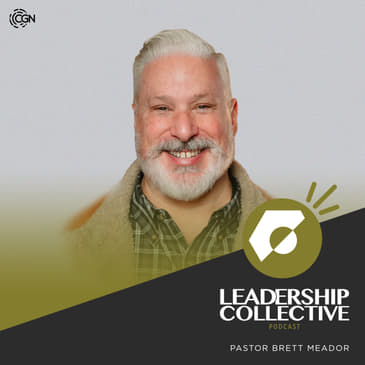
Ted Leavenworth and Rob Salvato are joined by Brett Meador (Athey Creek) to talk through the nuances and dynamics of pastoring through seasons of heightened political climates.
---
Athey Creek - atheycreek.com
[00:00:00] A win is if you win their heart over to know what is true and right. But a greater win by far is to save a soul from hell. You know, and that's where the gospel message is, is the center. It is the main thing. And, you know, you have to weigh out what the Lord's called you to do, the audience that you're talking to. And you have to ask, you know, what's, what's the greatest way to win the heart of souls to Christ?
[00:00:25] Today on the Leadership Collective, we're talking about pastoring and politics. What does that look like? Where do you find the balance? And our guest today is Pastor Brett Meador, the pastor of Athey Creek Christian Fellowship up in the Portland, Oregon area. And Brett is an amazing guy. He's doing a great job. And Ted and I are really looking forward to having this conversation as we head towards this next upcoming election.
[00:00:54] What should be our role and view and voice as pastors leading churches today? And so now here's our conversation with Pastor Brett.
[00:01:05] Well, welcome to the program, Brett.
[00:01:08] Hey, really glad to be with you guys today. Thanks for inviting me.
[00:01:11] Yeah, we appreciate you taking the time. And, you know, I was thinking, you don't, Ted doesn't really know you and your story and kind of how your church got started. I mean, God's doing an amazing thing up there at Athey Creek.
[00:01:23] But why don't you take a few minutes and just kind of take us through, you know, how you got started up there and what God's done. What's it been, 30 years now?
[00:01:32] Getting there. Yeah, going on 29 as we speak. So, yeah. You know, it really is, you know, a story like we hear of a lot of churches, you know, that start.
[00:01:42] You definitely feel like God's grace is the reason we're being blessed. But it really is. The Lord's done a great work.
[00:01:49] It was, you know, it was not that long ago, it feels like to me. You know, Rob, when you and I were younger dudes, you'd been up here.
[00:01:56] I don't know how many years you were already up in the northern Oregon.
[00:01:59] I was up about five years before you came. Yeah.
[00:02:03] I was laying the foundation and groundwork for you. Exactly.
[00:02:08] You were down there in Salem, which, man, that's a need down there. Oregon, you know, like California, Oregon, the whole West Coast, you know, that was the calling that I had.
[00:02:18] But as I was at a large church that, you know, was really blessed. We had solid Bible teaching, worship leaders, bands, music. The Lord was just moving.
[00:02:28] But meanwhile, in northern Oregon, you know, Portland area, in 1996, it was the least church city in America.
[00:02:36] Seattle and Portland were jockeying back and forth as the two least church cities or, you know, irreligious cities.
[00:02:42] And so when I was praying about moving and starting a church, I was 30 years old and I just felt that stirring.
[00:02:49] And I'd already been able to learn a lot from my pastor and from the church that I grew up in.
[00:02:54] And so kind of it was just it was time to go. Long story short, we just moved to Portland, didn't know one soul.
[00:03:02] We just found a middle school and started teaching the Bible verse by verse through the Bible.
[00:03:08] And, you know, we've never really had a big spike of growth.
[00:03:12] But from 1996, September, from that point till today, we've just constantly had a smooth, steady growth.
[00:03:20] And a lot of a lot of people coming from kind of all over the whole greater Portland area.
[00:03:24] It's not really a local community church as much, which, you know, you can't I'm not sure how to figure that out.
[00:03:30] But we have people from all over Vancouver, Salem and all over even downtown Portland.
[00:03:35] We get a lot of mixed folks from different groups.
[00:03:39] But we've grown from from zero to on a weekend.
[00:03:43] We get over 10,000 people every Sunday and Saturday, five services, sometimes six if we have a Sunday night worship.
[00:03:50] And, you know, we're just we're just hanging on for dear life.
[00:03:54] And the Lord's just been doing great stuff.
[00:03:56] That's awesome. Praise God.
[00:03:57] Now, Portland is, I mean, one of the most liberal cities in the United States today.
[00:04:03] So, you know, are you impacting that community, that liberal community?
[00:04:09] And, you know, how's that working for you guys?
[00:04:12] Yeah, I think we are not as much as I'd love.
[00:04:16] I mean, I'd love to see more of the, you know, we kind of refer to as Multnomah County, which is downtown Portland, basically.
[00:04:22] And that's the voting sect that really dictates all of the state of Oregon.
[00:04:27] And so that's where we have a huge heart to try to reach into that crowd.
[00:04:33] But, you know, our church kind of reaches across different groups.
[00:04:37] I was we were laughing in our leadership.
[00:04:39] Remember the summer of love where Portland had 120 riots in a row every night?
[00:04:44] There was a riot in Portland.
[00:04:46] But during that time, we had this strange dynamic that was happening.
[00:04:49] We had on one Sunday, this is hilarious.
[00:04:52] We had one Sunday where on my right in the sanctuary, there was a whole row of about 30 Proud Boys.
[00:04:58] And they were all wearing their jackets and the Proud Boys, you know, whatever, you know that.
[00:05:01] And then on the other side of the sanctuary, there was a whole row of Antifa.
[00:05:06] And they were dressed to the nines as Antifa.
[00:05:08] And it was very clear who they were.
[00:05:10] And our security team was like, do we need to be worried about this?
[00:05:14] You know, because the Proud Boys and Antifa were going at it in the streets in Portland.
[00:05:19] People getting shot and even killed.
[00:05:21] And so here, right in the middle of our sanctuary, we have this.
[00:05:25] But we've had both Proud Boys and Antifa accept Christ at Athey Creek.
[00:05:30] And to see their lives changed.
[00:05:32] And it's just been really cool to see how the Lord's using us in that way.
[00:05:36] And I'm not sure why.
[00:05:38] I wouldn't have anticipated our church necessarily being that church that could actually reach into those two different groups.
[00:05:45] But just by God's grace, that's kind of what we're seeing right now.
[00:05:48] I love that.
[00:05:49] I love that.
[00:05:50] And doesn't Portland still, they still do the naked bike ride?
[00:05:54] Yeah.
[00:05:54] You know when that stopped was the coronavirus.
[00:05:58] They stopped doing that, I'm pretty sure.
[00:06:00] But, you know, Portland still, you know, that's part of a funny history of Portland.
[00:06:05] You know, people don't realize why Portland.
[00:06:08] Why is Portland the most strip clubs per capita of any city?
[00:06:12] In fact, we would almost win that more strip clubs than any city in America, not even per capita, except for Houston.
[00:06:19] I guess Houston has, I don't know, 60-something strip clubs and we have like 61 or something.
[00:06:25] So we're right behind Houston, except per capita, we just blow everybody out of the water.
[00:06:29] And you think, why does Portland have that?
[00:06:32] There's an interesting story.
[00:06:33] Our state constitution back in 1859, they wrote in a thing that I don't think the early writers of that Oregon constitution knew much about this,
[00:06:45] but they left the whole freedom of expression thing wide open.
[00:06:51] So when strip clubs started in the nation, like in the 1950s, they started really growing.
[00:06:57] Portland was the cutting edge and all those Navy ships coming into the rivers there and the cargo ships.
[00:07:02] They wanted Portland to be the place where all these ship workers and longshoremen, all these people would come in and go to the strip clubs.
[00:07:11] And our culture was really set by that.
[00:07:16] So Portland's, you know, we had that whole keep Portland weird.
[00:07:19] That was our big mantra.
[00:07:20] Right.
[00:07:21] But that hasn't worked out so well.
[00:07:23] Weird became demonic, honestly.
[00:07:25] I mean, that's just the truth of the matter.
[00:07:27] So keep Portland weird really became demonic.
[00:07:29] And then after the whole riots of Antifa and the whole, you know, that whole season 2020 and forward,
[00:07:39] Portland's become sort of known as a joke around our nation.
[00:07:43] Like if you hear, you know, people on CNN or Fox News talk about Portland, everybody kind of, oh, that's a joke.
[00:07:49] You know, Portland, what a, you know, what a joke of a city.
[00:07:51] And it's really sad for us because Portland's an amazingly pretty city and it was beautiful.
[00:07:55] But if you drive downtown Portland right now, it does look a little bit Armageddon zombie.
[00:08:04] A lot of the businesses are gone now.
[00:08:06] A lot of empty.
[00:08:07] And, you know, it's just got a real dark, the fentanyl.
[00:08:10] We have law enforcement in our church who they say most of their job right now in Multnomah County is pulling dead bodies out of tents.
[00:08:19] And they do that daily.
[00:08:20] And it's very grim to hear some of their stories.
[00:08:24] My heart breaks for some of our law enforcement up here because of what's happening in Multnomah County.
[00:08:30] So that's part of the reason why we at Athey, we just want to be a church that somehow, you know,
[00:08:36] lets the light of Christ shine into Portland because it really needs it badly.
[00:08:40] Wow.
[00:08:41] All right.
[00:08:42] Wow.
[00:08:43] Well, as we record this today, we are 28 days from Election Day.
[00:08:50] And fun times.
[00:08:52] In our last episode, we addressed the subject of Christian nationalism.
[00:08:57] And we touched on the big idea of this element of Christian stewardship as it pertains to our involvement in politics.
[00:09:08] And, you know, it seems that there's a couple of extremes, right?
[00:09:11] On the one hand, you have the pastor in the church that sticks their head in the sand,
[00:09:17] won't touch the subject of politics with a 10-foot pole.
[00:09:21] And then on the other hand, you've got, hey, those congregations where politics take center stage.
[00:09:29] And it seems to be the ongoing agenda of the church.
[00:09:37] Sort of prime the pump here for our discussion today.
[00:09:40] What's the right approach to find balance?
[00:09:43] Is there such a thing as balance?
[00:09:46] How do you guys approach this?
[00:09:47] Yeah.
[00:09:49] Yeah, you know, you guys, I thought your last podcast was outstanding with Josh Belvin's.
[00:09:55] If your listeners haven't tuned into that one, they for sure should.
[00:09:59] He wrote an article, I think, on that question of stewardship versus nationalism.
[00:10:06] Outstanding stuff.
[00:10:09] You know, I think for me, and I don't know what you think about this, Rob,
[00:10:12] because you look like you had something maybe to say too.
[00:10:14] But I think for me, there's different – this might be actually contrary to what a lot of pastors think too.
[00:10:21] I don't know.
[00:10:22] But I think that different pastors are called to perhaps different kinds of ministries sometimes.
[00:10:29] And I know that there's a part of me that says, man, for sure don't stick your head in the sand and say nothing.
[00:10:37] But at the same time, I know there's certain kind of ministries that are reaching into some really dark communities that, you know,
[00:10:43] by just preaching the gospel only, that might be the very thing that little community needs more than who's going to be our next president of the United States.
[00:10:52] And it's hard for me because I feel strongly about, you know, who I think should be the next president.
[00:11:00] But I know for A.T. Greek, I think for us, I love teaching the Bible.
[00:11:05] I think teaching verse by verse is the key.
[00:11:08] And people – maybe I'm in a good spot because I have people accuse me of not dealing with politics enough.
[00:11:15] And I have people yelling at me because I'm too political.
[00:11:19] That's probably a good indication you're in the right spot.
[00:11:23] Maybe.
[00:11:23] You know, when people say, bro, you're too political, I always say, I don't talk about politics at all.
[00:11:28] Like, and they say, well, you know, yes, you do all the time.
[00:11:32] But I stick to my guns.
[00:11:34] I don't talk about politics.
[00:11:35] I teach the Bible.
[00:11:36] Right.
[00:11:37] And it just so happens that there's a lot of biblical topics that have been politicized.
[00:11:41] And I'm going to talk about those all day long because I'm teaching verse by verse.
[00:11:46] You can't get away from it.
[00:11:47] That's one of the reasons I'm – you know, I love Calvary chapels and kind of the way A.T.
[00:11:51] Creek rolls is we don't skip a verse of the Bible.
[00:11:54] So I think we're going to create good voters even if we don't talk a ton about the elections.
[00:12:01] I think we're going to create good voters and people that care about voting if we just teach verse by verse.
[00:12:07] So that's kind of my main focus, teach the Bible.
[00:12:09] And then, you know, the last several weeks I've been reminding everybody to vote.
[00:12:14] I remind them, man, we have this great opportunity to nudge our community in the right direction and just to vote biblically.
[00:12:22] I don't even need to tell who they should vote for in my opinion.
[00:12:25] I shouldn't name names really.
[00:12:26] I don't have to.
[00:12:27] If you know your Bible, you know, the big issues that we're talking about, I don't know about you guys,
[00:12:33] but it's, you know, probably number one is abortion.
[00:12:38] And number two for me is Israel, our position on Israel.
[00:12:42] Maybe number three, especially for religious liberty.
[00:12:46] These are things that I think are important issues of the day, and they come up all the time when we read through the Bible.
[00:12:53] I don't know.
[00:12:53] What do you guys think about that?
[00:12:55] Yeah, well, you know, I know as a pastor that, I mean, politics is not the answer.
[00:13:02] You know, whoever's in the White House isn't going to fix what's wrong in our country.
[00:13:08] They might help.
[00:13:09] They might be able to, you know, make a little bit of a dent in the problem and fixing the problem.
[00:13:15] But, you know, our country needs Jesus.
[00:13:18] Our country needs a revival.
[00:13:20] And so, you know, like you, I teach through verse by verse through the Bible, and my focus is primarily on, you know, who's Jesus?
[00:13:30] How does the Bible relate to him?
[00:13:32] How does this passage relate to him?
[00:13:34] And what does that mean, you know, for us?
[00:13:36] But like you said, Brett, you know, when you come to those passages and things in the Bible that address some of these issues,
[00:13:43] I don't shy away from it at all.
[00:13:47] You know, I was talking to a friend of mine.
[00:13:49] Most of you would probably know his name is Rob McCoy.
[00:13:52] He pastors a pretty popular church in California.
[00:13:56] And people definitely would say that Rob is a, you know, very politically minded pastor.
[00:14:02] But we were talking once, and he said, you know, he goes, I don't think there's the answer is on the federal level at all.
[00:14:11] He says, I don't think, you know, who gets in the White House is really going to change much of anything.
[00:14:15] So his focus is really to focus on the city and the state level, city first.
[00:14:23] And, you know, who gets on school boards and who becomes, you know, the mayor and who's on city council and that sort of thing.
[00:14:30] And I really agree.
[00:14:32] I think he's really wise on that.
[00:14:34] And so, you know, our approach has been to really try to champion some of those things on the local level.
[00:14:42] And if that means bringing, you know, somebody who's running for school board up on a Sunday and saying, hey, I want to pray for, you know, she loves the Lord.
[00:14:52] She's great.
[00:14:52] She's running.
[00:14:53] You know, we want to pray for her.
[00:14:55] You know, that sort of thing I think is really, really good.
[00:15:00] But definitely don't shy away from it.
[00:15:03] I agree.
[00:15:03] I don't think that we should be sticking our heads in the sand and just hoping, you know, like this doesn't mean anything.
[00:15:10] It means something, but it doesn't mean everything.
[00:15:12] Yeah.
[00:15:13] What you're articulating is that famous quote that all politics is local, right?
[00:15:18] So, and I agree with that statement in, you know, as far as politics go.
[00:15:28] And I also agree very strongly with what you've said, Brett, that, you know, our focus as pastors is to rightly divide the word of God.
[00:15:40] And as we equip our people, we're equipping them for the work of ministry and all of life is ministry.
[00:15:49] How we live out our faith is reflected in the ballot box.
[00:15:53] It's reflected in our home.
[00:15:55] It's reflected in our neighborhoods and communities and so on.
[00:15:58] And so that's critically important that we are equipping our people to engage in the exercise of their faith in every quarter.
[00:16:11] And that includes in the political realm in stewardship as Joshua Evans was talking about last episode.
[00:16:19] Yeah.
[00:16:20] I mean, I think that's really the key and getting it's part of it.
[00:16:24] To me, it's a mindset and it's getting people to realize, you know, what it means to live out being a follower of Jesus in every area of their life, including the way that they vote.
[00:16:36] Yeah.
[00:16:37] You know, and I have found, I will say this, I used to say, like you're saying, Brett, that I want to encourage you to vote biblically.
[00:16:48] And I would kind of leave it at that.
[00:16:50] Now, today, I'm a little bit more maybe directive in what that looks like.
[00:16:59] Like, okay, what does God champion and what should we be championing?
[00:17:02] You know, so I used to just say, you know, hey, it's important that you vote biblically.
[00:17:07] And I realize a lot of people are biblically illiterate.
[00:17:10] True.
[00:17:11] And so I feel like I need to kind of spell it out a little bit for them without saying you should vote for this, but to say, you know, hey, God's all about life.
[00:17:19] And he tells us that life begins in the womb.
[00:17:22] And so, you know, that should matter to us if we're going to be, you know, Christ followers.
[00:17:28] Now, Brett, you are sort of famous for these prophecy updates that you do once a month.
[00:17:37] And I've listened to many of them.
[00:17:40] You do this on Friday nights, right?
[00:17:43] Yeah.
[00:17:44] Once the first Friday of each month, we do a little prophecy update.
[00:17:47] Yeah.
[00:17:48] And these are on YouTube.
[00:17:50] Huge following.
[00:17:51] Huge following on YouTube.
[00:17:54] Really, really great, great stuff.
[00:17:57] And I'll just say, as a guy who has done prophecy updates myself before, that they take a lot of work.
[00:18:05] So the fact that you're doing those once a month just blows my mind because I know how much work goes into them and how much you stay up on all of that.
[00:18:15] But, you know, do the monthly prophecy updates give you the opportunity to speak kind of regularly on these sort of issues as you're dealing with, you know, what the Bible is saying about, you know, what's going on in the world?
[00:18:30] Yeah, that's a great question.
[00:18:31] You know, I get both encouragement from people, but also, you know, because of our prophecy update on the, you know, different platforms, we have people that are watching that but not watching our Through the Bible series.
[00:18:45] So I get these criticisms, all you ever talk about is prophecy update.
[00:18:48] And I say, well, for every 28 services I did this month, I did one prophecy update.
[00:18:53] So I try to get them squared away on that.
[00:18:55] But, you know, when you're going verse by verse through the Bible, I do love the confines of that.
[00:19:01] I love how the frequency of topics come up as the Bible unfolds.
[00:19:06] And I think there's great safety in that.
[00:19:07] But the prophecy update, I felt like doing that for a couple of reasons.
[00:19:11] I started doing the once a month.
[00:19:13] I do once a year before that, or if there were events that kind of were big that came up, I'd do a special edition.
[00:19:20] But now just a once a month frequency because during the coronavirus, especially, you know, with all the issues, wokeism and all the questions,
[00:19:30] I felt like I sensed an uneasiness and even a great fear that was happening within the congregation.
[00:19:37] And I just believe we're not supposed to be given over to a spirit of fear, but of, you know, power, love, and a sound mind.
[00:19:42] And I felt like, wow, all these things that people are afraid about, you know, the Bible really gives us all the answers that we need.
[00:19:48] And we know the end of the story.
[00:19:50] And so Bible prophecy to me is a great way.
[00:19:52] Some people say, well, it makes me nervous, the end times and the death and destruction.
[00:19:56] And I always like to say, I don't talk about doom and gloom.
[00:20:01] I talk about boom and zoom, the rapture of the church and the second coming of Christ and the great hope that we have.
[00:20:07] And we know the end of the story.
[00:20:09] So my goal was to say, let's bring comfort to the people that are freaked out about what's going on with the world.
[00:20:15] And, you know, I try not to be, you know, sometimes I think some of these prophecy updates can get a little sensational in my opinion and maybe get a little too predictive naming dates and times and people as antichrist.
[00:20:27] I want to be sort of the antithesis of that.
[00:20:30] I want to try to be that voice of reason.
[00:20:33] But at the same time, there's plenty of amazing things to talk about.
[00:20:36] But so the prophecy update gives me a chance to just talk about the issues that I think are causing perhaps concern or even fear within the church.
[00:20:46] I want to be bringing sort of a voice of calm and just that, you know, putting that peace that only comes from Christ, the peace that passes understanding.
[00:20:53] That's the goal of those.
[00:20:55] So it's actually, for me, been a good chance to address some of those topics.
[00:21:00] And I think, yeah, I think all the woke issues, all the, you know, the world wars that are going along right now and talking about Israel, the epicenter of all Bible prophecy.
[00:21:10] There's just plenty to cover.
[00:21:12] Never a dull moment.
[00:21:14] Yeah.
[00:21:15] We all pastor in different locations.
[00:21:18] Rob, you and I geographically, we've talked before.
[00:21:20] We're fairly close here in the Bible Belt of Southern California.
[00:21:24] But one thing we all have in common is that, you know, the joke is when you get two Christians in a room, you get three opinions.
[00:21:34] But we offend people when we talk, whether, you know, hopefully not intentionally.
[00:21:39] But people have contrary opinions.
[00:21:42] We live in a world where people don't handle contrary opinions as well as we once did.
[00:21:49] But how do you guys go about speaking on these critical issues, especially the sensitive subject of politics?
[00:22:00] How do you speak on these issues without offending a person who might be there who has a different point of view?
[00:22:07] Yeah, that's a great question.
[00:22:09] And I will admittedly say that I did not do a good job of that years ago.
[00:22:19] I think I really didn't think so much about the people who were there that maybe didn't think or hold the same view and maybe didn't even consider the fact that there were people there maybe that weren't saved or people there that were saved.
[00:22:39] They were just so new in their faith that they hadn't really defined some of these things that the Bible said.
[00:22:45] And so, you know, I didn't have a great sensitivity to that in my earlier days.
[00:22:55] And I think hopefully I've matured and I've come to a place where I just think through a lot more.
[00:23:01] I might run by even what I want to say by some people on our team that I feel like have a really good filter and say, I'm thinking of addressing this in this way.
[00:23:13] What do you think?
[00:23:14] And they might, you know, help me.
[00:23:16] So, but you still, you know, run the risk of offending.
[00:23:21] I mean, the truth offends people.
[00:23:23] But I think it's the way, you know.
[00:23:25] Now, Brett has an advantage from us because he admittedly says he looks like Santa Claus.
[00:23:32] Exactly.
[00:23:33] I know our listeners can't see him, but just Google him.
[00:23:36] And he looks like Santa Claus.
[00:23:37] He's got a great smile.
[00:23:39] And you kind of say things sometimes, Brett, with sort of a little chuckle.
[00:23:44] You'll say something and like, you got this chuckle.
[00:23:48] And I go, that was heavy what he just said, but he like sort of made a joke about it.
[00:23:56] Yeah, it's funny you should say that.
[00:23:57] I think I used to teach like that and I didn't know that I was doing that.
[00:24:02] I tend to be a pretty happy, jolly fellow.
[00:24:06] So I can talk about things and I still am just a happy guy, you know.
[00:24:09] And I think that helps, you know, make the medicine go down a little bit is joy and laughter.
[00:24:16] And I do laugh through a lot of things.
[00:24:18] But, you know, I agree with you, Rob.
[00:24:20] I do sometimes regret sometimes like, boy, I don't know that I represented that issue with the right heart or spirit.
[00:24:28] And, you know, I do.
[00:24:29] My wife knows I go home and beat myself up a little bit.
[00:24:32] It's too harsh, you know.
[00:24:33] Yeah.
[00:24:33] But I do believe there's kind of a pendulum swing that I think we have to be at least cognizant of.
[00:24:41] And that is, you know, when Jesus talked about it in John 15, he said this.
[00:24:48] And it really struck me last time I was reading this.
[00:24:50] It says in John 15, 18, if the world hates you, you know that it hated me before it hated you.
[00:24:58] If you're of the world, the world would love his own.
[00:25:00] But because you're not of the world, but I have chosen you out of the world.
[00:25:05] Therefore, the world hates you.
[00:25:07] You know, like to me, one of the mistakes pastors have made is, do you guys remember like the big seeker friendly movement back in the 90s?
[00:25:15] And, you know, and the whole thing was, man, we need to really reach the unsaved by making everything really friendly.
[00:25:21] And I think that translated over time into whatever you do, don't say anything offensive.
[00:25:26] Make the coffee shop really nice and talk really soft about everything.
[00:25:30] We went in a really bad direction there.
[00:25:33] And today there's a lot of remnants, I think, of that where pastors are afraid to talk about really important issues like, you know, LGBTQ or abortion or any of these things.
[00:25:44] They'll run for the opposite direction.
[00:25:46] And meanwhile, their congregations are wondering, what do we do and how are we supposed to think biblically about these topics?
[00:25:52] And if a pastor is not dealing with that, I think they're going to have people really frustrated.
[00:25:57] And they might even go find a church that's going to call it like it is and, you know, find a pastor that's not going to be afraid of those issues.
[00:26:04] So the one side is being too weak and just trying to pad everything you're saying.
[00:26:09] And the other side, you know, there's some people that quote John 15 about, you know, the world will hate you.
[00:26:15] And they think they're just being persecuted.
[00:26:17] But I always say, no, you were just being weird.
[00:26:19] Yeah.
[00:26:20] You are a weirdo.
[00:26:23] So you can kind of go either direction probably way too far.
[00:26:27] But I think when it comes to just speaking the gospel, the message of Christ, teaching the Bible, I've just said, you know what?
[00:26:36] Some people are going to really hate what I'm saying.
[00:26:38] Yeah.
[00:26:39] But I'm going to do my best to say it in the most loving—you know, I love how they marveled at Jesus' gracious words.
[00:26:46] Yeah.
[00:26:46] But at the same time, you know, like I hear pastors say, I'm going to only talk about what I'm for.
[00:26:52] Let's church talk about what we're for.
[00:26:53] But if you read the ministry of Jesus, he talked about a bunch of stuff he was really against.
[00:26:59] Like he hammered away at the things he was against.
[00:27:01] Yeah.
[00:27:02] And yet they still said that they marveled at his gracious words.
[00:27:06] And so I think that's the goal for me is try to find that sweet spot where we're going to just call it like it is biblically.
[00:27:13] Right.
[00:27:13] But say it in a loving way and not just unnecessarily make people mad.
[00:27:18] But no, we have people up here in our Portland services that march angrily out of the services.
[00:27:24] And that happens often too.
[00:27:26] And it doesn't make me happy.
[00:27:28] But again, that's probably a sign that you're doing something right maybe.
[00:27:32] What do you guys think?
[00:27:32] Well, you know, I think it's interesting.
[00:27:34] I think that we can come down so hard on things.
[00:27:39] And I agree with what you're saying.
[00:27:40] And the balance is really what we're hoping to achieve.
[00:27:43] But we can come down so hard on things and sort of in a harsh way.
[00:27:50] And there are people who are riled up in our churches, who are agitated.
[00:27:55] And we're just like pouring gasoline on their fire.
[00:27:58] And they're like, yeah.
[00:27:59] And they want to get their friends that feel that way, that hate this group and hate that group and just want to see God judge the world.
[00:28:08] And so when I see pastors kind of harping in that type of way, and they draw a lot of just really, really agitated people to their churches.
[00:28:21] And I definitely don't want to do that.
[00:28:23] And you're right.
[00:28:24] Jesus did address hard issues.
[00:28:28] But the thing, and this is where I'm trying to grow in this way in my own ministry, is that Jesus really understood the suffering and the confusion.
[00:28:44] You know, he looked at the multitude and saw them, had compassion on them because he saw them as being like sheep without a shepherd.
[00:28:52] Like he had this sensitivity and this understanding to the waywardness and the struggle that people were going through.
[00:29:00] And I think that's one of the things that, you know, I try to achieve is when I'm addressing something to also come across in a way where I understand that this is a struggle for some people.
[00:29:16] And, you know, I was talking to a young man one time who was same-sex attracted, and we were having just a conversation in the office.
[00:29:26] And, you know, he was sharing his heart with me and just his struggle and kind of how this all, you know, came about in his story.
[00:29:34] And I just listened, and I just ended up, I was really compassionate just speaking with him.
[00:29:39] And he said this to me, he said, I've never had a Calvary Chapel pastor speak to me the way that you're speaking to me.
[00:29:47] He meant it in a positive way, like not condemning, you know, trying to lean in to understand, you know, his struggle and kind of how he got there.
[00:29:58] And, you know, and his desire, though, his desire to remain celibate, but, you know, the struggle of thinking I'm going to, my whole life, I'm never going to have a family.
[00:30:08] I'm never going to get married, you know, that type of thing.
[00:30:12] And, but, you know, so I try to, whenever possible, it's easier in a conversation like that than it is from the pulpit.
[00:30:21] But to just come across in a way where I'm trying to show some empathy that, hey, I understand the struggle that is there that people have in some of these things and that they're wrestling with and kind of trying to bring about the heart of, you know, Jesus on those things.
[00:30:38] And I've had people in my church get upset with me for that because, you know, they're agitated about it and they wish I was too.
[00:30:48] And it's not that I'm, it doesn't break my heart, but it does break my heart, but it doesn't necessarily make me angry, if that makes sense.
[00:30:58] I love that.
[00:30:58] And the key word there is compassion.
[00:31:01] I think that if you don't hear that in a pastor's heart and he's just preaching away, I think that that you kind of, you're only exposing maybe something that's lacking.
[00:31:11] I love, you know, when Paul was talking to the elders at Ephesus there in Acts chapter 20, I love, you know, because in the same chapter he's talking about how we're supposed to be talking about, you know, the wolves that want to chomp down on the sheep.
[00:31:23] I mean, that's, that's some hardcore pastoring right there.
[00:31:26] But he starts the whole thing off saying, I came serving the Lord with all humility of mind, with many tears and temptations.
[00:31:34] You know, and the idea of the tears, it makes me realize Paul must have had a real compassion himself, like Jesus, for the people that he was talking to.
[00:31:42] And God, you know, save us from a tearless ministry.
[00:31:47] If we're just giving our, you know, I heard, I think it was Chuck Smith who said, you know, a lot of theologians are like porcupines, many fine points, but not very huggable.
[00:31:56] Yeah.
[00:31:57] Something like that.
[00:31:58] Hard to get close to.
[00:31:59] Hard to get close to.
[00:32:00] Man, there's a lot of pastors that have many fine points, but if that compassion and love is not there, I think we're, we're like the big clanging gong of 1 Corinthians 13, you know.
[00:32:11] I remember that caution that, you know, pastor once gave that a, that he said he'd, he'd learned to be suspicious of those things that felt really good saying that when he felt like, oh man, I just, I can't wait to say it.
[00:32:27] It makes me feel so good.
[00:32:29] And he said, I, I grew suspicious of those things.
[00:32:33] And, and I think, you know, you said something earlier, Brett, about how that approaching these, these different subjects and maybe a political subject or what have you, that, that it's hard because you have strong feelings.
[00:32:49] Right.
[00:32:50] And so you, you have to think through that.
[00:32:52] And I think the Lord Jesus, he's, you know, the blessed are the peacemakers for they shall be called sons of God.
[00:32:58] But you, but both of you guys make the point that, that there is a balance.
[00:33:02] I think of Hebrews 12, 14, that exhorts us to strive for peace with everyone.
[00:33:07] But it also makes a point of saying, we're also to strive for holiness without which nobody will see God.
[00:33:14] And I, and I, so there is that exhortation that, that we ourselves need to strive to be those people that are seeking after the Lord.
[00:33:24] And to have that, to have our, our holy relationship with him observable so that we can function as peacemakers.
[00:33:33] So that doesn't mean to be a peacemaker.
[00:33:35] I'm just burying everything under the rug and giving a seeker sensitive message, but rather I'm, I'm saying the hard things, but, but I'm, but I am speaking the truth in love in a way that, that truly is searching for striving peace.
[00:33:51] I have a question for you guys on that.
[00:33:53] Do you guys think, cause I really have wondered this.
[00:33:55] Do you think that, you know, if we were to say there was a perfect pastor out there who is a balanced in love, but also in speaking the truth.
[00:34:05] It seems to me that God has raised up different men with different personalities.
[00:34:11] And some guys are a little more of the sharp and kind of painful, a little more punchy in the face kind of pastor.
[00:34:17] But I get a sense that the Lord is using him in his area of gifting in a way.
[00:34:23] And then there's the other pastors that just, you know, really are mostly about the gospel and maybe won't touch some of the, the more difficult subjects.
[00:34:31] Maybe has, as the Lord wired that guy to be just truly, you know, Paul even said, I've determined to know nothing save, you know, Jesus Christ and him crucified.
[00:34:39] There's, you can almost make an argument, you know, there's, there's the Barnabases who's a son of consolation.
[00:34:44] And then there's the Paul.
[00:34:46] What do you guys think?
[00:34:47] Is there, is there a bandwidth that's, that different pastors, we can actually embrace them, even though they may not be as harsh or maybe not as soft and compassionate, but they're somewhere on a healthy spectrum.
[00:34:59] What do you guys think?
[00:35:00] I think what you're saying is an observable truth because there are guys that we can think of that fit in those different categories and God is blessing their ministries in, in their different capacities.
[00:35:12] So I would say that, that, yeah, observationally, I see that as well.
[00:35:19] You know, we, we could sit back and say, okay, well, but should it be that way?
[00:35:24] Is this a situation where, yes, he's strong in this area, but he should be strong in that area?
[00:35:29] That's not for us to say, you know, who are you to judge another man's servant, you know?
[00:35:33] So I think it's an observable truth.
[00:35:36] What do you think, Ron?
[00:35:36] Yeah, I mean, I think we see that in the disciples that Jesus chose.
[00:35:40] I mean, those guys were all over the map, you know, in the way that it seems like they were wired and, and the way they approach things.
[00:35:50] And even the ones that wrote, you know, you have James and John who, you know, want to call down fire from heaven and completely toast the city.
[00:35:59] You know, and, but Jesus did say, you guys do not know what spirit you are of.
[00:36:07] And it seems like John kind of toned down a little bit after a while.
[00:36:13] So I, I, I would say it this way, not contradicting what you're saying, Ted, but we can do that on this program.
[00:36:21] So, but, but maybe just saying a little differently that I think the tone and the, you know, way that somebody comes across is going to be different for the way that they are wired and, and whatnot.
[00:36:38] But I don't know that, that I, I mean, I would say this, I totally agree with what you're saying that it seems like there are certain, you know, guys that have a certain persona and they're built that way.
[00:36:49] And they're, you know, really good challengers and exhorters, other guys that are really great evangelists.
[00:36:56] And, you know, you have other guys that who are just amazing Bible expositors and, and, you know, but, but I would say this, I think that,
[00:37:07] that although the tone might be different and the approach might be different, I don't think that we can just ignore those, some of these subjects, if we're going to rightly divide the word of truth.
[00:37:21] So I feel like, you know, one guy might say it loud and, and bold and, and sort of in your face.
[00:37:30] And yeah, you know, that, that guy maybe has what I would call maybe a more prophetic kind of a prophet, you know, type of ministry.
[00:37:40] And then you might have somebody else who says the same thing and it, and it's like maple syrup on your pancakes, you know, it just comes across really like tasty and sweet and logical and like, oh yeah, I get that.
[00:37:53] And, and you walk away going like, oh, that really made a lot of sense, but you don't feel like, you know, you were super convicted.
[00:38:01] And so, yeah, I think that there, that's the diversity of the body of Christ and, you know, none of us equally or totally, I'll say none of us totally represents Jesus.
[00:38:14] I think it's collectively we do.
[00:38:16] I mean, Jesus did go into the temple twice and, you know, formed a whip and turned over tables and ran out the, you know, I call it the Rambo Jesus.
[00:38:25] And, you know, we, we, we don't like to talk about that one.
[00:38:28] We love to talk about the,
[00:38:30] I know some guys do.
[00:38:32] Jesus with his, you know, with the children on his lap and, you know, that type of thing.
[00:38:37] But, you know, there's a Jesus who got in the face of the religious leaders, but to me, it's the hypocrites and those who were oppressing people were the ones that Jesus came across the most.
[00:38:51] And if we think about it, that is happening in our culture.
[00:38:54] You know, that does happen in the world of politics.
[00:38:57] There is, you know, those who are oppressing people.
[00:39:01] And so, you know, I think there is a place, however the Lord has wired you to bring that up.
[00:39:09] But, you know, I wanted to ask something.
[00:39:11] I think that was a great question.
[00:39:12] But one thing I wanted to ask you guys is that I think one of the things that a lot of people in our churches forget, especially those who have been with the Lord a long time, is they forget what it was like when they were not saved.
[00:39:29] And they don't remember how lost they were.
[00:39:32] They don't remember, you know.
[00:39:34] So they're getting mad and angry and upset at people who are doing the same things that they were doing, you know, or similar things that they were doing, you know, back when they were, you know, not saved.
[00:39:46] And so I'm constantly trying to remind our body of these three things, you know, our calling to be salt and what that means.
[00:39:55] You know, the only way salt's effective is it has to permeate, it has to touch, to be light, you know, that we have to be seen.
[00:40:03] We can't just isolate ourselves.
[00:40:05] And that we're called to be ambassadors of Christ, that we're representing, you know, Jesus in this country where we're living for that country that we're waiting for, you know, citizens of heaven.
[00:40:18] But what does that mean and what does that look like for us to be ambassadors of Jesus on, you know, this earth?
[00:40:28] And so, you know, I would hope the ministry would reflect that balance, if that makes sense.
[00:40:40] Yeah, boy, it's funny.
[00:40:41] To me, I'd probably get into trouble with this because I really would love to be a great ambassador for Christ.
[00:40:48] But, you know, then you look at yourself and you realize, oh, man, Lord, help me, you know, with that.
[00:40:54] But I also see the need, kind of what you're saying there, Rob.
[00:40:57] Isn't there a giant need in the pulpits, you know, for that more of an ambassadorship?
[00:41:06] I see a lot of, you know, ministries.
[00:41:08] And I'm not the guy that wants to be calling out people or saying, hey, you need to, you know, shape up in ministry and represent Christ.
[00:41:17] But I see sort of a problem in the greater church.
[00:41:22] Wouldn't you guys agree that we're not really representing Christ?
[00:41:24] We're representing any number of other things.
[00:41:27] Right.
[00:41:28] What do you guys think?
[00:41:29] I think that's a great question.
[00:41:31] And I, but I still wonder, like, what do we do about the problem of misrepresentation of Christ?
[00:41:37] Right.
[00:41:37] Well, I mean, the Apostle John, I think about 1 John 1.8.
[00:41:41] If we say we have no sin, we deceive ourselves and the truth is not in us.
[00:41:45] Yeah.
[00:41:46] And I'm putting together this conversation, you know, Rob, you were talking about the guys who forget who they used to be.
[00:41:52] Mm-hmm.
[00:41:52] Mm-hmm.
[00:41:53] And I would add to that the guys who forget that maybe they're still struggling with the same sins, but they've just sort of, they have a more sanitized version.
[00:42:04] They just hide it better because of the, you know, that we, you know, yeah, I'm cleaned up and I'm better, but I'm still the same sinner that I'm dealing with.
[00:42:12] You talking about this, Brent, where you just, oh, Lord, have mercy on me.
[00:42:16] I think we're on the right path when we find ourselves starting to think in a certain legalistic way about other people or a critical way about other people that, no, it's a much healthier path to start with introspection and saying how, what does my walk look like?
[00:42:41] And then that puts me on that better pathway to being more pleasing to God, I think, in processing that.
[00:42:55] Yeah.
[00:42:55] And, you know, on the whole idea of misrepresentation or, you know, calling out other pastors who don't share their convictions, you know, we see that type of thing happening.
[00:43:08] And I think we just have to be really, really careful.
[00:43:11] You know, I think there was a time in our Calvary Chapel movement where, you know, any church that didn't teach through the Bible, even though that's, you know, that's our tribe, that's our background.
[00:43:23] We do that because we, you know, we do think it's the best way, you know, to take people through the Bible is chapter by chapter, verse by verse.
[00:43:31] But we would call out or, you know, put down people that taught topically and didn't do that.
[00:43:37] And I just think that is so prideful on our part because there are many, many ministries that, you know, teach and do that way that are doing wonderful job and producing amazing, you know, Christians.
[00:43:52] Yeah.
[00:43:54] And I think even in this realm, like you're saying, some guys have maybe more of a calling and a bent and they feel a passion to, you know, be more politically oriented and outspoken and other guys don't.
[00:44:09] And, you know, like you said, you know, you know, who am I to judge another man's servant?
[00:44:15] It's like, you know, that guy, he's dealing with his convictions.
[00:44:19] And I think another thing that really plays into this as well that we often don't think about, and this is one of the reasons I was really excited about having you on the show, Brad,
[00:44:29] is, you know, I think it's easier to be on one side or the other on the political spectrum depending upon, you know, where you're located.
[00:44:44] So if you are located in a place that is predominantly Republican oriented and you are charging and, you know, that flag all the time, it's easy.
[00:44:56] You know, you're preaching to the choir, you know, you're preaching to people that are like, yeah, you know, that's where I'm at.
[00:45:01] And, but, you know, you take other guys that are pastoring, like in a place like where you are, that is extremely liberal and you're trying to reach people for Jesus.
[00:45:13] You know, I could see why you want to focus on the Bible.
[00:45:15] You want to focus on Jesus and you're not afraid to bring these things up, but it's not your main message because you're really aiming at the heart.
[00:45:24] You want them to follow Jesus and not a party.
[00:45:27] Yeah.
[00:45:28] What's a win?
[00:45:29] You know, I think there is a win if a person who's a very progressive, liberal, you know, pro, all these things that the Bible's very clear on against, you know, then a win is if you win their heart over to know what is true and right.
[00:45:44] But a greater win by far is to save a soul from hell.
[00:45:48] You know, and that's where the gospel message is, is the center.
[00:45:52] It is the main thing.
[00:45:53] And, you know, you have to weigh out what the Lord's called you to do, the audience that you're talking to.
[00:45:58] And you have to ask, you know, what's, what's the greatest way to win the heart of souls to Christ?
[00:46:04] And I, I don't think you have to check your, your, for lack of a better word, politics at the door.
[00:46:11] Yeah.
[00:46:12] You don't have to do that, but I think you should bring it up like we've talked about when it's in the Bible, talk about it.
[00:46:18] But, but I think at the same time, the goal is to say saved souls, you know, and that's, that's what I'm praying for.
[00:46:26] Because I'm convinced if a person accepts Christ and loves Jesus and saved by his grace through faith, I'm convinced they're going to get to a place where they'll understand all the rest of it, you know.
[00:46:36] So, when it comes to other pastors, you know, as far as calling out pastors, we have this, this, you know, thing up here in Portland, there's these guys calling out some of us.
[00:46:48] Daniel Fusco and I get called out by these guys, but they're this kind of a small, super hyper Calvinist kind of church, you know.
[00:46:56] But, but, you know, they always talk about how, you know, Daniel or I have no business being in the pulpit kind of thing.
[00:47:04] And it is just kind of funny, but I, it doesn't hurt.
[00:47:08] I kind of hurt for them though a little bit because here we are in Portland where there's pastors saying that Jesus was transgender and that the Bible's this and that.
[00:47:18] You know, these guys, if you want to call out pastors, there's a lot of, you know, essential doctrine issues that are fighting words.
[00:47:25] And I say there are some pastors that need to be called out, you know, especially in this Portland area.
[00:47:30] And there's more, you know, there's a lot of, when you look at the churches in Portland, when coronavirus, it's probably like this in California, but more churches have shut down in Portland in the last five years.
[00:47:43] And even what were once good, solid Bible teaching churches, they're shut down.
[00:47:48] They haven't opened their doors since the COVID thing.
[00:47:51] And so there's this huge hole, in my opinion, here in the Portland area.
[00:47:56] And so, and meanwhile, there's these other churches flourishing that I think we do need to be honest and call those things out.
[00:48:04] But at the same time, in the same way that Jesus would have, you know, with the religious season of his day, we do have that model for us.
[00:48:11] So there's a bit of a safety net there.
[00:48:12] Yeah, I agree with you wholeheartedly.
[00:48:14] We have a guy in town who, you know, recently his message was that, you know, he's going to rebuke anybody who teaches children that Jesus died for their sins.
[00:48:26] And rather, he's going to counter that with a message that Jesus died for the pleasure of making you happy.
[00:48:34] And we call that out, right?
[00:48:36] Heresy.
[00:48:37] Right?
[00:48:37] We call out heresy.
[00:48:39] We name names.
[00:48:41] But yes, but for those who are maybe emphasizing, you know, more of whatever it is, a method of ministry that we disagree with, we have to be careful to distinguish between the message and the methods.
[00:48:56] And, you know, Jesus in John 1.14 tells us there that he was full of grace and truth.
[00:49:05] Yeah, there's a balance there.
[00:49:07] 1 John 3.18, we are to love in grace and in truth.
[00:49:11] And so there's a measure of grace that we extend to people and to the degree that we're just disagreeing about non-essential doctrines, we can extend grace.
[00:49:22] And, you know, I've told this story before, but it was a profound experience for me.
[00:49:27] If we're honest, all of us as pastors, we have occasion to look at somebody else's ministry and we have thoughts and opinions about it.
[00:49:36] And, you know, we don't always agree, right?
[00:49:40] And I found myself being critical of somebody and, you know, just honest to the Lord here.
[00:49:49] It wasn't me being – I wasn't gossiping about them to somebody else, but I was thinking it in my mind.
[00:49:55] And the Holy Spirit spoke to my heart and he said – and it was an issue of how they were struggling in ministry.
[00:50:04] And I was thinking, well, if they just do this, if they just do this, they made this boneheaded decision, and what do they expect?
[00:50:10] This was my attitude.
[00:50:11] And the Holy Spirit spoke to me and he said, do you want me to do that with you in your church?
[00:50:16] And I was like, no, sir, I don't.
[00:50:18] And I want to stop, you know.
[00:50:20] Just pulled me up short.
[00:50:22] Yeah.
[00:50:23] And I think part of that, too, is context is everything.
[00:50:27] And, you know, we have no idea sometimes what's going on behind the scenes in somebody's life.
[00:50:34] And so –
[00:50:35] And what God's called them to do, right?
[00:50:36] Yeah, yeah.
[00:50:37] And what's going on in their church and what they're dealing with is – yeah, it's – I have a question for you guys about this, though.
[00:50:46] Would you – how would you feel – or I'll put it this way.
[00:50:49] When there's certain ballot measures that are coming up that are just so anti what the Bible says,
[00:50:59] would that be something that you would address, you know, from the pulpit of just saying, hey, this is coming up and this is why it's wrong?
[00:51:06] And I would definitely encourage you to, you know, not vote for this.
[00:51:11] I mean, how would you – do you guys ever address certain ballot measures?
[00:51:16] I have in the past.
[00:51:17] I don't have a problem doing that.
[00:51:19] I don't have a problem saying, hey, this is problematic and here's why.
[00:51:24] Yeah, I've done that before.
[00:51:26] What about you, Brett?
[00:51:26] Yeah, I have, too.
[00:51:28] But I use that very sparingly.
[00:51:30] It's like I want to keep my powder dry on something that's big, you know.
[00:51:35] And because I want – when I use that play, I want it to be something, you know, that's giant.
[00:51:40] Because there's about 100 ballot measures I feel like I could address, you know what I mean?
[00:51:45] There's so many things.
[00:51:46] But, you know, when I start feeling that need is when I feel like there's big deception going on.
[00:51:56] Like where people really don't understand what's really happening.
[00:51:59] Have you guys noticed like some of these, you know, even the voters' guides that they give you in the mail, you know, they try to posture it.
[00:52:05] And if you just read the voters' guide, you don't even know what they're talking about.
[00:52:10] But – and they can make their measure sound really great.
[00:52:13] Oh, yeah.
[00:52:14] If you're not a careful student of what's really under the – you know, that's where I feel like as pastors, you know, it's like the scriptures you guys just shared.
[00:52:23] But like I love, you know, 1 Corinthians 13, you know, when we're talking about love, it says, you know, rejoice – you know, love, charity rejoices not in in iniquity but rejoices in truth.
[00:52:33] And I feel like we need to rejoice in the truth and not have any rejoicing in iniquity.
[00:52:39] So if there's a measure that's coming out, you know, a lot of times these like abortion initiatives and discussions, you know, the term of pregnancy and, you know, they can frame them so many different ways.
[00:52:50] But I feel like the congregation, we need to just speak the truth and say, here's what this really means.
[00:52:56] Yeah.
[00:52:56] And we should be really aware of what's going on.
[00:52:58] I feel like – I feel like that's partially what a job of a pastor is, is to bring clarity even biblically to what's out there.
[00:53:06] And I think that the congregations, if I'm not mistaken, I think there's a lot of people really starving for that information.
[00:53:13] I'm not sure your average congregant's going to spend as much time as we pastors are going to spend discerning, you know, what are they really saying here?
[00:53:21] So I think it's a good rule for us to be ready to bring that out when we really need to.
[00:53:25] And so what I'm hearing you say, Brett, is we definitely should not stick our head in the sand, that we need to be reading up and studying and knowing what's going on, even if we may not, you know, bring it up in a message.
[00:53:43] But we're ready to answer a question that somebody would have for us.
[00:53:47] Hey, as we wrap this up today, I mean, we know that politics are not the answer for our country, but they do play a part in the direction that our country goes.
[00:53:58] So I'd love to just get, you know, both of your guys' thoughts on, you know, why you think this upcoming election is so important.
[00:54:08] Who wants to go first?
[00:54:11] I'll go first.
[00:54:12] You know, I do feel like this is an important election, but I always tell our congregation, don't forget, you know, no matter who we elect, we're electing and we're voting for a sinner.
[00:54:24] So let's not be delusional.
[00:54:26] We're all sinners.
[00:54:28] But at the same time, we're not electing pastors or theologians because then we really, we shouldn't vote at all if that were what we were looking for.
[00:54:36] But I do think that you have to kind of weigh in, you know, what's going to happen, you know, with each candidate or each issue.
[00:54:45] And just, you know, I think some of the biggest issues on the ballot, I agree with you guys, the local, the community, that's an important part of our elections and measures that are important.
[00:54:57] But nationally, too, I think, you know, the nation that cares about Israel, the Bible has all kinds of promises.
[00:55:03] You know, I'll bless those who bless Israel.
[00:55:04] I'll curse those who curse Israel.
[00:55:07] And, you know, there's a big difference between one, you know, administration and the other when it comes to Israel and the Jews.
[00:55:14] Last time I was in Jerusalem, I was going down.
[00:55:18] They have a train line called the Trump train because when Trump, you know, declared Jerusalem the capital of Israel back when he was in the office, which, you know, presidents for decades were claiming they were going to do that, but nobody ever did.
[00:55:34] But the Jews felt so blessed by that.
[00:55:36] They named the train in Jerusalem, you know, the Trump train.
[00:55:39] And there's even a street now, Trump Street, you know, and but if you ask the average person on the street in Israel, you know, what do they think about the, you know, other administrations?
[00:55:50] You know, I was there with my son, Joey, one time and one of our presidents, I won't name who it was, but it wasn't the conservative side.
[00:55:58] But he took the picture of the president, threw it on a newspaper, threw it on the ground and stomped on it and spat on it right in front of us there in Jerusalem.
[00:56:05] You know, and it's because the Jews feel very strongly, you know, about, you know, what the United States says and does.
[00:56:14] And here's Israel.
[00:56:15] Why is this important now?
[00:56:17] Israel's fighting for their life over there.
[00:56:19] We know the end of the story prophetically.
[00:56:21] We know God's going to deal with Israel and we might even lose the election, but that's when we know God raises men up and puts men down.
[00:56:27] But to be apathetic at this time, as far as voting, I think we'd be missing out on an opportunity to try to nudge toward friendliness toward Israel.
[00:56:35] I think we can try to nudge toward caring for the unborn children.
[00:56:40] These are huge issues.
[00:56:42] I think that, you know, if the Lord should tarry and we actually continue much longer, I think there's going to be a day where we see abortion as worse than slavery than what we did in our history of the United States.
[00:56:53] And I think there's going to be a great reckoning of that someday.
[00:56:58] So I think that's part of our job maybe to remind people that, you know, the unborn child is something, if we're not going to speak up as church pastors, I'm not sure anybody really is.
[00:57:09] When you think about the Bible talks about how the Holy Spirit, you know, 2 Thessalonians, the church or the Holy Spirit will be taken out.
[00:57:18] But, you know, right now we're letting, as the King James put it, we're holding back.
[00:57:23] Can you imagine when the church is gone how the world's going to operate?
[00:57:27] And the point there is that what is the church doing?
[00:57:31] Is we're holding back, you know, evil from going full-blown.
[00:57:36] When that happens, when the rapture of the church happens, I believe that's what we'll see the world without Christians.
[00:57:41] And that's going to bring in the great tribulation.
[00:57:43] So I feel like we have – it gets back to what you guys were talking about last time about we have this responsibility to steward what we have in front of us.
[00:57:53] And I think if we don't realize that voting and election of this size this coming November, if we don't realize that we have an effect on that, then I think we tend to be a little bit apathetic if you ask me.
[00:58:06] So I see it as a giant.
[00:58:08] What do you guys think?
[00:58:09] What do you think, Ted?
[00:58:10] I think every election is important from the issue of Christian stewardship.
[00:58:16] And I think what makes this one maybe even a little more important is that I do believe our nation is at a tipping point.
[00:58:25] Yeah.
[00:58:26] And that there are significant issues at hand.
[00:58:32] For all of the issues that would align with my biblical faith, certainly there are many.
[00:58:43] There are issues that have to do with our Constitution and the very risk to fundamental change to our Constitution as American citizens.
[00:58:54] Those are important issues that are at hand.
[00:59:00] But, Brett, I so strongly agree with you that our Lord remains on the throne, that he puts one up, he takes another one down, that all authority comes from him.
[00:59:10] You know, I made a joke during the 2020 election, the Sunday after all the dust had settled and we knew that Trump had lost and that Biden had won.
[00:59:25] But it was stolen.
[00:59:26] Yeah.
[00:59:27] And you saw, you know, some people were just came in like, you know, their dog had died and it's the end of the world.
[00:59:35] And I came into the pulpit and I just said, you know, I can't believe it.
[00:59:40] And I watched Tuesday night and it was, it just wasn't looking good.
[00:59:44] And then as the, and it just, the news just got worse and worse.
[00:59:48] And finally it dawned on me, Kanye's not going to be our president, you know.
[00:59:54] And everybody had the opportunity to laugh.
[00:59:57] And I just wanted everybody to take a deep breath and say, look, our hoped for, if you, you know, if your hoped for candidate didn't win, it's not the end of the world.
[01:00:09] Yeah.
[01:00:09] Because our, our King sits on the throne and that's the same now.
[01:00:13] I think all of these issues we say are important.
[01:00:16] We, we should be good stewards as Christians and we should be aware of the issues and we should be voting for the person who most aligns with that.
[01:00:24] But at the end of the day, Jesus is my King.
[01:00:28] Yeah.
[01:00:28] And I'm not, I'm not a citizen of this world.
[01:00:30] I'm, I'm, I'm, I'm citizen of heaven and I'm looking forward to.
[01:00:35] The thing that is baffling, and I agree with both of you guys wholeheartedly.
[01:00:39] And I think, you know, the key issues are, you know, Israel, life, you know, Christian liberty, Christian speech, free speech.
[01:00:49] You know, all of that is super, super.
[01:00:53] And there's so many other things that just on the one side line up, you know, with the Christian principles.
[01:00:59] On the other side just seem completely in the other, other direction.
[01:01:03] But it baffles me when we read in scripture that it tells us that God is the one who puts people in authority.
[01:01:11] And so he ultimately is going to determine this election.
[01:01:15] We're supposed to vote.
[01:01:17] And so when the, I'll just use the phrase, some people might not like this, but I'll just put it this way.
[01:01:25] When I would call it the more ungodly side wins.
[01:01:31] What is God doing?
[01:01:33] You know, is, is, you know, some people say, well, he's just giving us what we deserve, you know.
[01:01:39] When God wants to judge a nation, he gives them wicked rulers.
[01:01:42] Yeah.
[01:01:42] Maybe that's what it is.
[01:01:44] You know, maybe he's preparing us for something.
[01:01:46] Maybe, you know, it's when sin abounds, grace abounds all the more.
[01:01:51] And so, you know, the Lord is gearing up for, but I think we always have to keep that in mind.
[01:01:59] That, you know, hey, we're doing what we're supposed to do.
[01:02:03] You know, we're stewarding the role that God has given to us as leaders to educate and equip and encourage and, you know,
[01:02:13] encourage people in our churches to live out their, you know, Christianity in every area of their life.
[01:02:18] But ultimately, Jesus is on the throne.
[01:02:21] He's going to put in the president's seat in America who he wants to be there.
[01:02:28] And the key thing is, and I think, you know, this is where after the last election,
[01:02:33] a lot of Christians just lost their way, is no matter how this goes, it's the response.
[01:02:46] How are we going to live?
[01:02:48] You know, I was telling Ted for the first time ever, I'm actually going to do a series.
[01:02:52] We're calling Citizens and Saints leading up to this.
[01:02:57] And I'm going to do, at first I was going to do it all before the election.
[01:03:01] And now I'm going to do half of it before and half of it after with the idea of, okay,
[01:03:09] so this is who's in the White House.
[01:03:11] What does this mean for us as believers?
[01:03:13] And how do we live?
[01:03:14] And does this change anything, you know, that we looked at in the first two studies,
[01:03:20] which are going to deal with the first is how we've been made in God's image.
[01:03:24] And what does it mean for us to be lightbearers?
[01:03:26] And the second is going to deal with what does it mean to, you know, how we live in the
[01:03:34] repeat of Babel.
[01:03:36] And so what does it mean for us to live as Christians in a Babylonian culture?
[01:03:40] And so that doesn't change.
[01:03:43] So where do we go from here?
[01:03:46] And what does it mean that he's on the throne?
[01:03:48] And, you know, if it means that our world in America is going to be getting darker,
[01:03:55] that means that the church is to shine brighter.
[01:04:00] Not retreat, not go get, you know, in our little, isolate ourselves in our little communes
[01:04:07] and wait for the rapture to come.
[01:04:08] But, you know, we are to be salt and light in this world.
[01:04:14] And the Lord's keeping us here.
[01:04:16] You know, the rapture hasn't happened yet.
[01:04:18] He's keeping us here for a purpose.
[01:04:20] And what is that purpose?
[01:04:21] I think that's key.
[01:04:23] Yeah.
[01:04:23] Yeah, whether you're abased or bound, you know, whether you're hungry, starving, or full.
[01:04:28] You know, Paul, you know, when everybody quotes, you know, Philippians 4, 13,
[01:04:33] I can do all things through Christ who strengthens me.
[01:04:35] They think, oh, that just means I can do anything in Christ, you know.
[01:04:40] But the context of that is, no, you can be starving.
[01:04:43] Right.
[01:04:44] Or you can be full.
[01:04:45] Yeah.
[01:04:45] You can be abased or you can be abounded.
[01:04:48] That's all things.
[01:04:49] And I feel like whether we win or lose our favorite election or topic or candidate,
[01:04:56] we can do all things through Christ.
[01:04:59] And I like what you're saying, Rob, your sermon series that you're going to do.
[01:05:03] I think that's going to produce healthy Christians win or lose to know how to be solid believers
[01:05:10] in these complex days that we're living.
[01:05:12] I think that's what we need to be equipping the saints.
[01:05:15] Maybe that's even more important than, you know, encouraging people to get out and the vote.
[01:05:20] You know, I think that's important too.
[01:05:22] But I think the most important is are we equipping people one way or the other?
[01:05:25] When you look at the end time scenario, you see globalism, one world government, one world religion,
[01:05:31] one world economic system.
[01:05:34] Like somewhere along the way, our voting thing is probably going to go not in a great direction.
[01:05:39] Yeah.
[01:05:39] I mean, that's just going to happen.
[01:05:40] So are we equipping the saints either way?
[01:05:43] I think that's what I hear you guys say.
[01:05:46] And I think that's huge.
[01:05:47] Yeah.
[01:05:48] Excellent.
[01:05:49] Well, Brett, thanks so much for being on the show today.
[01:05:52] It's great talking to you.
[01:05:53] Always great to see you and just so excited about what God's doing up there in the Portland area
[01:06:01] and your church.
[01:06:02] And I know that you are a great encouragement and a beacon to many up there.
[01:06:08] And I have many friends that go to your church.
[01:06:10] And so love you, brother.
[01:06:13] Love you guys.
[01:06:13] Keep up the great work.
[01:06:14] I love your podcast.
[01:06:16] It's just a blessing.
[01:06:17] I'm sure there's a lot of blessed leaders out there.
[01:06:20] God bless you, Brett.
[01:06:21] Thank you.