
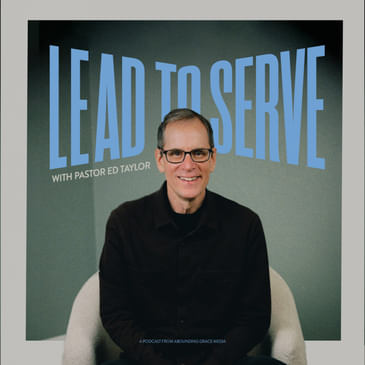
In a world where success is often measured by fame, wealth, and social status, redefining what success means can be a liberating and transformative experience. In this episode of the Lead to Serve podcast, host Pastor Ed Taylor and guest Pastor Bob Claycamp discuss the true definition of success in God's eyes. This is an essential episode for you if you want a new and refreshing perspective on success. Be free from shame and guilt by learning God's heart so you can succeed in His eyes.
Key Words: Ed Taylor, Pastor Bob Claycamp, Lead to Serve podcast, redefining success, servant leadership, biblical definition of success, faithfulness, aligning goals with Jesus, kingdom success, traditional definitions of success, fame, wealth, social status, pleasing God, personal experiences, private time with God, spiritual growth, faith, courage, skill, Psalm 72, Matthew 25:23, Romans 12:3, ministry, church leadership, embracing grace, personal walk with the Lord, community, shared experiences, fulfilling life of service, external validation, unrealistic expectations, pressure in leadership, balance vs. faithfulness, God's calling, reflections on success, goals aligned with God's purpose.
[00:00:05] Calvary Church presents Lead To Serve, A Leadership Podcast with Ed Taylor
[00:00:10] Hey, welcome again to another edition of the Lead To Serve Podcast. My name is Ed Taylor. I'm your host today in every episode as we're well into Season 6 now of the Lead To Serve Podcast.
[00:00:25] Again, we're so grateful for your response. We're so grateful that you are leaving reviews, that you're sharing it on social media, telling your friends about it. I just literally received feedback today from the East Coast of a brother and his family that are being built up by this podcast. So thank you guys. You know what our goal is.
[00:00:49] Our goal is to help you grow in your servant leadership so that you'll glorify God in everything that you do, whether you're serving in the church, which of course is the backdrop, but you can be serving at home, in your community, at work, on the softball field, wherever you might be. We're grateful. Why? Because the better servant you are, the better leader you will become. Joining me in studio today is our good friend, Pastor Bob Clay Camp. Welcome, Bob.
[00:01:19] Hey, it's great to be here.
[00:02:17] Welcome, Bob.
[00:02:18] Welcome, Bob.
[00:02:19] Welcome, Bob.
[00:02:46] Welcome, Bob.
[00:02:49] Welcome, Bob.
[00:03:46] Welcome, Bob.
[00:03:49] a purpose. A subdefinition of that is the attainment of fame, wealth, or social status.
[00:03:59] And I might even add social media status. And then that's pretty much, that's good enough.
[00:04:08] The accomplishment of a name or a purpose or the attainment of fame, wealth, and social status.
[00:04:15] So let me just talk real briefly and then invite Bob into the conversation. Here's where this comes from.
[00:04:22] And I speak primarily to pastors, leaders. I'm thinking of moms today and dads as parents that
[00:04:31] just feel like they're an utter failure, which will be our next topic, but they don't feel like
[00:04:37] they're successful for whatever reason. Let's take parents, for example, Bob. A big thing today,
[00:04:43] parents, there's always some new way to parent. I can be a helicopter parent. I can be hands-off
[00:04:48] parent. I can be grace-based parent. I can be parenting of scheduling. And there's all these
[00:04:53] methodologies. A person can adopt the methodology, run it to its exact course, and then still feel like
[00:05:01] they weren't successful. Like they're still in a place where I did everything for my kids, but look,
[00:05:07] look what happened. Look what happened to my kids or look what's happening to our kids.
[00:05:11] And they've replaced what I believe the biblical definition of success is, which I'll get to in a
[00:05:19] second. They've replaced the biblical definition of success with something else, running a program.
[00:05:25] You know, I think of a pastor, right? Let's go into the pastor. How big my church is? How many people
[00:05:30] come? How many people watch me on social media? You know, how popular I am? How many likes I have?
[00:05:36] How many loves I have? All of that has replaced a very simple definition of success.
[00:05:47] And it can be a lot of different ways, but let's just say, number one, a definition of success
[00:05:53] biblically is pleasing the Lord. It is honoring God. It's pleasing the Lord. Or in Matthew's gospel,
[00:06:03] I would say that the biblical definition of success is faithfulness. Faithfulness. Matthew
[00:06:09] chapter 25, verse 23. With all that in mind, Bob, what are some thoughts you have in relation to
[00:06:15] success? Well, in that definition, it talked about you have an aim, you have a goal, and success is
[00:06:23] defined by reaching that goal. But you have to go back and ask, what is Jesus' goal? What is his aim?
[00:06:33] Because if you're setting up a different target than he has, you're already not going to have success.
[00:06:41] The kingdom of God is clearly shown through the words of our Lord Jesus, as well as all the scriptures.
[00:06:49] And our definition of success must come from the scriptures and from spending private time with
[00:06:57] the Lord. I think that faith, courage, and skill are a threefold cord to kingdom success. And it's not
[00:07:08] the performance, but it starts with the relationship with Jesus and understanding what his goals are.
[00:07:16] Because I know that we can take business principles from the world and do things efficiently and more
[00:07:24] quickly and more profitable, maybe. But relationally, you have to have your goal
[00:07:33] connected to what his goal is overall. And even being faithful, sometimes you're faithful to things
[00:07:41] that he hasn't asked you to do because he hasn't given the grace to do it. And I think this is where
[00:07:47] a lot of pastors and leaders set up goals for themselves and ask God to bless those goals,
[00:07:55] rather than coming before the Lord and saying, what's your goal? Because I want to be faithful to that.
[00:08:02] I was in the corporate world for a few years before entering into full-time ministry, Bob. And I remember
[00:08:07] the kind of pressures that were put on us to provide the right numbers at our weekly meeting. And sometimes
[00:08:15] the boss would come into town and require demanding numbers, demanding reports so that we could
[00:08:23] quantify whatever thing that they were looking for. And we would put the reports together. And I remember
[00:08:27] the first occasion when I had to do that, we had to stay up all night. We had to run all these other
[00:08:32] reports, crunch the numbers, put them all together so that when the boss came to the office in the
[00:08:38] morning, he demanded we give him this report. And I remember that first occasion, me and my partner,
[00:08:48] the brother that, he wasn't a brother, but the man that served alongside of me, he worked for me.
[00:08:55] He was my number one assistant in the office. As we were putting the things together, we got everything,
[00:09:01] we put it in the binder, we had it all together. And a couple of things I learned, there was actually
[00:09:06] a few things I learned. Number one, there was nothing I could do to improve those numbers. There
[00:09:14] was nothing I could do. There was nothing. Like it was, there was so much of that report was out of my
[00:09:19] control, but I was going to be held accountable for it. And I'm like, man, I don't, how am I going to,
[00:09:24] how am I ever going to measure? I remember the frustration I lived with where I was looking at
[00:09:30] something, putting it all together, knowing I had to answer for it. But I don't know, 90% of the
[00:09:36] numbers were completely outside of my control. It's definitely in the past, a hundred percent of
[00:09:42] them were out of my control because it's already done. But any corrections or things that he would
[00:09:46] demand in the future would not, like, for example, I worked for an ambulance company. I couldn't
[00:09:51] control how many people called 911 that, and as a matter of fact, it's counterintuitive. I wouldn't
[00:09:56] want them. I would want those numbers to be low because that means less people would be hurt and in
[00:10:01] need of urgent medical care. But that's a, that's a side, that could be another podcast, but we say
[00:10:06] that all the time, Bob, we always have a new season in these discussions. But number one, I couldn't
[00:10:10] control those numbers. Number two, I gave, we gave him the report in the office. He came in, introduced
[00:10:17] himself. He was, you know, the big dog and what was in the uppity uppity up of the, of the company
[00:10:23] rolls into town, going to show his authority. We had him the report. He flipped through it and then
[00:10:28] literally threw it in the trash. And he said, thanks. So it, which was another lesson I learned,
[00:10:33] um, which is not the, not necessarily part of this topic, but it's worth mentioning is we were so
[00:10:40] worried and concerned and we needed to get that report because we thought it was so important,
[00:10:44] but actually it wasn't that important. We, we didn't need to be there all night. We could have
[00:10:48] handed him anything. He probably didn't look at it, but it leads us to the third part. And that is
[00:10:53] the real success in that episode was not corporate policies. It wasn't looking at business practices.
[00:11:04] It was just doing what we were told that was success. We were faithful. I wouldn't have known
[00:11:10] it necessarily. I didn't associate it yet with biblical principles. Maybe I don't really remember
[00:11:15] what I was thinking. I was probably so worried that if he, the numbers didn't look good, they were
[00:11:19] going to lay us off or something. But once you get over that, the real success was just faithfulness.
[00:11:25] I did what I was asked to do. And when you say our definition of success must come from the scriptures
[00:11:33] and from spending time with the Lord and, uh, we're praying and we're having that, that, that word
[00:11:41] that we're just getting our direction in the morning from God. That's so important. But how does that
[00:11:48] look like this morning? Well, did you have in your mind, uh, using your private time for today?
[00:11:56] Yes. Um, in, in my time, usually when the weather's nice, I like to go for a walk and use that time as,
[00:12:03] uh, getting, uh, alone with the Lord, talking with him, getting down to the basics. Um, and as I was
[00:12:11] walking, it came back to me that Matthew 11 passage where Jesus said, come to me, all you that labor and
[00:12:19] are heavy laden, and I will give my, uh, I will give you rest. Take my yoke upon you and learn from me.
[00:12:26] And then there are three points there and that's come to me. There is take my yoke and there is learn
[00:12:34] from me. And those three things aren't just when you initially turn your life over to Christ. This
[00:12:42] is something that you deal with every single day. And so that stirred my heart, even though I taught
[00:12:51] on that passage before, still it was fresh to me in the midst of all the distractions that I've been
[00:12:58] going through recently. It's like, let's get back to the basics here. It's just you and me, Bob.
[00:13:04] And let's, um, let's go over what I'm concerned about and what my definition of success is.
[00:13:12] In my devos today, and this is, I want to, I want to draw this out because this is more organic
[00:13:20] than it is necessarily. Okay. I'm going to get up in the morning and I'm going to find the principles
[00:13:26] and the business, the, how to, how to be a better anything. We have to, we just have to change our
[00:13:32] thinking and say, we're following Jesus. You know, however your, uh, imagination works,
[00:13:40] because obviously we can't, Jesus is in heaven seated, standing seated at the right hand of
[00:13:45] the father. Uh, he's indwelling us by his Holy spirit, but we haven't picked up and left our family
[00:13:51] and followed him and hung out with him for three years all throughout the area of Galilee.
[00:13:55] It's a different application today of being a follower or an apprentice or a disciple of Christ.
[00:14:03] So when I'm up this morning, I, I knew that I had, and I'll give you, uh, my, my, what,
[00:14:10] what my morning looked like just today, what my morning looked like is I knew we would do,
[00:14:14] we'd be doing some recording today, which means I'm going to lose a lot of work time today in other
[00:14:20] areas. Um, this is a joy. It's not even like work, but it is kind of work. It's part of our
[00:14:25] ministry here, but it's, it's fun. Um, but I have things that I have things, I forget what they
[00:14:30] called them, but I've, I've got to produce them. I've got to teach a Bible study this weekend. I've
[00:14:35] got to prepare for, I've got a lot. So I have a lot. So I know that I have four hours today, uh, that.
[00:14:41] And so my first temptation today was to skip devos and in my mind, just say, I'm in the word,
[00:14:51] I'm working for the Lord. I don't, I can get along without private time this morning, which may or may
[00:15:00] not be true. I, I, I teach all the time, read your Bible and pray every day. I, I want to do that,
[00:15:06] but that's the first option that's before me. That was the first thing I faced, uh, after I got ready
[00:15:13] for the day. Uh, that was the first choice or even temptation. And today I chose devos. I chose to do,
[00:15:23] I, it is not a waste of my time to spend time with the Lord and set aside my work, even though it's
[00:15:30] church work. It's not a waste of time to do it. I open up, uh, in on my iPad is what I did. I went to
[00:15:37] Luke chapter 12, where I'm reading right now, really following Christ and following Jesus.
[00:15:44] And this is what he said. So this is what the Lord, um, gave to me. As soon as I open up the Bible,
[00:15:49] beware of the 11 of the Pharisees, which is hypocrisy. There's nothing covered, uh, that will
[00:15:56] not be revealed nor hidden that will not be known. And then I read through the next couple chapters,
[00:16:01] but this stuck out to me of one of the things that he shared with me, because there is a warning
[00:16:08] and it's on the heels. Isn't it just the timing of the Holy spirit? It's on the heels of this personal
[00:16:14] decision that I make, uh, whether I should do my devos or not. Um, and just jump into church work,
[00:16:20] um, spiritual work, which I know will honor the Lord, but just beware of this, Ed beware of hypocrisy.
[00:16:27] Which I'm like, okay, Lord, I, I, I'm, I'm not a hypocrite. I'm, I, I want to live authentic.
[00:16:33] I just taught on that two weeks ago, use the whole section in Acts 20 on this, but this is a
[00:16:39] leadership principle. It's also a personal principle. It's my life, but also a leadership
[00:16:43] principle where, Hey, you know what? This is key from the lips of Jesus himself. Um, you got to be
[00:16:49] aware that, um, hypocrisy is a big deal. You better watch out for it. You better pay attention to it.
[00:16:55] Uh, and even if you cover something up and you think you got away with it, uh, it's not, it's
[00:17:00] going to be revealed and almost always going to be revealed. So there's a, there's a natural flow
[00:17:05] of the Holy spirit to take his word, uh, and embedded in our hearts so that it can be applied,
[00:17:12] uh, at different places. So when, when pastor Bob tells us that our definition of success has to come
[00:17:19] from the scriptures, we, we have to take every other definition of success and, and submit it to
[00:17:25] the scriptures and make sure that in the private heart matter, cause this is a private heart matter.
[00:17:31] I could have done all sorts of spiritual activity. And let me just say, let me just say, there are
[00:17:38] times where I may, you may, somebody listening may have to jot out the door, uh, without sitting down
[00:17:46] and reading the Bible without being hypocritical like that. Like this can't be some legalistic,
[00:17:52] heavy burden. There may just be, I've got to catch a plane. I got to, I woke up late. I don't control
[00:17:57] that. I got to get to work. I'd be there. There are times. So don't tie it in with, well, I have to do
[00:18:02] my devos every morning. We don't want to be legalistic about this. But for me today, this is what got
[00:18:07] revealed. You got four hours of work. Are you willing to give half hour, 45 minutes of that on top of that
[00:18:14] up for your personal devo time? And I say, yes, not even knowing that this would be the part of our
[00:18:20] topic today, because this is, we're just talking about success. And, and so getting it from the
[00:18:25] scriptures, private time with the Lord, you don't even have to look for it. That's the point I'm
[00:18:31] trying to make. You don't even have to look for it because the Lord will tell you he will fashion
[00:18:35] inform you into being the kind of leader and servant that he wants you to be. And then for my conclusion in
[00:18:43] Matthew 25, Jesus said, he said, the Lord will say to him, well done, good and faithful servant.
[00:18:52] You have been faithful over a few things. I'll make you rule over many things, enter into the joy of
[00:18:58] the Lord. The pathway to joy is being a good and faithful servant, faithful over what's been given
[00:19:05] to us. So Bob, I want to, I want your input on this. You say you have three, you have a threefold
[00:19:12] cord to kingdom success, faith, courage, and skill. What do you mean by that? It comes from Psalm 72,
[00:19:21] I believe, where at the end it said that the Lord chose David and brought him from the sheepfold.
[00:19:32] And it's, let me, I don't have it right here in front of me, but in that he, he, he shepherded them
[00:19:40] with the skill and the integrity of his heart. And so skill and his, his heart for caring for the sheep,
[00:19:52] it was a combination. And so there was courage because your, David had to protect the sheep from
[00:20:02] the lion and the bear, and he had to go confront it and not just run off. And so courage is involved,
[00:20:08] faith, trusting in the Lord and him being in charge of everything, him handling the outcome and all that.
[00:20:17] And then also his skill that he had learned over the time that he was taking care of the sheep,
[00:20:25] because the longer he was doing it, the more skillful he became. And in following Jesus,
[00:20:32] there is still that same faith required. There is courage to do the difficult things and the hard
[00:20:38] things. And then there is a skill because the Lord wants us to do what we do with excellence as much as
[00:20:46] is in us.
[00:20:47] I think Jesus makes room for us too, in this definition of faithfulness. And perhaps you're listening right
[00:20:53] now and you have a whole different definition. We'd love to hear it. We'd love to hear your feedback
[00:20:57] where you're listening to this. I know there won't be much disagreement on it. It might,
[00:21:03] there'll be way more freedom and release from this particular last week's, this week's, and next week's
[00:21:10] podcast episodes. I really get, I think this is a word from the Lord, just ready to free people,
[00:21:15] to free you from this burden of, I just never feel like you can balance anything because you never will.
[00:21:21] It will never happen. We have to change our definition of balance because the words of the
[00:21:27] Bible are more like sacrifice and commitment and giving rather than trying to balance everything.
[00:21:34] So there's one piece of freedom. The second piece of freedom is what is success? Well, you know what?
[00:21:39] I did everything I could and my child still, I did everything I could and my church still,
[00:21:45] I did everything I could and my spouse still. Well, then the real question is everything you could
[00:21:51] were you faithful? Well, yeah. Well, then you were successful. So much in life, like that illustration I
[00:21:58] used at work is outside of our control. The decisions are outside. All I have is my own personal walk
[00:22:05] with the Lord. And I think faithfulness measures it. Faithfulness makes room for our faith and trust in
[00:22:11] the Lord. Faithfulness makes room for courage that the Lord gives to us. Courage makes room for skill
[00:22:18] as we present ourselves to the Lord, which, which like you say, Bob, regular, uh, bringing our
[00:22:25] expectations and our desires regularly to the Lord so that he can change them, affirm them, direct them.
[00:22:34] And like remembering that this thing, this, this is not our deal. This is God's deal. We're in his
[00:22:42] hands. So how he wants to use us, how he wants to lead us, how he wants to help us. If we're not coming
[00:22:50] back as my pastor used to say, if we're not praying, we're not in prayer, going back to headquarters
[00:22:55] and giving our, getting our direction from headquarters, then we're going to find ourselves
[00:23:00] meandering off on a path where we have the world's definitions. And then we come and we go, well,
[00:23:05] look at our church today, Bob. There was far less people in our church service this week
[00:23:10] than they were last week. Well, what does that mean exactly? We aren't sure yet what that means.
[00:23:16] We really don't know, but I can tell you what it doesn't mean at the outset. It doesn't immediately
[00:23:21] mean you're not successful. Um, we don't know what it means. It could be a lot of things.
[00:23:26] There could be, if we have, I mean, it would be dramatic for us if we had a church service here
[00:23:33] this weekend that was 50% lighter than the previous one, that would be a message that,
[00:23:40] that would be saying something, but we don't need to jump to conclusions right away
[00:23:44] of what it says yet. But I'm, I'm pretty confident looking at the previous week. Let's just say it
[00:23:51] happened here. That's an example. Last week I was faithful. I gave the word of God. The Holy Spirit
[00:23:58] was here. The worship team served. You were here serving. I was faithful. You were faithful.
[00:24:03] So that when 50% of the church doesn't come the following week, doesn't mean we weren't successful.
[00:24:09] Um, there's a lot of things. I remember again, another illustration in the church planting
[00:24:14] realm when I first moved here and I, we were meeting in the school. I didn't, I really was green as
[00:24:20] green could be. I didn't know anything about anything church planting. We had a successful,
[00:24:25] glorious church service with, I don't know, 50 or 60 adults there. The next week there was maybe 20
[00:24:32] or 30 adults there. And I'm just freaking out. Like, what is going on? I don't know if I could do
[00:24:37] this the rest of my life, this kind of wild spring swings. And, and I remember talking to one of the
[00:24:43] brothers there, um, that I was like, what's going on? And he, he goes, Oh, Ed, uh, the Broncos played the,
[00:24:49] the Denver Broncos played on this today. And the time of the game, we only had one service.
[00:24:55] So it was like a 10 o'clock game. We have a 10 o'clock service. And I learned that I moved to a
[00:25:02] city where they value football, especially back then they had the right after the year, they went
[00:25:08] back to back Superbowls. So they valued football. It's, it's still very important component of our
[00:25:15] community here. And I needed to learn that football will influence some people in their church
[00:25:21] attendance. Um, but then all that did with me is just win me over. Like, no, I need to win them over
[00:25:27] to the Lord. I need them to love God and learn how to love God, but it didn't necessarily mean
[00:25:32] anything negative. I just needed to learn something. Uh, I was successful the previous week. I was
[00:25:36] successful that week only because I did what God had called me to do. I was faithful. Any final
[00:25:41] thoughts were already out of time. I have been, um, around, uh, the States as well as Europe and,
[00:25:51] and the UK and talking to missionaries, especially after 15 years, they say, what am I doing wrong?
[00:25:58] I'm back to where I was when I started. And I don't understand. I'm doing everything that I see all
[00:26:04] these successful pastors doing, and I don't get it. I don't understand. And there is a,
[00:26:11] a perspective reality that you, uh, sometimes we come with hidden expectations on what it's supposed
[00:26:19] to look like after so long a time. And we forget that God gives grace to every person according to
[00:26:29] his own purpose and his own will. In Romans 12 verses, uh, verse three, actually it is in just
[00:26:36] verse three. It says, for I say through the grace given to me, to everyone who is among you, not to
[00:26:44] think of himself more highly than he ought to think, but to think soberly as God has dealt to each one,
[00:26:53] a measure of faith. And so I remember pastoring in the UK and I could not grow the church beyond
[00:27:03] 50 or 60 people and half of them were university students. And no matter what I did, that was just,
[00:27:10] I'm going, what is the deal here? And the reality was I can only operate within the measure of grace
[00:27:20] God gives to me. And that's where success is defined. And I have no control over that measure of grace.
[00:27:30] It says, as God has dealt to each one, a measure of faith. So it was a refining time in my life. It was a
[00:27:39] purifying time. It was a discouraging time, but it was also a very learning and healthy time.
[00:27:46] I think that phrase has come up that is important for us to remember. There's so much outside of our
[00:27:51] control. We really don't control whether someone comes to church or not. We really don't control
[00:27:57] whether a family decides to reconcile. We don't control. There's so much that we don't control
[00:28:03] where it places us in a position of being very uncomfortable and wanting to jump in and control
[00:28:10] it because our measurements are wrong. We think that if the church grows, we're successful, but really
[00:28:18] we're operating, as you say, within the grace that's been given to us. And we're a hundred percent
[00:28:23] faithful. And that's exactly where we are. When we are faithful, we are successful. And when we are
[00:28:30] successful, that means we've been faithful. Don't ever forget that. You guys that are listening to me
[00:28:36] right now, if you can get this so soon, it helps when you're serving in the church. It helps when
[00:28:42] you're serving. But faithfulness, I mean, again, that would be another podcast to describe
[00:28:47] faithfulness because faithfulness does require work. I think that also builds up the skill part
[00:28:54] of what the threefold core that you mentioned, Bob. Faithfulness does require back-end work. The
[00:29:00] Bible says if you desire the position of a bishop, you desire a good work. Like there's work involved.
[00:29:06] There's not laziness. So there's a whole different angle to be faithful. But this is, the topic here is
[00:29:13] hitting toward and leaning toward those of you listening is like, yeah, I just don't think I'm
[00:29:17] successful. And we want to give you some pieces of life to be able to look back to and say, look,
[00:29:23] Jesus said this, I'm going to give you something, just be faithful with it. Which also explains why
[00:29:29] some people do more than others. There's 30 fold, 60 fold, hundred fold. And if you're comparing,
[00:29:37] you're like, well, I only have 30 and this guy's always got a hundred, but you guys are both equally
[00:29:41] successful. One, like you're both equally successful because you've been faithful within the, where Bob
[00:29:48] is saying within the grace that God's given us. Another way of understanding it is the way that God
[00:29:53] is the capacity that he's given you, the abilities that he's given you, the sphere of calling that he's
[00:30:00] given you, that the Lord is using you. And so equate, we want you to equate faithfulness with success,
[00:30:06] success, but that ends our program today because we ran out of time very, very quickly. So thanks
[00:30:12] for joining us. The topic next time, we'll just give you a heads up is failure. We'll, we'll be
[00:30:16] handling feelings of failure and we'll build on this on topic here today with success of how do we deal
[00:30:24] with feelings of failure? What do we do with them? How do we respond to them? What are ways that God can
[00:30:30] lead us away from them? But this is the Lead to Serve podcast, Pastor Bob Claycamp, along with Pastor
[00:30:36] Ed Taylor, talking about ministry, growing in grace together. Make sure you leave us a good review,
[00:30:44] share this with your friends. We'd love to hear from you. You can go to our website,
[00:30:50] edtaylor.org. Pastor Bob also has a website, bobclaycamp.com. And we'd love to hear from you.
[00:30:57] Be sure to share this with someone until next time. Stay close to the Lord, be encouraged in him.
[00:31:03] Thank you for joining us for this episode of Lead to Serve with Pastor Ed Taylor,
[00:31:08] a leadership podcast from Calvary Church in Aurora, Colorado. If you have a leadership question you want
[00:31:13] to hear answered on a future Lead to Serve podcast, please email it to pastored at calvaryco.church.
[00:31:20] And if you like our podcast, please subscribe, rate, or review us on iTunes and share us with your
[00:31:25] friends on social media. Thanks again for joining us and we'll see you next time right here on the Lead to Serve podcast.