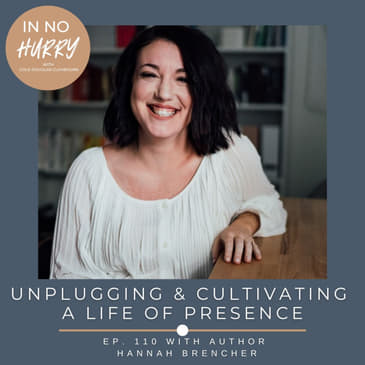
One of my favorite people, Hannah Brencher, is back on the podcast this week to talk about her new book: "The Unplugged Hours: Cultivating a Life of Presence in a Digitally Connected World."
If you're anything like me, you spend way more time than you should on social media. And if not social media, then you likely struggle to get away from the constant barrage of push notifications, text messages, emails and phone calls that bombard our devices. Perhaps it's left you feeling burnt out.
That was the case for Hannah, and in the Spring of 2021 she realized the culprit was her constantly plugged-in lifestyle. Like so many of us, Hannah had been turning to her phone to cope with life in a time of isolation and uncertainty. Those coping mechanisms had calcified into habits she didn't know how to break.
She felt a nudge to turn off her phone, and soon after a challenge was born: 1,000 unplugged hours in one year. She shared her tracker sheet on her website and thousands of people downloaded it and signed up for their own 1,000-hour challenge.
What started out as a personal journey and practice for Hannah is now laid out in this practical book, which is released September 17. You can purchase the book anywhere books are sold.
And while she advocates for an unplugged lifestyle, she knows it's not practical for us live a completely tech-free life. Plus, there are plenty of benefits to tech, and social media, it's just a matter of keeping them in their proper place. But in that vein, you can find her on Instagram @hannahbrencher, where she shares tons of practical and helpful content, and also on her website, hannahbrenchercreative.com, where you can sign up for her weekly email list, read blogs, sign up for courses and even get some freebies.
I'd also love for you to connect with me on Substack on "The Road Ahead": coledouglasclaybourn.substack.com. You can also find more of my articles and content at coleclaybourn.com and on social media:
Instagram: @coleclaybourn
Twitter: @ColeClaybourn
Also find me on Facebook at facebook.com/ColeDouglasClaybourn
[00:00:08] Hey friends, welcome back to another episode of the In No Hurry podcast. This is your host,
[00:00:13] Cole Douglas Claybourn. Super excited to be back with you for another episode and this
[00:00:19] week is such a treat. I get to have one of my favorite people, one of my favorite authors,
[00:00:24] Hannah Brencher back on the podcast to talk about her new book, The Unplugged Hours.
[00:00:30] And I love the subtitle for this book, Cultivating a Life of Presence in a Digitally Connected
[00:00:37] World. If you read one of her earlier books, Come Matter Here, it was about being here,
[00:00:43] being present in a getting there world and so much of my life has resonated with so much
[00:00:49] of what Hannah has written and as we all know, we are so deeply connected to our phones and
[00:00:55] our devices and they just take up not only our time but our emotions and our creativity
[00:01:01] and so many other things that can negatively affect us. And they're not obviously totally
[00:01:06] all bad, but the way in which we have come to be so reliant on these devices has become
[00:01:12] problematic and that is what Hannah did several years ago. She started unplugging
[00:01:18] for a thousand hours of the year and really it was just a way for her to peel back
[00:01:23] personally. It wasn't anything she was doing for content or a book, it was just a practice
[00:01:27] that she was implementing in her own life to unplug and be more present with the people
[00:01:32] in her life, her husband, her friends, her daughter and it has just changed her life.
[00:01:38] I wish that I could say that I have unplugged in the same way that she has. I've only gone
[00:01:42] through very small incremental periods where I have unplugged from my phone and from social
[00:01:47] media but I did notice a difference when I did that and if you've ever done that,
[00:01:51] my guess is you probably have noticed slightly less anxiety, maybe a better ability to be
[00:01:57] present with those that are around you and that is what this book and this message from Hannah
[00:02:01] is all about. And I'm so excited for you guys to hear this conversation with her,
[00:02:06] to hear her thoughts behind the book or heart behind it and what she hopes you as a reader
[00:02:10] will get from this book. The book comes out on September 17th. You can get it anywhere that
[00:02:16] you get a book and I'll have all the links for all that in the show notes. But I'm so excited
[00:02:21] for you guys to hear from Hannah again. Again, she's just one of my favorite people. Here is
[00:02:25] author Hannah Brincher talking about her new book, The Unplugged Hours. Well, Hannah Brincher,
[00:02:37] welcome back to the InnoHurry podcast. It's so good to have you on here again. How's it
[00:02:40] going? It's going well. Thank you. I am, I can't complain. It's a busy season but really
[00:02:48] excited in book launch season. I say this every time I refer to you. You're one of my favorite
[00:02:53] authors, one of my favorite people. So excited to chat with you about your new book that is coming
[00:02:56] out The Unplugged Hours. Just tell us kind of where this, I guess before you tell us where the
[00:03:02] idea came from, define to you or define what it was to you to be unplugged. I know for
[00:03:08] some people that might be a different, that might mean something different but for you,
[00:03:13] what does that meant to you and what are you hoping people get from hearing that word?
[00:03:19] Yeah, so I have learned over time that like unplugged can take on various different definitions
[00:03:25] and so for me, unplugged. Specifically, I feel like the biggest thing is I am completely off
[00:03:34] of my phone. I feel like the phone is like the biggest culprit at least in my story for what
[00:03:39] makes me feel too connected. I also would be off of email, not streaming a show or like,
[00:03:46] you know, binge watching a show on Netflix. For me, it's relatively whatever I'm doing in that
[00:03:52] moment. I'm focused, I am tech free and it's really about, I've learned over time, like it's about
[00:04:00] attention and where you're placing your attention and I think that that is kind of the key to
[00:04:05] unplugging. It's like, am I focused in this moment or my feet sunk into the ground in this
[00:04:11] moment or am I all over the place? Am I distracted? And so that's how I would classify
[00:04:17] an unplugged hour for me is basically tech free. So whenever you had this idea, because you started
[00:04:23] posting a lot about doing unplugged hours and kind of just pulling away and it's something that I
[00:04:28] have really tried to do a lot of my wife just spent a month off of social media and really felt
[00:04:33] a difference from that and it's just hard for me because my job is so online and just
[00:04:38] things that we do are so tied to it that it feels difficult to do that. But I have noticed that the
[00:04:43] times where I spent less time with my phone in my hand, I feel less anxious. I feel more present
[00:04:49] and you know, that's something that my therapist has been trying to challenge me to do more is be
[00:04:53] more present because it's like you and I are both in theogram fours, which is a blessing in a curse
[00:04:58] and we spend a lot of time in our heads and we spend a lot of time either being nostalgic
[00:05:03] or looking ahead to the future and it's really, really difficult for us to be present. And that's
[00:05:08] what I've learned like for me, that is a very, very difficult thing is because I'm either thinking
[00:05:12] about something that's far ahead or something that happened long ago and I don't enjoy the
[00:05:16] moment that's right in front of me. And so what have you found to be some of this the biggest
[00:05:20] joys of cherishing the moment that you're in? I mean, you just posted recently about how you
[00:05:25] stopped sharing to social media while you're in the moment. I used to feel the same way
[00:05:30] whenever I would be on vacation. I felt like I had to share right then. Yeah, you know, and
[00:05:34] that I try not to do that now, but what have you learned to be some of the biggest joys of
[00:05:39] just being present in those moments? Yeah, so I mean, I feel like that one that you just said
[00:05:45] like that is one of the biggest ones is actually getting to be present in those moments for a
[00:05:50] long time. I felt like I wasn't or I felt like I wanted to be but like you said, like
[00:05:55] my head was all over the place and thinking about this and thinking about the thing I
[00:05:59] had to do next. And so I've definitely felt like now I'm able to like enjoy a moment,
[00:06:06] savor a moment and not even necessarily have to share a moment. I feel like a lot of times like
[00:06:13] it's habits that have built up over time, you know, a lot of us grew up in the age of the
[00:06:19] internet where like, you know, Facebook was coming to the forefront, Instagram coming
[00:06:23] to the forefront and we learned to share bits and pieces of our day. But what we I think maybe
[00:06:30] didn't have the hindsight to see was that it's like, how was that not going to affect us? How
[00:06:35] was that not going to get us to a place where like we needed affirmation or approval or feedback
[00:06:41] for all these parts of our days. And so I really had to get to a place where I could
[00:06:46] learn to savor the moment for myself enjoy the moment for myself. And that was largely,
[00:06:52] you know, the bigger problem for me is like if I can be in this moment and not enjoy it,
[00:06:58] what is wrong? What is actually going on? And I felt like that was a larger issue of contentment,
[00:07:05] which contentment I think is fueled a lot by social media. It's like, we have access to see
[00:07:10] what everybody else is doing, what everybody else is wearing, the size of their homes,
[00:07:15] the families are growing, all these things. It's really hard to be content in that space.
[00:07:22] But one of the things that I keyed into during that time of unplugging and beyond, you know, in like,
[00:07:28] Paul talks about contentment in Philippians four, but what I found to be really beautiful is like,
[00:07:32] I had never noticed that he says in Philippians four, I have learned the secret of contentment,
[00:07:38] meaning it didn't come to me naturally. It didn't come overnight. It wasn't like a life switch.
[00:07:42] I had to learn this. And so that's something that I've leaned into in the unplugged hours. It's like
[00:07:48] learning contentment and being okay if like contentment is an instant or if feeling still
[00:07:54] flare up. But I mean, there have been so many benefits to unplugging that I'm like,
[00:08:02] I just like, I feel like people can't experience them unless they just like do it for
[00:08:07] themselves. And it's hard and it's uncomfortable, but it's like, man, the growth and the peace and
[00:08:13] the clarity like that comes from unplugging is like, it's unmatched. Like when I look back on
[00:08:20] that year where I decided to unplug for a thousand hours, I still look back and feel like that was
[00:08:26] one of the best years of my life. Like because I was fully present in it. I was fully engaged
[00:08:32] in it. And I have continued the rhythm on unplugging since then, but there was just something
[00:08:38] really magical about that year that everything about it seems like it was in Technicolor.
[00:08:45] Yeah. How long did it take for that to become a habit? I know I think last time we talked,
[00:08:49] we talked about James Clear's book, Atomic Habits. And I've read that at the start of,
[00:08:53] I believe it was the start of 2023. It was the first book I read of the year as a way to
[00:08:58] hopefully build some habits. And you know, he talks about habit stacking and other
[00:09:01] ways to build habits. But, and I know it takes a while for sometimes for habits to really form.
[00:09:07] When did you really start to feel like it was a rhythm for you and not a burden? Because I feel
[00:09:11] like at first it may feel really difficult to unplug. I don't know. Maybe that wasn't the case
[00:09:15] for you, but I know for me that would be the case. So when did you really start to feel like,
[00:09:18] man, this is something that I want to do. And maybe you started to even feel
[00:09:22] worse if you were online more. I don't know.
[00:09:26] Yeah, I think that the thing for me was that I was, I was absolutely ready for it. I knew
[00:09:32] that I was ready for it. I knew that there were signs of burnout, that something had to change.
[00:09:37] And so like the experience for me was that I was like sitting in a quiet time. It was my birthday
[00:09:42] and I really felt this nudge come out of nowhere telling me to unplug, telling me to
[00:09:48] power down. And so I've known especially like in my faith if I am anything I want to make sure
[00:09:54] that I am like obedient to those nudges. And I've also learned in my faith too
[00:10:00] that if I'm prompted to do something, it doesn't mean it's not going to be uncomfortable. It doesn't
[00:10:05] mean it's not going to come with resistance, but there's always good on the other side. Like
[00:10:08] there's something good and golden on the other side. And so at that point, you know, I had
[00:10:14] already practiced unplugging specifically for my work, like I would do like focused writing
[00:10:21] and I loved that. But for some reason, it wouldn't carry over to like my personal life,
[00:10:28] you know? And so yeah, at the beginning, it was tough and it was tough mainly because I had like
[00:10:34] been so programmed and wired to think I have to be doing something at every moment. I have to be
[00:10:42] checking something off the list. I have to be checking into something. And it takes a long
[00:10:48] time to like come out from under that programming to remind yourself like no, no, no, like I'm not a
[00:10:55] human. I'm not a human doing like I'm a human being. And I think it's something that you consistently
[00:11:01] have to practice. Here I am like thousands of unplugged hours later. And like right now I'm
[00:11:07] in the midst of a book launch that is like go, go, go. And I've had her remind myself like,
[00:11:13] yeah, you can go, go, go. But like this is not who you are anymore. The unplugging really changed
[00:11:20] that in me. It changed my need to be on always be accessible because there was so much deeper joy
[00:11:28] and abundance in not going at that pace. And so I think there's a certain level like almost
[00:11:37] like a mourning or like a grieving process you have to go through when you do start
[00:11:41] unplugging and then unplugging more consistently because you are letting go a piece of your identity
[00:11:48] in a sense. It's a piece of your identity that said you always had to be creating and producing.
[00:11:53] You always had to be moving and hustling and deeper than that. It was my sense of worth and
[00:12:00] value was like if I'm not producing, then I am not valuable. And it's really hard to let
[00:12:06] that mindset go. That's really uncomfortable. But if you can get to the other side of it,
[00:12:13] if you can keep pressing in like man, I just feel like the fruit is so much better in this place.
[00:12:21] But no mistake, it's definitely hard. Yeah. Are you a three wing?
[00:12:26] I am a three wing. Yes, yes. That's why it's especially hard for you to not feel
[00:12:30] like you have to produce. Yeah, that's exactly right. What did you notice about just being
[00:12:35] with your family? I mean you have a daughter and a husband and I know at times whenever Emil
[00:12:41] and I will go out to dinner, we both are guilty of sometimes being on our phone and checking Instagram
[00:12:45] or whatever. And it just sometimes that can get in the way of being present with the ones that
[00:12:50] you love. And your daughter I think is what four years old now. Yeah, she's four. So
[00:12:56] what have you noticed just about being with your family and being able to watch her grow up
[00:12:59] whenever you don't feel as tied to being on your devices or just cultivating whatever you
[00:13:07] want for social media and other people who you don't know? Yeah, I think I've learned to really
[00:13:12] appreciate the mundane and the ordinary day-to-day life which I don't think I fully appreciated
[00:13:21] before this. It's not to say that I couldn't but I don't know there's something that I was
[00:13:29] inadvertently without even realizing it like just doing a million things at once. Like being with
[00:13:33] my daughter but also like anytime she would go to do something cute or fun or whatever, here I would
[00:13:39] be taking out my phone to like thrust in her face to like record it. And so I really had to step
[00:13:44] back and get to this point of like it's enough. Like it's enough if I'm the only person that
[00:13:51] knows that this happened. It's good enough and that took a long time to get to that place.
[00:13:57] But you know I think one of the beautiful things that has come through the unplugged hours
[00:14:01] like is like really rich traditions that we've built as a family but also like what I like to call
[00:14:09] I call it like slow documentation meaning that like I am journaling more. I am taking more
[00:14:16] pictures on like a point-and-shoot camera. Like I have these like five-year memory diaries
[00:14:24] that I fill out or like little books for Lane and Novi that I can write notes in. Like I think my
[00:14:29] journaling bibles are much richer. I have recipe books and cookbooks. So it's like a slower form
[00:14:35] of documentation that like other people may not see all the evidence but I have all the evidence
[00:14:42] that I was here, that I lived, that I was invested, that I was present and for so long I
[00:14:47] was confused by the fact that I felt like I had to present all of this evidence. You know? Like
[00:14:53] I had to let people know it was happening. Let people know I was doing this thing and like sharing
[00:14:58] parts of your life on social media can be really beautiful but it also comes at a cost because
[00:15:04] if you go to share something like a piece of writing or like a big project that you've been
[00:15:10] working on or something you feel really proud of, like if you don't get the reaction you were
[00:15:15] hoping for or maybe you were expecting, how can that not change the way that you feel about the
[00:15:23] hard work? You know what I mean? Right. And so that was something like especially even in
[00:15:29] the book writing. Like I didn't really share my book writing process and when I finished I was
[00:15:36] like I have to get to a point where I can tell myself like job well done and like no one gets
[00:15:42] to take that away from me. And so it's kind of the same thing in the vein of like family was like I
[00:15:48] had gotten so used to like sharing my relationship, sharing my daughter online and then something in
[00:15:54] the unplugged hours was like it's not that I just like don't want to it's just like this is mine
[00:15:58] and I want it to be mine and I don't want anything to taint that or to let other people
[00:16:04] get their fingerprints all over that. Yeah. Yeah, I share this anecdote quite a bit. When I
[00:16:10] started doing this podcast it was like the fall of 2019 and I think I just had this idea that
[00:16:15] you know a lot of people would listen right away and I had this vision of what it would be and I'm
[00:16:20] ever being like 10 episodes in and just being like nobody's given me any reaction to this
[00:16:25] like nobody's listening to it like I thought they would and I was having fun doing it but
[00:16:30] I was letting that dictate the result or the idea of my results to the point where I almost
[00:16:36] quit doing it and I was like so just like I felt so much discomfort about it and then I had to realize
[00:16:42] just really what what I was doing was sitting in my discontent and not being content with what was
[00:16:47] there and be you know I was I was able to connect with a lot of really cool authors and like just
[00:16:52] a lot of really cool people and I was like that needs to be enough like I don't need to do this
[00:16:56] because I want millions of people to listen or whatever. I just was like I enjoyed doing it
[00:17:01] so I had to really retrain my thinking of you know I don't want to feel pressure to post so much about
[00:17:07] each episode because I was doing that for a while. I was making all kinds of clips and you know trying
[00:17:11] to do what I thought was right and I was like well as an author you probably hear this too it's
[00:17:16] just you hear like you got to do so many things online and like really promote your work and
[00:17:20] you got to be good at social media and it's like you feel the pressure of I really got to
[00:17:25] build this social media following but also want to be true to myself and like for me
[00:17:28] I've never been one that where that felt natural to be super self-promotional it just was how I was
[00:17:34] raised like I just did not like that's always felt really unnatural to me and so I'm like you
[00:17:38] where I've started you know anytime that I'm writing stuff I rarely post about it it's
[00:17:42] really done more in the quiet than it is in public where it used to be if I wrote a chapter
[00:17:47] I'd want to share it on my Instagram story everybody look at what I did I finished some
[00:17:52] writing today you know and there was a time I mean we went through a hard season where
[00:17:56] you know a tornado hit our house and we were displaced and so I didn't write for like nine
[00:17:59] months because I just wasn't in the space to do it so when I did write a chapter after that I did
[00:18:04] share because I was like okay I'm actually clear-minded yeah that was different but for a while it was
[00:18:09] like I wanted everybody to see everything I was doing to feel validated and it was so empty
[00:18:13] because it didn't really mean anything because I was like I know that I was what I was doing
[00:18:16] was good enough so I love what you said. And that's so true like what you just said about
[00:18:21] like the you know when you started putting it out there and you're like okay well no one's like
[00:18:25] really responding to this I'm not getting the traction I thought I was going to get and I think
[00:18:29] that that's like the shift that we have to make of like okay I don't actually get to control
[00:18:36] the results of this I don't on the internet we do not control the results of it but we can
[00:18:42] control the output we can control what we are doing and what we are showing up to do every
[00:18:46] single day and I think that's the most important part because it's like you were working your butt off
[00:18:53] and I'm glad that you did not quit but like that I've learned to make that the measuring tactic
[00:18:58] rather than the results because I don't control the results I leave the results up to God but
[00:19:03] like can I look back and say job well done because you showed up faithfully and consistently
[00:19:08] and you gave it everything that you had. Yeah yeah I love that and I love like in the book
[00:19:14] you talk about how you're not advocating for a completely digital free world like you're not
[00:19:19] trying to say throw your phones away throw your devices away because you mentioned you know my
[00:19:23] mom calls and gets to talk to my daughter on FaceTime and they get to share a breakfast date and
[00:19:28] they get to have moments like that so there are obviously good things about technology I think
[00:19:32] we all recognize that so in terms of just striking a balance or setting good boundaries
[00:19:37] whatever you found have been good rhythms for you in that way. Yeah I'm definitely not
[00:19:42] anti-tech I think that tech is amazing I've loved it since you know the moment I could get on the
[00:19:49] internet when I was in like sixth grade I've loved the internet. I've been building websites and
[00:19:55] creating things since then and so for me it was never like I want to get off the internet I want
[00:20:00] to get off social media I think it's such a beautiful privilege to be able to cultivate
[00:20:06] a community and a readership via online platforms is something that authors didn't have 20 30 years
[00:20:13] ago um and so I definitely think that the tools are beautiful but like that is what they are they
[00:20:19] are tools and so like we have to be mindful to use them and not allow them to use us um
[00:20:24] and so there are a few things that I do you know like I try to have pockets in my day
[00:20:30] that are tech-free that like I am not on the phone I am not I am doing a single task
[00:20:35] and that's what I'm focused on and my phone is away and those are things like you know reading
[00:20:41] while my daughter is playing or bedtime or morning time like when I'm getting up and I'm
[00:20:47] doing my morning quiet time or when I'm doing focused writing I have these different
[00:20:51] pockets throughout the day that technology doesn't touch um the same for weekly rhythms you
[00:20:58] practice a weekly Sabbath we have a tradition on Friday so we call pizza Friday where like we
[00:21:05] watch a movie and like and that's unplugged time for us because we're both we're enjoying a film
[00:21:11] together and I think that that's like there's nothing wrong with that of like watching a thoughtfully
[00:21:16] produced movie together and enjoying that together it's when you're like double screening
[00:21:21] that you're like oh okay this is where yeah it gets tricky um so I practice a Sabbath we have some
[00:21:30] traditions um it really ebbs and flows in different seasons like but one of the things that I do that's
[00:21:38] been such a helpful tool it's like at the times where I'm feeling really like overwhelmed or like
[00:21:43] maybe feeling like I'm too plugged in I will take a step back and I will like write out what I
[00:21:49] call my what's not working list um and that's where I will just like write down all the things in the
[00:21:56] moment that feel like they're not working and so it might be some bigger things but a lot of times
[00:22:00] it's like the smaller stuff of like I just feel really dehydrated or I'm comparing myself a lot
[00:22:06] today or I feel way too plugged in and then when I create that list I try to come up with
[00:22:11] micro shifts or like micro moves that look like shifting me back in the right direction and so
[00:22:17] for anybody that does start unplugging I do feel like there is a like there's a constant reorientation
[00:22:23] process in different seasons some seasons like right now I'm required to be more plugged in
[00:22:28] than typical but I'm also more mindful of like the times then when I am offline and taking a
[00:22:36] break and taking a rest um yeah but I think one of the biggest mindsets had to be like dismantled
[00:22:43] in it and once I was able to dismantle this mindset like I feel like the unplugging happened
[00:22:48] a lot more seamlessly was this mindset of like I'm holding the world together I have to be on
[00:22:56] and working because if I'm not then nothing is going to be working I will not be relevant
[00:23:02] anymore that is going to be the thing that keeps you on the phone more than anything else
[00:23:07] if you are convinced that you are the one holding it all together yeah like how can you get off the
[00:23:14] phone like that's what's tricky about the tools we're holding is like they can always convince us
[00:23:19] that you could just be doing one more video one more post one more email one more task and when I
[00:23:25] learned to release control of that belief that I'm holding it all together the allure of the
[00:23:30] phone went away to an extent not all of it but like it was kind of like uh oh is this is my currency
[00:23:37] piece in this moment or is it like this like hurried frantic racing and if it was the hurried
[00:23:44] frantic racing to me that was a cue in itself of like step back this is not good for you this
[00:23:50] is not peace we want to follow the peace yeah I mean that's that's all so good I mean you
[00:23:56] mentioned the word hurry there a couple times I mean obviously the name of this podcast is in no
[00:23:59] hurry and I created it because it was coming out of a season where we had just moved to a new city
[00:24:05] and I was teaching at the time and I was just so busy I was in charge of the yearbook and I coached
[00:24:12] both boys and the girls tennis teams and it was like I was always always always doing something
[00:24:17] even if it wasn't on my phone I was just always doing something and then I felt like I had to
[00:24:22] share everything online like I was posting everything about our tennis programs everything
[00:24:26] about our you know whatever whatever it was and I was like I am so burnt out and it was right around
[00:24:32] the time when uh the ruthless elimination of hurry came out and then to hell with the hustle
[00:24:36] and it was like that was the that that was the message at the time was like we have got to
[00:24:42] just slow down and I had a guy on my podcast last year he's a pastor in Australia and his
[00:24:49] name is Adam Ramsey and he wrote a book called Faithfully Present and Emily and I just listened
[00:24:53] to it as we went down to Florida and a lot of the same things just about like you know how time is
[00:25:00] always ticking and different things about you know just how to be present and what the Bible
[00:25:03] says about it and it's like I feel like this is a message that is being circulated it feels
[00:25:09] like there's a lot a lot of times there's like a certain message that I notice that a lot of
[00:25:12] different people are talking about and I feel like right now that is what I'm hearing a lot
[00:25:16] is being present like I said my therapist has mentioned that to me and it's a prompting
[00:25:20] that I've felt on my own heart so it's just kind of cool how like God works in different seasons
[00:25:25] and you notice things and I don't know I just feel like this idea of being present is is just very
[00:25:30] palpable right now I don't know if you have felt that what's holding you back from it I think
[00:25:36] just all the all the all the that's a good question Hannah um I think it's flip it back
[00:25:41] onto you I think it's all the habits I've that I've developed of like being on my phone
[00:25:46] and you know I'm a journalist and so I feel like when it's just very habitual when I log
[00:25:53] into my computer it's like the first thing I do is go to check Twitter and yeah it is I'm not as
[00:25:59] I am not as likely to check it now well I guess I'm still likely but I don't spend as much time on
[00:26:04] it because I used to have tweet deck I don't know if you ever used tweet deck were you ever
[00:26:07] familiar with that no it was like I mean I know what it is but I never used it so like
[00:26:13] let me just paint this picture across my computer screen basically I had like five columns so it'd be
[00:26:18] like my timeline and my mentions and then like other accounts that I ran and then like lists that I
[00:26:23] created and it was like constantly just scrolling and scrolling and so when Elon Musk bought Twitter
[00:26:29] they basically did away with tweet deck and now I just have to use the regular
[00:26:33] like website and it's not as appealing which is good because I don't feel as
[00:26:37] spend the most time on there yeah yeah that's a lot to keep up with it and so I and I have actually
[00:26:43] turned off pretty much every notification or I've at least put them in like you know on your
[00:26:48] phone where it does like the I don't know like the roundup or it sends you like a bunch at like
[00:26:53] six o'clock or whatever time you want to do it's like I don't get yeah I don't get notifications
[00:26:57] like this anymore like I used to get all kinds of sports notifications and things like that and
[00:27:01] my phone would always be going off and I don't have that every group chat I'm a part of I put it on
[00:27:07] do not disturb just because I can't handle the notifications so I've tried to take measures
[00:27:11] but yeah it is I think it's just become habitual to like oh I have a free moment let me just
[00:27:16] check Twitter let me just check Instagram and this is convicting me to consider finding some
[00:27:22] margin to unplug and maybe maybe the start of the new year I will actually I don't have to
[00:27:27] wait till the start of the new year I can do it right now but you know what I also think too
[00:27:33] like to that point what what I've noticed is like because I have instead of trying to
[00:27:40] change all of these like quote unquote bad habits that are not necessarily bad habits
[00:27:45] but you've been wired like what I was trying to do was re re or not reintroduce but like
[00:27:51] introduced a new habit that habit being unplugging whether you start with an hour you start with
[00:27:59] 30 minutes 15 minutes at a time but like now that it's become a habit in my life what I find is that
[00:28:06] like I'm actually able to feel like I'm enjoying these other platforms more because when I first
[00:28:13] signed up for them I did it because I found it to be enjoyable I liked keeping up with the
[00:28:17] news I liked keeping up with Instagram and so like it's interesting how I didn't take any of that
[00:28:24] away which will be the first thing that people tell you to do if you want to be more present it's
[00:28:29] like delete the social media but like is it really that sustainable for some people it will be
[00:28:36] but for a lot of people that have like digital jobs or like want to be on the pulse of what
[00:28:43] technology is doing like social media is a part of it but I found that like where social media was
[00:28:50] wearing me thin making me just exhausted I didn't even want to post because I was like okay what is
[00:28:56] the next trend what's the next thing I have to keep up with by implementing these rhythms that
[00:29:02] allowed me to step back and recharge rather than behavior modification I have since begun
[00:29:09] to look at all of these platforms with a completely different lens. I remember you told me the last
[00:29:17] time we talked that I assume this is still the case but you had like a time limit on your phone and
[00:29:23] laying is the only one who knows the password to it so once you're locked out you're locked out
[00:29:27] is that still the case? It's not because I honestly don't need it anymore okay I think when that
[00:29:32] first happened that was because I didn't feel like I had much control over it and then as I
[00:29:38] actually started tracking my unplugged hours and that became my metric I naturally just wasn't
[00:29:44] on my phone to the point that I needed a time limit anymore and so like it's interesting yeah
[00:29:51] because I've actually never thought about that I'm like oh yeah I don't have that anymore because
[00:29:55] I think because I've done so many unplugged hours when you start unplugging and you have
[00:30:02] a way to track it because I feel like you can't really measure what you don't manage or you
[00:30:07] can't manage what you don't measure. I started just to see the results for myself and I saw the
[00:30:14] gains it's like when you're going to the gym and you first start it out and you don't really want
[00:30:19] to go and you're not seeing any results but then when you start to see those results they become
[00:30:24] self motivators and so I was seeing that in my own unplugged journey was like oh wow I am
[00:30:31] more peace filled oh we have created more of these traditions oh I love what me and my
[00:30:36] daughter just created together in this or I love getting used this time to say like oh man I've read
[00:30:42] two books over the last week rather than I scrolled and can't remember anything of what I scrolled about
[00:30:48] and so I think that's what's so interesting about it was like you start to see the results
[00:30:53] compound and then you want more of them and like one of the things that I do like in my
[00:31:00] with my courses my online courses I teach you know discipline rhythms routines all of that
[00:31:06] but in my course your routine overhaul at the beginning of the course I have students create a
[00:31:14] list and it's like basically a list called the person I'm becoming and they write down the
[00:31:20] person in which they want to become and that takes on various forms whether that's success or
[00:31:25] you know that I'm an early riser or I'm a present mom or I'm the friend that shows up
[00:31:34] with birthday gifts I'm clean and I'm organized whatever it is um and so what's funny is that I feel
[00:31:41] like those things a lot of them a lot of the goals a lot of the things that we say that we want to
[00:31:46] become are not necessarily tech related like it's not the first thing that you write down
[00:31:51] is probably not going to be I have X amount of followers on Instagram you know um and I
[00:31:57] started to realize that the things that I had written down was like oh the time that I've
[00:32:02] given to scrolling or to like mindlessly watching another love thing on Netflix like
[00:32:09] I can use this time to actually cultivate habits that bring me closer to this person that I said
[00:32:16] that I wanted to become and I feel like that is the most valuable thing in the world that is
[00:32:21] like a motivator in itself it's like you're telling me that if I just dig in and I get
[00:32:25] really present I could actually become this person like game on yeah you asked me what was holding
[00:32:31] me back and I think we've probably touched on this to some degree but like what I hear
[00:32:35] when you're describing that is a lot of people and I would say that I fall into this category
[00:32:40] there's probably some fear about that because it's such a change of rhythm it's so counter cultural
[00:32:46] that I know for me I deal with a lot of FOMO and so it's like this idea of uh you know
[00:32:52] what am I missing out on I mean I remember last year at the beginning of 2023 I had a
[00:32:55] goal of not being on Twitter for all of January and I don't know if you recall this I don't
[00:33:00] know if you watch NFL but I think everybody knew this the NFL player who nearly died on the field
[00:33:04] in the Monday night football game for the Buffalo Bills that happened and I was like okay I've got
[00:33:09] to know what happened and I like that sucked me back into that sucked me back into Twitter and
[00:33:14] I was like now I like I've already broken the streak and I stayed on it and then and like
[00:33:19] it was just awful but like I legitimately tried and it was like one little thing got me back on
[00:33:23] there and there so there's like for me it's literally the fear of missing out and you
[00:33:28] you were describing how some people are like oh you mean if I do this I can actually become the
[00:33:32] person I want to become I think there's got to be some fear involved I mean what have you seen from
[00:33:36] your perspective and maybe people that have given you feedback in terms of the fear element of
[00:33:41] unplugging yeah I would say that's the biggest one that you just talked about was that fear of
[00:33:48] missing out is what drives a lot of people to stay connected you know um and I kind of just like
[00:33:54] flipped it on its head of like yeah like you you're gonna miss out that's gonna happen you're
[00:33:59] gonna miss out on things that are happening on the internet and chances are a lot of them are happening
[00:34:04] to people you don't know you've never talked to that football player god like at you can care
[00:34:13] about him but at the same time like is he in your orbit um and that doesn't mean we don't have
[00:34:18] highs and passions in this and that but I think that what I was realizing oh the trade-off is
[00:34:23] if I'm determined not to miss out on anything I'm actually going to miss out on a lot I'm gonna
[00:34:30] miss out on a lot of what is right in front of me I'm gonna miss out on being with my daughter
[00:34:35] being with my family being with my friends like the things that are right in front of me that we
[00:34:40] can almost take for granted because we have this other side where it's like information is
[00:34:46] accessible like at the snap of a finger we can learn and know everything that we could
[00:34:52] possibly want to know and like how does one compete with that but at the same time like when you
[00:34:58] reprogram yourself to be like yeah but like do I need all that information could it be that today what
[00:35:04] I don't want to miss out on is like the sunrise at my own house moving my body a creative writing
[00:35:13] day you know like um I think there is an element probably of like self-sabotage laced into that
[00:35:20] because it is very terrifying to be like oh yeah the person that I want to become but at the same time
[00:35:26] I think like we spend so much time like investing in other people and pouring into other people and
[00:35:32] yet when it comes to things that we said that we wanted to do for ourselves that's usually like
[00:35:37] the first thing that drops unfortunately. Yeah that's really good I mean there's gonna be some
[00:35:44] I think discomfort too whenever that happens like just like I mentioned how that first little bit where
[00:35:49] you feel like okay I'm off of social media I don't want to be on here how do you get past that
[00:35:57] initial pull to want to get back on something because that's for me that was the biggest hurdle and it's
[00:36:02] like what usually once I get past that I'm good like whenever my wife and I have done whole 30
[00:36:07] it's like getting past that first week and a half then I'm like okay I'm good to go the rest of
[00:36:11] the time but it's that first little hurdle that is hard and so how did you navigate that?
[00:36:18] Well I think that's the thing with the unplugging was that it was going hour by hour of unplugging so
[00:36:22] I wasn't going cold turkey off of anything I wasn't getting rid of social media I still don't I haven't
[00:36:28] gotten rid of social media. That was one of my questions was like do you delete the apps or
[00:36:32] anything I guess you don't delete a phone or anything? I used to I definitely used to and
[00:36:39] now I'm just like because it's become such a habit it's kind of like yeah like I don't know
[00:36:45] last time that I deleted the apps and that's obviously something that happens like with growth
[00:36:49] over time but the thing with like the whole 30 it's like yeah the first week and a half is tough
[00:36:54] then you get into your groove but then come day 30 we go a little crazy introduce everything back
[00:37:02] in we always miss the intro no one ever does the reintroduction let's be honest no one does it
[00:37:08] nobody does it and it's almost like well what was the point of the last 30 days you saw all the benefits
[00:37:15] you told yourself a number of times I'm never going back I'm doing this for the rest of my life
[00:37:20] and then you go right back and I think it's because we have to address the root issue and
[00:37:27] if we don't address the root issue habit change isn't going to take place in the same way
[00:37:31] that if you go off the social media for lent and you re-downloaded on Easter your habits
[00:37:36] are going to come back and they might come back even worse because we did not deal with the root
[00:37:41] issue and so I think that's the most important thing it's like okay like what am I
[00:37:47] seeking out social media for what am I saying that social media can give me why am I on these
[00:37:53] platforms to begin with and then reassessing from there like because for me like I show up
[00:38:00] on my platforms because I want to give hope and I want to encourage people like and so as long as
[00:38:06] that's my mission and I have that mission I can show up and follow through with that mission
[00:38:11] but whenever I start to get misaligned or I get too plugged in I have to scale back and get back
[00:38:17] to the why like why did I start this in the first place and so it's a constant journey
[00:38:24] it's not an overnight thing but I think my biggest thing was like okay but like I can't go and throw
[00:38:31] my phone in the woods I'm not going to go live on a commune I have to learn how to work with tech
[00:38:37] because literally everything happens on tech it happens on email it happens you know like
[00:38:44] my business is run a lot of the times via social media and so I have to learn how to work with
[00:38:49] these tools um and that's a little by little shift by shift thing like so for me like I don't have
[00:38:56] email on my phone and that's because yeah I would check it all the time if I had email on my phone
[00:39:02] but I'm not even in a place where I'm going to be responding to those emails I don't respond to my
[00:39:06] emails via my phone unless it's an emergency so why even have it there if later I can designate
[00:39:12] a time to sit down and be fully intentional and present with what's right in front of me
[00:39:18] and I think that's just the biggest thing it's like where are you placing your attention and
[00:39:22] are you being intentional with it yeah do you what do you do in terms of like accountability
[00:39:28] like do you have like this lane is is lane the one that kind of keeps you accountable with this or
[00:39:32] do you have friends that sort of keep you accountable because I feel like for some people
[00:39:36] that might be super beneficial is like hey I need you to hold me accountable I remember like
[00:39:40] whenever I did your um it was your riding boot camp like five years ago I was coaching
[00:39:46] tennis at the time and this was during August of 2019 and I remember telling my tennis players I said
[00:39:52] every day that I show up to practice I want every one of you to ask me if I wrote today
[00:39:56] and they did love that and uh yeah that was like probably the most productive month I've ever had
[00:40:02] and it was just there you go like I and I had these you know 15 to 18 year olds keeping me accountable
[00:40:07] but it worked so what do you what do you recommend me do you have a rhythm in terms of somebody
[00:40:12] who keeps you accountable with what you're doing here or somebody that is starting that they may need
[00:40:17] that little extra help you know talking about going to the gym it's usually better if you go with somebody
[00:40:21] so I don't know any thoughts on that yeah I definitely feel like especially like if you're
[00:40:26] starting out on this journey if you're listening and you're like I have never unplugged before
[00:40:30] accountability could be huge like we have plenty of online trackers that you can use to track
[00:40:37] your unplugged hours but it's amazing if you invite somebody into that experience if you
[00:40:41] ask somebody hey like do you want to do this challenge with me this month or this year like
[00:40:47] we were talking about earlier like I had a time and a season where my husband was holding me
[00:40:53] accountable to being on the apps because I was like I don't want to waste all my time doing this and so
[00:40:58] I had a limit and then Lane had my passcode so that I couldn't bypass the limit and that
[00:41:05] worked for a season I think I'm definitely in a season right now where like maybe it's just like
[00:41:09] I need accountability and other things in my life or other habits that I'm growing but when
[00:41:14] you're starting something out like I 1000% think accountability is amazing and I you know I think
[00:41:23] I mean I think back to like when I first started like pre this concept of unplugging
[00:41:31] like I remember years ago that I was like going through a breakup and all I wanted to do was be
[00:41:39] online to be like oh is he posting is he this is he that you know and my friends took my social
[00:41:45] media passwords away from me and that whole month I was completely off of line and they were good
[00:41:50] friends um but that was like one of the best months that I've had in so long because if I
[00:41:55] wasn't online I was actually like in my life like you learn very quickly when you're like oh I
[00:42:00] can't go on social media so I better go find something else to do you know and so that's
[00:42:06] where I think accountability can be really key to making sure that you are successful that you're
[00:42:13] not doing it alone yeah that's really good well the last question I always ask and I feel like the whole
[00:42:19] conversation that we've had kind of answers this question but I mean maybe you could think of
[00:42:23] some rhythms you guys do for your Sabbath but the name of the show obviously is in no hurry so
[00:42:27] I mean what are some things that you do personally and maybe you guys do as a family
[00:42:31] to sort of just slow down I mean you mentioned the pizza night which by the way every time
[00:42:35] you post one of these pizzas it makes me so hungry they always look so good but what are what are some
[00:42:41] of your favorite rhythms to just slow down whenever you guys have the moments to do that
[00:42:46] yeah you know I definitely think like the biggest rhythm is practicing a weekly consistent
[00:42:51] Sabbath um and so for me Sabbath happens from Friday night into Saturday nights um and that's
[00:42:57] just mainly because you know we go to church on Sundays and I often feel like getting up
[00:43:02] and going to church does not feel restful like it's a thing it's a big occasion you know and so I
[00:43:09] feel like Friday into Saturday is really my time to unwind from the work week to really just get to
[00:43:17] unplug be with my people take a breather take a break but most importantly not work
[00:43:24] and that's the hardest part it's like I'm not on email I'm not doing that extra project even
[00:43:28] though I can like I'm releasing control and giving it back to God during that Sabbath time um and so
[00:43:38] yeah it's funny because even just like I'm thinking about it where it's like yesterday was a pretty
[00:43:43] busy day for me but like there was like this hour hour and 15 minutes like before I had to like
[00:43:51] hop on to like prep for a live class I was teaching last night that like I just put my phone away I sat
[00:44:00] down and I finished a book that I had been reading and what's interesting about that is just like
[00:44:05] practicing that or like mono-tasking to be like I'm gonna sit down and finish this book
[00:44:11] just being in the unplugged hours I feel like in a sense like makes you feel like you're
[00:44:18] moving slower makes you see the piece of like toning it down of like walking a little slower
[00:44:25] for you to realize it's not a bad thing it's actually a really good regenerative thing and
[00:44:31] so it's like I look back on just like that hour and was like oh that was so that was a sweet time
[00:44:37] right there and like Novi was playing around me and like she was content because I was present
[00:44:43] with her and when I've even noticed that like with her it's like if I am reading on my Kindle or I'm
[00:44:49] reading on my book she's way more at ease and like can play around me than if I'm on my phone and so
[00:44:58] I would say one of the people that keeps me accountable is definitely Novi I've given her
[00:45:02] the language since she was very little to tell for her to tell me mom get off your phone and
[00:45:08] she does and I listen to her because like I will I will check with her like on days where I'm
[00:45:15] feeling like oh I think I was maybe too plugged in but I'm also super hard on myself I will go
[00:45:20] and I will check base with my four-year-old because four-year-olds if they are anything
[00:45:24] they are honest you know um but I think that's like yeah I don't know I just think that there
[00:45:31] is a piece that comes just from releasing yourself from the hurry and the anxiety that I think
[00:45:37] the phone produces yeah yeah that's really good I love the idea of your daughter keeping you accountable
[00:45:44] she does she does like I'll be like hey do you want to FaceTime Abuela and she'll be like
[00:45:49] no and I'm like okay like we're not like I'm not gonna yeah like I'm gonna honor the boundaries
[00:45:55] that you have for the screens and I'm gonna honor the boundaries that you want me to have for
[00:46:00] the screens yeah well I just think about that in contrast to how many families we see out in public
[00:46:05] that just hand an iPad to their kids when they're at dinner and they just let their kids kind of go
[00:46:10] into the land of you know the internet and watching videos and I just I understand it
[00:46:16] but Emily and I have talked about like we already are trying to think like you know if and when we
[00:46:20] have kids what kind of rhythms are we going to establish with our kids in terms of screens and I
[00:46:25] think Emily even has some ideas of like at what age do we even want to start introducing screens
[00:46:29] because like I see kids that are two or three years old that are looking at iPads and I'm like
[00:46:33] that can't be good I mean I don't know the science behind it but I don't think that can be good
[00:46:36] the science is not yeah the science is not good and I think like you know I always try to say
[00:46:43] you know what like I don't I don't know what that person is going through I don't know
[00:46:47] because there have definitely been times when we've gone to a restaurant and we're like you know
[00:46:51] what okay there is an iPad and we're gonna give her the iPad you know like um but we did
[00:46:56] like little things like we started from early on we would take her to Waffle House and do like
[00:47:02] a restaurant training or sit in the restaurant and like very Atlanta you to get a waffle house
[00:47:08] waffle house it was a low stakes environment but it's funny now because we can go to other nicer
[00:47:13] restaurants and she knows how to sit in the restaurant and order and like be a part of a
[00:47:17] restaurant experience for me that was the bigger thing was like we could hand her a tablet when
[00:47:23] we go to a restaurant but like restaurants are fun it's meant to be a fun time it's meant to
[00:47:29] be a fun experience and if I don't teach her that at a young age like how is she ever gonna know
[00:47:33] that I'm curious to see all of these kids growing up like if they'll know how to be present at the
[00:47:38] table you know and we're the same way like we don't she watches things from a screen and that's
[00:47:44] where like a big TV screen is where she thinks that she can watch things and then we use
[00:47:49] we use the tablet for educational games that she and I do together and so it's different for
[00:47:55] every person but I definitely see the correlation between screen time and the moods and the emotions
[00:48:02] and the development of children yeah that's really fascinating I'll well Hannah thanks so much for
[00:48:08] sharing all this what are we're talking about unplugging in here I'm gonna ask you about your
[00:48:12] social media and where to connect with you and where to buy the book so in terms of
[00:48:16] where you are online whenever you are online what are the best ways to connect with you
[00:48:19] and then those who want to buy the book what are the best ways to do that yeah you can buy me at
[00:48:25] hannahbrancher.com or Hannah Brentner on social media platforms the book is called The Unplugged
[00:48:30] Hours and it is available Amazon Target book retailers wherever books are sold
[00:48:36] all right well my friend thank you so much for joining I'm so excited for people to get
[00:48:41] this book and to read it and I really hope it speaks to them I know it's going to speak to
[00:48:45] me and I just hope people will take away from this the benefit of being present and I think it's
[00:48:51] what's really cool is to see the evolution of your books I mean you know come matter here I think
[00:48:55] kind of had an element of this of just mattering here in the moment in a getting their world
[00:49:00] this is very similar I think in a sense and it's it's really cool to see kind of how
[00:49:05] your life has progressed and and how you've you know just grown and how you've interpreted
[00:49:10] the the current moment and the social media element to it and just I don't know I love I love
[00:49:15] seeing the progression of your books I know you shared before how in some cases like an idea for
[00:49:20] your next book sometimes can be found in a previous book yeah fighting forward I guess kind of came
[00:49:26] from something that was written in come matter here and I don't remember if this and fighting
[00:49:30] forward has it has unplugged our in it okay so there you go um the box putting your phone
[00:49:37] in the box yes the catalyst for this so I don't know what the next book will be but it's got to
[00:49:42] be somewhere in this is like very Taylor Swift of you with these like Easter egg in your books
[00:49:49] that's the greatest compliment that you could ever give me well and well you've actually
[00:49:52] correct me if I'm wrong in your writing boot camp did you not talk about the art of Taylor
[00:49:58] Swifting is that something that you wrote about yes yep it is something that I wrote about
[00:50:02] but like not in the best way it was more like you might not want to write about that person
[00:50:08] but Taylor is like the one person that seems to do it and make millions off of it but yeah
[00:50:13] so I'll have to go through because like maybe the next book is somewhere in here you never know
[00:50:18] you never know I've got to keep the tradition going yeah well I'll read it and then I'll try
[00:50:24] to take my guess as to what I think your next book will be about and shoot me an email and
[00:50:29] then I'll write it because I don't know what it is yet well Hannah thanks again so much this is great
[00:50:35] and I'm looking forward to the book and I hope everybody gets their hands on it and enjoys reading
[00:50:40] it awesome thank you it is always so good to talk with Hannah and I so appreciate her coming on
[00:50:50] the podcast this week to talk about her new book the unplugged hours I'm so excited for
[00:50:55] this to be out in the world and for you to get your hands on it again you can get that pretty
[00:50:58] much anywhere that you get books there'll be some links in the show notes as well for her social
[00:51:02] media and her website she has plenty of content related to this book as it's been getting close to
[00:51:08] launch time and I'm just so happy for her and I always love talking with her and I love what she
[00:51:14] does on social media she's so genuine and just so real and authentic I really think too just as
[00:51:21] we close out this year and we enter into an election season there's just a lot of pressure
[00:51:26] as it relates to social media you're going to see a lot of opinions and a lot of
[00:51:31] vitriol and discourse and just things like that and especially when the holidays come it can be easy
[00:51:36] to feel comparison and just a lot of other emotions and so I really think this time of the year
[00:51:41] is a really good time for us to maybe think about unplugging or at least disconnecting
[00:51:47] to some degree from our social media and our internet usage because it's just so nice I think to
[00:51:53] take a break especially whenever a lot of the conversation online can be really toxic
[00:52:00] especially during an election season and so I don't know maybe use this as an opportunity to
[00:52:04] just kind of peel back and be present with the ones who are in your life but thanks so much for
[00:52:10] tuning in this week if you are not already connected with me I would love to connect
[00:52:14] with you on social media I am at Cole Claybourne on Instagram and Twitter you can find me on
[00:52:19] Facebook at Cole Douglas Claybourne and also my website Coleclaybourne.com and a link to my
[00:52:25] sub stack is in the show notes as well so I'd love for you to subscribe to that if you enjoyed
[00:52:29] this episode I'd love for you to share it with somebody who you think might benefit from hearing
[00:52:33] Hannah's words and also tell them about her book I think anybody will benefit from that male
[00:52:38] female regardless of what age you are I think we all can benefit from the message that's in
[00:52:43] this book but in the spirit of unplugging I hope you guys find some time this week to relax
[00:52:48] and not be in a hurry and I'll catch you next time