
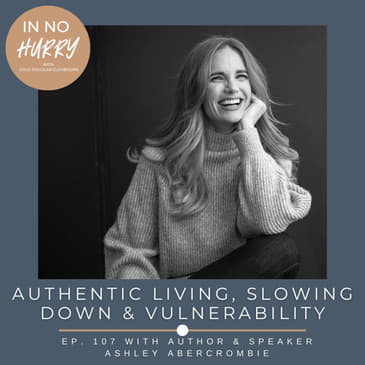
Do you ever follow someone on social media and just know you would vibe with them in real life? That's how I feel about this week's guest, Ashley Abercrombie.
We've been following each other on the internet for a year or so, and I love her content and personality so much. And after my conversation with her this week, I love her story even more, and I know you will too.
You may already be familiar with Ashley and her work as an author and speaker. She wrote Rise of the Truth Teller: Own Your Story, Tell it Like It Is, and Live with Holy Gumption in 2019, and Love Is the Resistance: Learn to Disagree, Resolve the Conflicts You've Been Avoiding, and Create Real Change in 2021. She's contributed to a variety of outlets, like RELEVANT and Virtue, she's the creator of After Hours on Substack and a co-host on the Why Tho Podcast.
This week we talk about the right perspective on goal setting, the need for slowing down, being vulnerable, living authentically, and having tough conversations with grace. You can follow her on Instagram and Threads @ashabercrombie and online at ashabercrombie.org.
I'd also love for you to connect with me on Substack on "The Road Ahead": coledouglasclaybourn.substack.com. You can also find more of my articles and content at coleclaybourn.com and on social media: Instagram: @coleclaybourn Twitter: @ColeClaybourn Also find me on Facebook at facebook.com/ColeDouglasClaybourn
[00:00:00] Hey friends welcome back to another episode of The In No Hurry Podcast. This is your host
[00:00:13] Cole Douglas Claybourn. Happy to be back with you for a new episode and the first
[00:00:18] episode of 2024, the first episode of a new season, season five of this show which
[00:00:24] is so cool and I'm super excited for my guest this week. Have you guys ever followed anybody
[00:00:30] on social media and you just kind of have a feeling that you would jive with him if he ever got
[00:00:34] to hang out with them in person? That's sort of how I have felt about my guest this week,
[00:00:39] Ashley Abercrombie. We have followed each other for, I don't know how long on social media and
[00:00:44] I just have always enjoyed her vibe and the content that she puts out and this week we finally got
[00:00:48] a chance to sit down and talk something that I've wanted to do for a while I wanted to have her
[00:00:53] since last year sometime when we were finally able to find a time and talk. Many of you may
[00:00:58] already follow Ashley on social media or are familiar with her work but she's the author of
[00:01:03] Rise of the True Teller, own your story tell it like it is and live with Holy Gumshin
[00:01:08] and a new book that came out in 2021 called Love Is the Resistance, Learn to Disagree,
[00:01:13] Resolve the Conflicts, You've Been Avoiding and Create Real Change. But on top of writing books,
[00:01:19] she's done a ton of other things including a lot of freelance writing, she contributes to a
[00:01:23] lot of different outlets but she's worked as a pastor, a speaker and what I think is really
[00:01:28] cool is that she has also worked as a prison chaplain in the pastor and has helped lead faith-based
[00:01:34] initiatives all across the country and she talks a little bit in this episode too she's 20 years
[00:01:39] sober she's got a passion for justice she has a lot of stuff with nonprofit especially things that
[00:01:44] help women that have been victimized in the sex trafficking and sex exploitation industry so
[00:01:50] really really cool stuff that Ashley is doing but her latest book really hits on something that I
[00:01:57] am passionate about which is just advocating to live our authentic selves and being true
[00:02:03] to who we are and not feeling like we need to put a front up or not hiding things that we feel
[00:02:08] passionate about having tough conversations that we need to with grace and with dignity as Christians
[00:02:14] and just really really good stuff we talk in this about comparison we talk in this stuff about
[00:02:19] doubt and just struggles with our faith and things like that all the stuff that most Christians
[00:02:24] go through and she opens up in a really vulnerable way about some pretty intimate details about her
[00:02:31] life that I obviously very grateful that she shared on here so there's a lot in this conversation
[00:02:36] that I think you will hopefully get out and be able to have it be a benefit to your life
[00:02:43] this is a great episode to start off the new year we even talk about goals and how to start
[00:02:47] off the new year right she writes a newsletter on sub-stack called After Hours and we talk a little
[00:02:52] bit about that too and even her first one that she wrote out this year that was about goals
[00:02:57] and she explains all that I won't give too much away but she talks about goals and I know that
[00:03:01] that's a big thing that people do here in January as we started new year so excited for you guys
[00:03:06] to listen to this here is my conversation with my new friend Ashley Abercrombie
[00:03:16] well Ashley Abercrombie welcome to the show how are you? I'm doing great thank you I'm so glad
[00:03:21] to be here yeah I'm excited to talk with you I think we followed each other on social media for a
[00:03:27] while you've been on my list of people that I wanted to have on the show and I'm glad we could
[00:03:31] finally connect here to start off 2024 just what what's been your it's obviously early in the
[00:03:38] new year but what are you hoping this new year brings you just in terms of Joanne you got a lot
[00:03:45] of stuff that you care about your family and your writer things like that what do you look
[00:03:48] forward to most about this new year? Well thanks for asking that question I just finished a piece
[00:03:53] about being goals because I feel like in just got that right before we started recording literally
[00:03:59] just finishing before we recorded and I think it was about 2014 so almost a decade ago when I
[00:04:06] decided to stop making doing goals like what do I want to do? And I started asking myself who do I
[00:04:11] want to be? And that particular question has framed the way I think about years and in fact I think
[00:04:18] often when we're in the dead of winter it is just not the best time for me personally to start
[00:04:23] brand new and every time I try to set all these goals and do all these things like life happens
[00:04:28] and things change and shift and so I've made the mindset who do I want to be? What type of person
[00:04:33] do I want to become? And I'm allowing the person I'm becoming to inform the things that I'm doing
[00:04:38] and that has brought a great deal of peace to my life. It's made me more healthy it has ended
[00:04:44] my obsession with workaholism and perfectionism and all those things that kind of hinder us as
[00:04:50] creators and hinder us as people and impede on the intimacy of our relationships and so that
[00:04:56] that's my new way of thinking as being goals and so I ask those every year and you know it could
[00:05:02] be small things like walking by the river it could be making sure that I laugh with my family
[00:05:05] every day. It could be I want to share one meal a day with a person, at least one meal with a person
[00:05:11] so it's small things that I focus on throughout the year as I'm accomplishing those bigger goals
[00:05:17] that I have. I love that because I look forward to the start of a new year because I feel like it is
[00:05:22] a time to reset and I get really excited about it. And last year I was really good the first month
[00:05:28] and a half or so about I was journaling every day, I was walking every day, I was establishing all
[00:05:33] these good rhythms. I read Atomic Habits at the time so I was like doubling down on how do I establish
[00:05:39] all of these and how do I avoid the distractions? And then I realized I mean it was like one bad weather
[00:05:43] week and then I just got out of my rhythm of walking and then I didn't do it as regularly anymore
[00:05:48] and I think for me, I always feel a little bit of guilt whenever I stop a goal or like I have a
[00:05:54] checklist of things I want to do. And a lot of times it's super valuable stuff like I really want
[00:05:59] to write more, I want to be more creative, I want to have better discipline so it's all good things
[00:06:03] but I feel this almost like inherent guilt whenever I don't see them through all the way. Is that
[00:06:09] something you dealt with? And is that did that change your approach to how you and I like the
[00:06:13] comedy said the dead of winter is not really the best time for you to do that. I know a lot of people
[00:06:16] see I think August, they see August is like a second January because it's usually the start of
[00:06:20] the school year. But so what was that a problem you had too in terms of just realizing that some
[00:06:27] point the goals you said they may not happen and then did you ever feel that guilt that I was talking
[00:06:31] about and did that inform kind of this new approach you have? Oh absolutely, you know I was ridiculous.
[00:06:38] I like I would set these, I had these five areas I'm like faith, family, finances, friendship
[00:06:43] I forgot to get oh fitness, that was my other one you know. All that so we go. You know goals
[00:06:47] underneath goals underneath goals and quarter one goals and quarter two goals and annual I mean it
[00:06:52] was ridiculous like no human being on the earth could possibly hold up those standards and then I
[00:06:56] would feel the way that you're talking about I feel like man I set all these huge goals and I'm not
[00:07:01] accomplishing anything and I realized they were outsized and unrealistic and you are not just going
[00:07:06] to become a brand new person in a day like you don't go from not working out at all to working out
[00:07:11] you know seven weeks for an hour that's just it doesn't work that way we're human beings who are
[00:07:16] evolving we have to take smaller steps to sort of get to those goals and so that's why I moved from
[00:07:21] like I'm going to do this specific thing every day to rhythms of being so that way when there is
[00:07:26] like a weather week great I'm gonna be in my house I'm gonna turn on yoga with Adrian on YouTube
[00:07:31] and I'm gonna do a little bit of restorative yoga right like I can't go walk today it's dumping bucket
[00:07:35] terrain like and I'm able to shift and flow without that sense of guilt so I prefer the word rhythms
[00:07:41] over like you know things I want to do and goals I want to accomplish like it's the rhythm that I can
[00:07:46] get into that is sustainable that is life giving that feels replenishing and honestly like I don't
[00:07:52] know a single person in my life who isn't working really hard like it's not that we're not producing
[00:07:57] things and we don't have high outcomes we're not being successful in the things that we're doing
[00:08:02] and of course we're making mistakes and having failures too so I don't think we have to most people
[00:08:06] have to worry about like they're worth it ethic and accomplishing things most people actually need
[00:08:10] to set a better rhythm of rest and a better sustainable rhythm for accomplishing things so that
[00:08:16] we don't turn into like this human doing you know I just want to remind people like you're a human
[00:08:21] being you're not a human doing you are not a machine you are not created to produce produce produce
[00:08:27] and hit a goal hit a goal hit a goal hit a goal like that's not actually what we're created for
[00:08:32] yeah and so I think figuring out those rhythms that feel sustainable and refreshing to you
[00:08:37] are very very important you're speaking my language that I mean obviously the name of the show is in
[00:08:41] no hurry and that's the topic that I feel pretty one of the one of the topics I feel the most
[00:08:47] strongly about I was a high school teacher for five years and that life was just consistently
[00:08:53] it was never ending and I thought whenever I initially left journalism to become a teacher that
[00:08:58] it was going to slow down a little bit because I thought oh well be done with the workday at three
[00:09:02] o'clock and then I can relax well no my workday as a teacher didn't stop until I went to sleep
[00:09:07] and then even breaks it never stopped and so I created this show actually when I initially left
[00:09:12] teaching because I was like I need to remind myself to slow the heck down because I was coaching tennis
[00:09:18] I was the charge of the yearbook and the student newspaper and I was teaching English and it
[00:09:23] was doing everything that I could do to be back there and I was like I'm going way too fast and
[00:09:28] I'm doing way too much so when we moved cities I was like this is a great time for me to to recalibrate
[00:09:33] and so whenever I did go back into teaching I purposely didn't take on as much but I do think
[00:09:37] what you're saying is very true and that's actually the topic of the book that I'm writing now
[00:09:41] is about the topic especially as millennials we feel this incessant yes it's almost like
[00:09:48] culture created where we have to do more and a lot of times people feel it out of necessity because
[00:09:54] so many things are so expensive and so to even pay for a house or rent a lot of people feel like
[00:10:00] I've got to have a second or even third job or a side house and so if they're not doing that
[00:10:06] they're either they either feel inherently guilty or a lot of times people are just like well you're
[00:10:11] not working hard enough and it's like I could have three jobs and probably still not make as much
[00:10:15] of a difference into paying for a house as I want to so you know speaking to maybe even I'm
[00:10:23] I'm 34 so I'm a millennial and I know Jinsy is is entering into the same thing as a graduate college
[00:10:29] this idea of workaholism I think we are we are we are we are workaholics and that's just
[00:10:36] from 18 to whatever age people are retiring at we feel it but I know especially my generation
[00:10:42] the almost every teacher that I worked with had a second job whether they did it over the summer or
[00:10:46] during the school year and that's crazy I mean we're not meant to work that much so we're
[00:10:50] we're I mean what is your heart for for that I mean you mentioned having rest and finding
[00:10:54] rest for yourself I mean what message would you give to people that feel like they have to
[00:10:58] overwork or they have to do x y and z just to make ends meet and they don't really feel like
[00:11:02] they have any time to rest. This is such a good question and it's also a complex question because
[00:11:08] you know your personal context really matters here the truth is I mean there I've been in the
[00:11:13] workforce since I was a teenager and it's only been in the last decade that I feel like I've
[00:11:18] actually been able to not work multiple jobs in order to survive and in order to you know have
[00:11:23] the quality of life that I want so I want to assure people that if you are in that place for you
[00:11:29] maybe you have student debt that you have to pay back now that you have to pay it back maybe you are
[00:11:33] you know dealing with difficulties in your family maybe you have a new medical diagnosis like
[00:11:37] there's a million reasons why people need extra support and extra income or maybe you work for
[00:11:42] a nonprofit maybe you're a teacher you know all those different things um it's a personal context
[00:11:47] really really matters here but for me I think that I really had to come to a place where I realized
[00:11:52] that my worth was not deeply connected to my work and I had always created like made those two
[00:11:58] synonymous now I'm an elder millennial I'm 42 like I'm right on the cusp born in 81
[00:12:04] and so I'm like I was raised by boomers right so and not your typical boomer my mom is like
[00:12:10] really young at heart in fact she was offended when I told her she was a boomer
[00:12:15] if I've seen the thing on the internet yeah like my mom that is your age group but I think
[00:12:21] that we watched that generation you know make work their world and it was deeply connected to
[00:12:28] their sense of identity it was deeply connected to their sense of meaning and significance and
[00:12:34] they're good and bad things about that and we also watched them be able to work really hard and
[00:12:39] afford a home in their 20s and 30s and take vacations hey vacations yes by a house for like
[00:12:45] under a hundred thousand dollars and you know like they they had a whole different experience in terms
[00:12:50] gas was like a dollar you know so it was a very different world and now there was an actual dollar
[00:12:56] menu and McDonald's now it's like three dollars or whatever it is so everything is so extensive yes
[00:13:00] exactly in same at Taco Bell it's very important yeah and I think that that cost of living you know we
[00:13:07] haven't raised minimum wage in most states since 2007 when Obama raced it up to seven dollars
[00:13:12] in 25 cents like where I live in North Carolina that is still the minimum wage for even though housing
[00:13:17] has quadrupled and groceries are expensive and gas is crazy like so people really are in a struggle
[00:13:24] and so I think I would point back to the need for things that replenish you so whatever your income
[00:13:30] bracket is however many jobs that you have to have to survive and pay your bills and do the things
[00:13:35] that you need to do it is really important that you figure out what refreshes your soul what
[00:13:40] replenishes your life and if you're anything like I used to be I used to give like 120 percent to
[00:13:46] every task every person every project and I just felt like it was necessary it felt like that meant
[00:13:52] it was I was operating and working in integrity and what I discovered is that no one was asking me
[00:13:57] to do half the things I was doing I was making everything more complicated all my jobs were harder
[00:14:02] because I was adding things on top of the things that I'd been asked to do to deliver extra
[00:14:06] things because I thought that was important no one was asking me to do that no one was paying me
[00:14:10] extra to do that no one was giving me any benefits for doing that yeah so I think you figure out
[00:14:15] what replenishes you what things can you stop doing realistically and still you know be successful
[00:14:22] at the work that you're doing and then how can you build relationships that bring laughter to your
[00:14:27] life and joy and people who are with you within the hard times and people who are like yeah works
[00:14:32] really sucks today and I'm sorry that you're going through that and let me come sit on your couch
[00:14:35] for a little bit and let's grab a pizza you know like yeah you need people who can support you
[00:14:40] and I think having those three things no matter what your economic bracket is or how many jobs
[00:14:44] you have it's helpful to make you feel like your your life has meaning beyond your work
[00:14:51] and it makes you feel like you are supported and cared for as a person we all need that yeah
[00:14:57] that's great and I think this next question maybe we'll tie in a little bit to discussion about
[00:15:04] your book Rise of the Truth Teller being kind of about being our authentic self I know for me when
[00:15:10] especially when I was a teacher I was in my mid 20s when I took that job and I felt at least the
[00:15:16] first couple years that anything that I was asked to do by the administration I needed to say yes
[00:15:22] to it because I wanted to prove that I was valuable and then I realized that most young teachers
[00:15:29] feel that way and then that's how they end up getting a lot of responsibilities because all the
[00:15:33] veteran teachers are like I don't want to do that we're going to let the young people with energy
[00:15:36] then I realized after like two or three years that I there was a time I remember I tell the story
[00:15:40] quite often and I remember my wife and I were out to dinner and it was like April toward the end of
[00:15:44] the school year and I just everything that was like at the end of the school year the yearbook was
[00:15:49] about to be due we were about to take an overnight trip with the tennis team and I needed to find
[00:15:54] the hotel and like everything was just like like I like had a nervous breakdown at dinner with my
[00:15:58] wife and it was awful and so I just remember feeling the weight of everything and I was just overworked
[00:16:04] and I but I felt like I needed to keep doing more otherwise people wouldn't see me as valuable and it
[00:16:10] was completely birthed out of this insecurity and comparison that I deal with where I just I wanted
[00:16:18] to be seen as like the guy who you know was good at this and that and so in a way I felt like I was
[00:16:25] disguising my authentic self I was putting on this front of like yeah I have no problem doing all
[00:16:31] this I can do all the like I you know I just was like I was doing everything they asked me to do
[00:16:35] even though I and I had a hard time saying no and so how much of that plays into this where people
[00:16:41] feel like they have to take on more because they either are trying to prove themselves or
[00:16:47] they just feel like if they say no that they're letting people down I know some people kind of have
[00:16:52] an issue where they they feel like they don't want to say no to somebody because they don't want
[00:16:56] to put them out of their misery but really it's just making ourselves and you know more inconvenience
[00:17:00] so from that perspective I don't know if that went into your thought process with this book at all
[00:17:06] but yeah I just wanted to have you speak on that issue too. Yeah thank you you know I thank you
[00:17:10] for sharing so vulnerablely too it feels so good to be able to hear that and I I relate completely
[00:17:16] I always tell people I feel like I had a PhD in pretending you know like I knew how to show up
[00:17:21] and do all the things and I really felt like if I couldn't be the one who served the most or did
[00:17:26] the most that people wouldn't want me around or that I wouldn't bring value to the organization
[00:17:31] or to the community and it took me a very long time and I'm talking like a few decades to really
[00:17:36] realize like I'm valuable because I exist like because God created me because of who I am
[00:17:42] and not because of what I can do not because of what I produce not because of how I serve
[00:17:46] and not because of the way my work can benefit others and all of that is extremely important hear me
[00:17:52] like I love to work like I genuinely really love it but I think when you kind of a mesh your value
[00:17:59] with what you produce you begin to become someone who's like a machine my friend Harmony says all
[00:18:06] the time that we repeat what we do not repair and I really love that I quoted her in my book because
[00:18:12] I realized gosh I'm just repeating things that I have not repaired I'm repeating the need to get
[00:18:17] approval from authority figures that I didn't get it from I'm feeling the need to find my
[00:18:22] significance outside of these places because I didn't get it there and I need someone outside to
[00:18:28] validate me I need them to say that I'm good enough I need them to say that my life matters I need
[00:18:32] them to say that I'm good at what I do and I was always looking externally for validation
[00:18:38] and I want to be careful here because actually we do need encouragement and validation and assurance
[00:18:42] and relationships that's so important and in work too and in work absolutely but if you are
[00:18:49] constantly looking for it everywhere else I think that you'll live perpetually disappointed and you
[00:18:54] won't be able to find that intrinsic value that comes from existing that comes from who you are
[00:19:00] that comes from the inside of knowing that you're loved knowing that you're enough knowing that
[00:19:04] you're significant and knowing that where you're not enough like God's grace is sufficient for you
[00:19:10] and that his his powers made perfect in your weakness and so I think all of that is really important
[00:19:16] I got over the performing imperfection isn't through my recovery journey so I am now I'll be 21
[00:19:22] years sober next month that's awesome it's huge and I think that you know the first decade of
[00:19:28] that was kind of unlearning this need to be perfect in order to be loved because that is actually
[00:19:35] my deeply held belief is that being perfect means that I'll be loved and so I've had to work really
[00:19:42] hard to let that go because all of us are messy human beings and none of us are perfect and none of us
[00:19:47] you know can do all these things without eventually breaking down and so I think I had to really
[00:19:52] resolve my humanity and allow myself to be messy and allow myself to drop some balls and allow myself
[00:20:00] to not be perfect and allow myself to make mistakes and as I got into healthy relationships
[00:20:05] and communities what the recovery journey allowed me to see is that people still love me even when
[00:20:10] I wasn't perfect and people still love me when I messed up and people still love me when I made
[00:20:14] mistakes and that helps me grow and understand that that actually wasn't created for perfection
[00:20:20] that the goal is wholeness not perfection and that's how we become more authentically who we are
[00:20:26] because we can show up trusting and believing that we have value beyond perfection and that we
[00:20:32] you know because we exist and because of the communities that are a part of and because of who
[00:20:36] we are we add value where we go and that's really important to know and understand but it takes a lot
[00:20:41] of time it takes a lot of practice it takes a lot of good relationships for you to be able to know
[00:20:46] that deep in your bones yeah well thank you for sharing all that I know it may be difficult times
[00:20:52] to talk about you know your sobriety journey and things like that our pastor talks about his
[00:20:56] sobriety journey quite a bit and he's super vulnerable about it but I know that some people may not be
[00:21:02] as vulnerable and open about it but one of the notes I made about this book was that idea
[00:21:08] of exposing our messiness and our shame instead of hiding it and I just remember when I was a teacher
[00:21:15] I had some I was an English teacher and so I had some students that just they were not
[00:21:19] they were not gifted writers and they were they were not confident in their ability to write
[00:21:23] and so when they had an essay their natural inclination was to to find something that they could
[00:21:29] copy or cheat off of and turn in what they perceived to be a good piece of work
[00:21:34] and what I always told my students was that look I don't care how good or bad of a writer you are
[00:21:40] I just want to read your authentic voice because I can't assess you if it's not really you and I
[00:21:45] know like right now chat GPT is this thing is they're using it I don't know how I would react to
[00:21:50] it if I was a teacher but I told students that I would rather them turn in their self-created
[00:21:56] work if they felt like it was D or F or whatever level then find something that was you know
[00:22:01] I can tell when it's not their voice and so I felt like there was a metaphor there where
[00:22:07] that's kind of how I want to approach my life and how I would really want anybody to approach
[00:22:12] their life because if somebody that I'm friends with or or family with or whatever just in some kind
[00:22:17] of a relationship or connection with I would want them to always be bringing their genuine self even
[00:22:23] if there's shame and messiness there that they're not proud of what message would you have in
[00:22:29] that regard as well and how I know that for some people that may be uncomfortable that may not be
[00:22:35] as easy to do so that for those folks where they just they really have deep seated shame for
[00:22:41] for whatever and maybe that comes from the church I know some people have really bad experiences
[00:22:45] in the church and they're younger I don't know what people's stories are but
[00:22:50] to me my my thought is always to be fully loved you have to be fully known
[00:22:55] and I think like when I when I got married that was one of the lessons that I learned the
[00:23:02] most about God where it's like if you were you can't hide anything from your spouse and if you do
[00:23:07] you're going to feel the guilt about it but whenever you are fully known by that person it's like
[00:23:11] that torn well song fully known and loved by you and it's like that's truly what the love of
[00:23:16] Christ is and so I feel like that that is a message that you're bringing in this book I would assume
[00:23:22] is what your heart was too I mean what what can you speak to in that in that sense about just
[00:23:28] being willing to be vulnerable about the messiness and shame that we might feel about different
[00:23:33] things that we have in our life what a beautiful question so you know Mike Foster says that we learn
[00:23:39] love from people who do not love us yeah and so we're raised in different environments where we
[00:23:45] have all these unique experiences and we experience like true love where we are cared for and nurtured
[00:23:52] and encouraged and then we also have these experiences that could rain you know range the gamut from
[00:23:57] severe abuse to neglect to to you know just being disregarded or for your dreams not to matter
[00:24:02] or your parents trying to shape you into who they think you ought to be instead of who you naturally are
[00:24:07] you receive that at home you receive that in school you receive that on your job if you were part
[00:24:11] of a faith community growing up you receive it there if you spent time at the YMCA with your coaches
[00:24:16] like you know if you were involved in sports like all these kind of adults and communities are shaping
[00:24:21] what you think is good what you think is valuable what you should be ashamed of what you
[00:24:26] shouldn't be ashamed of and so all of us come to adulthood with that kind of goodness and baggage
[00:24:32] and we have to sort out like what kind of things did I just inherent because somebody else told me
[00:24:38] that this thing is bad and maybe it's not bad maybe it's just being human you know I remember
[00:24:43] going up like I wasn't allowed to be angry like nice southern girls don't get angry the problem
[00:24:48] is like I'm a fiery redhead who gets pissed off some people like I needed to learn as an adult
[00:24:54] that actually anger is a normal emotion and it's perfectly fine to have it you just have to know what
[00:24:58] to do with it and you have to know how to navigate it but I would stuff it down and suppress it
[00:25:02] and try to make it go away because nice southern girls don't get angry and so I had to learn
[00:25:07] that it isn't a shameful thing to be mad and that actually some things are worth being mad about
[00:25:12] and it's okay to have that emotion you know had to unlearn some things around you know sexuality
[00:25:18] because I was I was abused and went through some very difficult circumstances and so I had to
[00:25:22] learn that I didn't need to be ashamed of the things that I was victim of I didn't cause them
[00:25:27] I didn't create the situation I didn't cause it to happen and so what do I have to be ashamed
[00:25:31] of the person who did the thing needs to be ashamed not me I was innocent victim and so I had
[00:25:37] to unlearn the shame of that and how you do that is challenging you know I like the term in the
[00:25:43] social services sector wraparound support because I really think when you're trying to overcome
[00:25:48] shame whether it's you know from little T trauma or big T trauma I think that part of you know
[00:25:55] overcoming shame you need a lot of services around you you might need to go get some professional
[00:25:59] therapy you might be like me I need to be in recovery groups in order to be successful in your
[00:26:04] sobriety you also need good friends you might need a faith community that can support you on your
[00:26:09] journey and all of that especially when you come from a different all background is discerning
[00:26:14] who is a safe person that I can trust and who is a safe person that I can open up my life to
[00:26:21] and you're probably going to try and then have to realize that didn't work out so good and I'm
[00:26:26] going to pull back and I'm going to try with this person who feels safe like it's it's a bunch
[00:26:30] of learning it's messy it's not straightforward it's not you know easy but it's worth taking the
[00:26:36] risk to be vulnerable with some people it's worth taking the risk to trust that some people are
[00:26:41] going to help carry you through that difficulty and help you learn to not be ashamed of your humanity
[00:26:47] and to not be ashamed of your experiences and all of us have passed I don't care if you had two
[00:26:52] of the best parents on the earth it doesn't mean that you're exempt from issues problems in pain
[00:26:57] that is the human condition yeah and so we need to be set free from thinking that we're supposed
[00:27:03] to be these perfect little human beings who arrive at this place of a foray and we have no issues
[00:27:08] problems or pain that isn't real black yeah and so it's it's a process it takes a lot of support
[00:27:14] it might take some professional services takes good friendships it takes good community
[00:27:18] and that takes a while to develop and a lot of people give up during that time of developing
[00:27:23] that a lot of people relapse if you have a background of addiction during that time because it can
[00:27:28] feel very isolating and lonely to have to rebuild that and have to try and have to trust but I'm telling
[00:27:33] you 21 years later that is so worth it it is worth the risk even when you get it wrong
[00:27:39] and even when you trust someone who wasn't worthy of your trust it's worth it to do it again it's
[00:27:43] worth it to try again it's worth it to laugh again because we need that in order to be well we need
[00:27:48] that in order to be whole we need that in order to show up in our own life with some strength
[00:27:53] and some courage like you have to do this hard work it's worth it well thank you so much for sharing
[00:27:59] that again I mean you have quite quite a story with with a lot of different layers to it that
[00:28:05] experiences that I could never imagine until I really appreciate you sharing all that
[00:28:10] with this book in particular and I guess any of them that you've written what are you
[00:28:13] or you touched on these topics I mean how cathartic has that been for you to write through that
[00:28:18] because I know us as writers that's what we do is we write we write our emotions I know not
[00:28:23] that not everybody is capable or comfortable with doing that but obviously you speak about it
[00:28:30] you know fluently but how was how was that to write about it how cathartic was that for you
[00:28:35] it is very cathartic yeah you know I love I love the first round draft where you are you know not
[00:28:42] editing as a writer I'd like to separate my creator and my my creator writer and my editor because
[00:28:47] if you try to sit down as a creator and create but you've got like this editor sitting on your shoulder
[00:28:53] telling you what's good and bad and how you should change things and what you should do you have to
[00:28:57] kind of put that away for a little bit and just like flow and I think when I do that I I discover
[00:29:03] memories that I forgot I discover lessons that I want to remember I discover that the experiences
[00:29:10] I had in my life are actually of benefits to others and for me that means that the pain that
[00:29:16] I went through is not in vain and so it's cathartic on a few levels like not only just getting it out
[00:29:20] because it feels good to get it out it feels good to bear witness to your memories and to your life
[00:29:26] and to the things that you've watched through and it feels good to let other people bear witness
[00:29:31] to the pain of your life to the joy of your life to the lessons of your life because it's strengthens
[00:29:36] other people and I really love when people get to read something and go man I thought I was the only
[00:29:42] one but I'm not I love when people can read something and feel less alone and feel less crazy
[00:29:48] and feel normalized for being a human yeah and I hope that my work does that for people because
[00:29:55] that really matters to me so how do you go just this is kind of a question about the writing process
[00:30:01] because like for me I'm a journalist instead of the the process is much quicker from idea to
[00:30:08] the final result of an article a book is very different and the process still of creating what
[00:30:15] I hope will be my first one and it's been years in the working in the working because it's just
[00:30:19] a long process and it's a lot of times I have found especially in the Christian space there's just
[00:30:23] a lot of unknown you get told a lot of times like oh you have to have a big platform or this and that
[00:30:29] and this and that we could I mean we could get into a whole other topic about that but it is
[00:30:34] it's a lot to go from you have this idea to do people actually want to hear this to am I the right
[00:30:41] person to say to some of this I believe is doubt that the enemy puts in our head like oh am I
[00:30:46] really the best person to say this what what am I qualified this is some of the battles that I've
[00:30:51] had to like why am I qualified to say this there's already a book about this what am I going to say
[00:30:55] that's different when you when you've had an idea how have you gone from idea to to getting it
[00:31:02] on paper to then writing it to seeing it through and not allowing any distractions to hinder you
[00:31:09] and it seems like from a little bit I've gathered from this conversation you you you have good
[00:31:13] discipline you're able to find time to work so what does that rhythm look like for you and how do
[00:31:17] you how do you make sure that the idea you have actually sees the light of day okay such a good
[00:31:24] question all right so two things I think that the first one is I make my peace with there's nothing
[00:31:31] new under the sun and here's what I mean by that is that I'm not going to have nor is anyone else
[00:31:36] going to have some profound revelation unless maybe you're a scientist like I'm gonna have some
[00:31:41] profound revelation about some truth that only I could think of like that's not true everything
[00:31:47] good is universal and so we tap into the universal truths and we tap into the universal experiences
[00:31:54] of humans from our unique lens and so that's actually what we bring to the table I'm not going to come
[00:31:59] up with some revolutionary idea that no one's talked about before but that doesn't mean that I don't
[00:32:04] have or that you don't have or that anyone listening doesn't have a unique angle on that particular
[00:32:09] thing and so I think that's what you have to find as a creator and a writer it's not am I worthy of
[00:32:14] writing this or should it be written because it's already been written those are not the questions
[00:32:18] it's I have a unique angle what is my take and how can I express my angle and my version of this
[00:32:26] unique universal truth that I see and I think that's what's really important when it comes to creation
[00:32:32] and when it comes to idea into like implementation like I think often about ideas in bits and chunks
[00:32:38] like I want to think about okay I have this great idea about a book and believe me my title changed
[00:32:43] like 52 times I actually thought the book proposal for anyone who might be writing one was
[00:32:47] harder than actually writing the book it's just so difficult to put down like your hook statement
[00:32:52] and that exact like one big idea and then to break it out into your chapters it's all challenging
[00:32:58] but at the same time I think that you know the the book idea you have to figure out does this have
[00:33:03] legs on it like is it just an essay let me write an essay and see what that feels like okay actually
[00:33:09] it is an essay but there's more here or like I can tease this out six different ways and then
[00:33:13] you start to do that and then you start to find other tendrils and then you start to think about
[00:33:16] stories and stories from history and stories from your personal life and you just begin to sort of
[00:33:21] tease that thing out until it gets bigger and bigger and bigger and I think once you do that you can
[00:33:25] discover if you have a book and of course platform and all of that plays into it there are a lot
[00:33:30] of books that get published particularly in the Christian world that are not good books they're not
[00:33:35] good they got published because somebody's a big pastor or they have a giant platform but the
[00:33:40] writing is a good and honestly it probably should have just been a 50 minute message and not like
[00:33:45] a 400 page book and so I just know that like you can't control any of those things like platform
[00:33:52] how much money goes behind the book that you get pushed out there how much marketing goes behind
[00:33:56] your book like you don't get to control any of those things but you do get to control what your work
[00:34:00] is and what it says and what your idea is and how you tease that out and how you flesh that out for
[00:34:05] people who are going to be reading and my discipline looks like weekly writing so I write once a
[00:34:11] week for pleasure I not for anybody who will read it I write for myself like once a week I love doing
[00:34:17] that and then I write long form once a week for my my email audience like I write for them
[00:34:22] because I love doing that and I love long form writing and then I sometimes do some social media
[00:34:27] chunks I'm in a zone right now where I just am a little bit done with social media and it's getting
[00:34:31] on my nerves I don't want to fall with it and right now I don't have to so yeah feels good to my soul
[00:34:37] I'm so where I was then I would think at the beginning of a week either a Sunday or a Monday I'd
[00:34:41] sit down and plot out what do I want to talk about this week and how what are those mini captions
[00:34:45] going to look like and where are they going to go and so I have had you know I have Google sheets
[00:34:49] that I worked with and all these different places where I could kind of take that long form idea
[00:34:53] that I write once a week and break that down into smaller chunks for the internet like
[00:34:57] such lots of ways you can think about ideas and obviously I'm talking about you know books
[00:35:01] and social media I mean I recognize I've just said a whole chunk of things but it does take you
[00:35:06] know just sit button seat that's what Anne Lamott says just get your button seat and just write
[00:35:11] and you know if the page is blank who cares like I don't believe in writer's block I think you just
[00:35:15] start putting words on a page and if you don't like them that's fine you don't have to like the words
[00:35:19] just get the words on the page and all good rating is just rewriting but if you don't have anything
[00:35:24] to rewrite you know you can't make your writing that so just get in the seat and do it yeah
[00:35:30] that's all that's all good stuff I mean I just think of my own experience it's just tough to like
[00:35:35] I definitely live in the space of where I feel like there's an editor on the other shoulder
[00:35:40] and it's like well I don't want to write this if I'm gonna just have to redo it and
[00:35:45] and it's it's it's just a like I said my my background is in journalistic writing and it's
[00:35:52] just different to go the long form route I would I would love to at some point write a fiction story
[00:35:58] but I'm like I don't know if I ever will have the patience or ability to sit down and do that where
[00:36:04] I'm coming up with the story all on my own I have so much respect for fiction writers because
[00:36:09] especially the ones who are so good at storytelling I mean it is crazy like it's one thing to recount
[00:36:14] your own story but and I know a lot of times they are informed by personal experiences but still
[00:36:20] that's pretty awesome it is build a world is not a small thing no not at all I try to do that in like
[00:36:26] you know computer games or whatever and use an imagination that way but not the same as right
[00:36:30] right it was very different so your your newest book I believe this is your newest book love
[00:36:36] is the resistance this came out in 2021 learn to disagree resolve the conflicts you've been avoiding
[00:36:42] and create real change I think that this thinking about the current cultural moment that we find
[00:36:50] ourselves in this is such a necessary book and I think you know we think about even just you
[00:36:58] talked about your not on social media right now and I wish that I could quit it I really do because
[00:37:03] especially not even just the politics of it aside I have found Twitter to be just a much less fun
[00:37:09] platform yeah as a journalist it was always my favorite one because I was able to deliver and also
[00:37:16] find news quicker yeah I used to have tweet deck I don't know if you've ever used tweet deck okay well
[00:37:23] Elon shut that down so I no longer can use tweet deck I hate the desktop version of Twitter
[00:37:29] so I if I really audited I bet you I have I'm tweeting at least 50% less than I was just two years ago
[00:37:37] so it's the social media there's good and bad of it but it is it can really I think Twitter for
[00:37:43] me has been the most vitriolic last year last year I quoted a very popular conservative radio
[00:37:54] hawk show guy and he made a comment this is this was after the football player nearly died on the field
[00:38:02] and if you recall this and there was you know there was a lot of different takes about this
[00:38:07] and I don't remember exactly what what I said I think he was arguing for football to continue
[00:38:12] being a violent sport and I was like this feels like a weird take after somebody almost died on
[00:38:17] the field yeah and it was like him then he quoted me to his million followers or whatever
[00:38:23] and then my mentions were just obliterated by all of his followers and it was like holy cow I do not
[00:38:29] even want to be anywhere near social media right now it is an awful place sometimes there's very good
[00:38:34] things but there's also bad things but I think even as Christians my buddy Dan Darling wrote a book
[00:38:39] about kind of a similar topic a few years ago basically about how do we use our words for good
[00:38:43] online as Christians and I struggle with it I've gotten into a lot of spats with people
[00:38:49] but about trivial things like sports but also politics mean obviously we had a pandemic and then
[00:38:55] a contentious presidential election that brought out a lot of things where did your heart for this idea
[00:39:00] come from was there a specific instance or just a collection of instances why was this topic on
[00:39:06] your heart at this time okay man you said so many good things I have a tendency to ask really
[00:39:13] long questions and I love it it's great it feels like a conversation and I appreciate it um you know
[00:39:19] love is the resistance was born out of you know the 2020 like I was writing it during 2020
[00:39:25] I was pregnant with our third child and we were home stuck in Los Angeles which had the
[00:39:32] strictest lockdown in the nation we were down for two years schools were closed for 18 months
[00:39:36] and I was just watching left and right as a person who came out of a nonprofit ministry background
[00:39:41] like watching the church just look so embarrassing I mean I felt so embarrassed and I recognize
[00:39:48] living in cities like Los Angeles and New York where we used to live I don't have the luxury
[00:39:53] to live in a little Christian bubble if I want to be relevant and connected to the people around me
[00:39:59] to the people who are part of my faith community I don't have the luxury to start accusing everybody's
[00:40:03] lifestyle and legislating my morality on top of them like that's not what you can do in those
[00:40:08] big cities because it just doesn't work it's not effective and also it's not loving it's unkind
[00:40:14] and so I was watching the church just act a fool and it really felt like a letter like I felt
[00:40:19] like I was writing a letter to the church and in some ways it was received in some ways it wasn't
[00:40:24] I had a very similar experience on Twitter right after my book came out with a female conservative
[00:40:30] you know podcast person and she did the same thing she retweeted something that I said and
[00:40:36] you know I had thousands and thousands of mentions and I like I had to take my Twitter private it was
[00:40:40] so bad they went over to my Instagram like it was terrible and I was like I wanted to but I was
[00:40:45] verified at the time and I do I would lose my verify mark if I did that then it got taken away
[00:40:50] anyways yeah because the way they change everything yeah I'm not gonna pay eight dollars to have a
[00:40:55] check no nobody is no thanks yeah I think that writing that book really felt like hey will you wake
[00:41:02] up like will you stop meshing politics with faith and will you stop being so and loving and
[00:41:08] calling it Christlike will you stop being so disrespectful to people who don't look like you vote
[00:41:13] like you think like you act like you I just got so exhausted of the church not practicing
[00:41:20] neighborliness not practicing the thing that we are called and created to practice um and I was
[00:41:26] frustrated and angry and I think there are times in the book where that comes across um that I'm
[00:41:30] that I'm feeling frustrated and angry and I have hope for the church I'm still a part of a local
[00:41:35] church I still um I still love it not only for my sobriety and my sanity but because I still believe
[00:41:41] in it you know as as wild and crazy as the church is I still believe in it um and I think that we
[00:41:46] have a real capacity to gather and do good and to gather and create a space where people can feel
[00:41:51] loved and included and when I don't see that happen I get really mad and so that book was an offering
[00:41:59] like hey here's how we can stop being passive aggressive here's how we can stop making sideways
[00:42:04] comments about everybody here's how we can really embrace our neighbor here's how we can practice the
[00:42:10] spiritual discipline of enemy love like Christ doesn't just cause to love he calls us to to love
[00:42:14] even our enemies like he pushes it that far for us and I felt like so many Christians in this digital
[00:42:20] age and in this digital bubble are going on the internet and saying all kinds of crazy things they would
[00:42:25] never say in real life because somebody would beat them in the streets like you just can't talk
[00:42:28] like that to normal people like you cannot do that like if we were face to face it would never happen
[00:42:33] yeah and some people are forgetting that the things they do in public really matter and that our
[00:42:39] love has to bear witness to something in public and in private and I want that for the church and so
[00:42:44] that book felt like an offering for us to do better frankly do you think the people in your
[00:42:50] mentions recognized the irony of the fact that they were ripping you on the internet and the whole
[00:42:57] premise of the idea of your book is like hey let's not do this and then they completely miss it
[00:43:03] and I would venture to guess based on my experience with this many of those people probably had
[00:43:09] a Bible verse or some reference to God in the Bible and I hate to use I mean it's such a trope
[00:43:15] but it's so true that it's true you know they always have like you know the John 316 you know
[00:43:22] like all the all the typical like standard popular verses in their profile or whatever it's like
[00:43:29] you know patriot dad American godfaring forever you know it's like you just cussed me out bro
[00:43:36] like what are you talking about yeah I'm not saying I'm perfect and don't act a fool in the internet
[00:43:43] sometimes too but like if you're gonna advertise that you are a Christian maybe let's act like it
[00:43:49] so I said I said this up to ask too I mean you mentioned that you took your Twitter private
[00:43:56] did you engage with any of these people how do you respond to these comments because at some
[00:44:01] point like it is overwhelming and you can't but like you may catch a few comments that are just like
[00:44:07] okay I have to clap back at this person yeah and and but then you feel like well now I'm gonna
[00:44:13] open myself to even more ridicule I mean like people were like screenshotting like my profile picture
[00:44:18] and making fun of the fact that where glasses and like yeah yeah yeah I'm just like are we too they
[00:44:24] caught they're calling me ugly saying all kinds of things about my hair like it was ridiculous so
[00:44:27] yes how do you how do you respond I guess just internally like keep your sanity but then like
[00:44:34] if you outwardly ever choose to respond how do you respond because there's a tension of
[00:44:41] I really want to put this person in their place but also I want to I want to stand up for what the
[00:44:47] book is about and not be you know not fall into the trap so how did you handle all of that
[00:44:53] so it depends like case by case I will say that now I just don't engage like I don't care
[00:44:57] you know every now and then I might say something back but it's really quicky and quick and it's
[00:45:01] not a big deal and I will not go back and forth like I just as a practice I don't but I used to
[00:45:07] especially back like 2019 2020 2021 I actually thought like we could go back and forth and be
[00:45:12] civil and it might make a difference and I very quickly realized that no it doesn't make a difference
[00:45:18] and these folks are inter like arguing on the internet for sport like they're not doing this because
[00:45:22] they want to grow and it's always an it's usually an anonymous account too they got like a frog
[00:45:26] is that picture or something yes or even if if it's not anonymous then they just want to fight you know
[00:45:31] like it's they actually have no interest in changing and I write a story in that book levisa
[00:45:38] resistance about a very popular conservative commentator who decided to invite on someone who's
[00:45:44] who's a very liberal commentator and they had this um conversation about Black Lives Matter
[00:45:50] and in that conversation like I had a great deal I watched it because I thought well maybe
[00:45:54] maybe there's just some middle of the road things here that they could talk about
[00:45:58] and it just never happened like she shredded him at every point every every time he tried to talk
[00:46:04] she had a rebuttal she had something she wanted to say back to him like she never just listened
[00:46:09] to hear and understand and that's when I realized like actually some people just don't want to
[00:46:14] understand they are making their living they are making their energy and time is going to do this
[00:46:20] just because they want to do it and some people are making profits off of that like that
[00:46:24] particular person and it's worth their time to be this way and then other people are just mimicking
[00:46:29] and parroting those people who are profiting um and so I think that you know arguing on the internet
[00:46:35] is a complete waste of time I don't have the energy for it I'm like if you want to talk in the street
[00:46:39] let's talk in the street like we'll do business together um and watch out because I'm six foot two
[00:46:43] so you better come correct you know what I mean like I'm not here to play like let's go like that's
[00:46:48] more my attitude now like I just want to take it old school and be like okay let's have a real
[00:46:52] dialogue or not at all yeah um and even with the conservative person who was retweeting and I'm
[00:46:57] not dig I'm not digging on conservatives by the way I don't really care if you're Republican or
[00:47:01] Democrat like I respect people on both sides of the aisle I have family and friends who are on both
[00:47:04] sides of the aisle and I love them I'm talking about the extremes of either end where you're just like
[00:47:10] spouting off without real reason and without real logic but I think that that back and forth
[00:47:16] exchange that I had with that gal by the end of it she was like I want you to come on my podcast
[00:47:20] and like I'm having a baby in three weeks like I don't want to come on your dumb podcast you know so
[00:47:25] what why just argue you just shredded me for an hour and now you want me to come talk nicely
[00:47:31] on your podcast all right yeah we're not doing that just so you can say you had someone who thinks
[00:47:35] differently on there no because you don't really want to change and you don't really want to dialogue
[00:47:38] do you know what I mean like yeah I think we need to be formed by one another like if you and I
[00:47:44] disagree about something and I'm willing to listen you're willing to share and you're willing to
[00:47:47] listen I'm willing to share are the way we see the world should should touch each other it should
[00:47:53] form one another we should be able to leave with a new perspective and a new thought and a new idea
[00:47:58] and a new understanding of how someone else moves through the world and so I've recognized that
[00:48:04] people on the internet don't want to do that and so I'm not interested in wasting my time anymore
[00:48:08] yeah I love that I what's really sad is last January whenever I was you know I was mentioned
[00:48:15] I was journaling every day I was walking every day and one of my one of my goals was I'm not
[00:48:19] going to be on Twitter at all in January like that was a legitimate goal but it's tough because as
[00:48:25] a journalist that that is a way that I often find sources and as a writer it's a lot of times
[00:48:30] the way to promote my podcast or my writing my newsletter things like that so it's like that's
[00:48:35] there's a trade-off and I think it was like one of the first few days of January when that incident
[00:48:41] happened with the football player and I was like I looked at my wife and I was like I'm sorry but
[00:48:46] I've got to see what people are saying on Twitter like this is a major moment I have to
[00:48:50] and then it just stuck me back in and so I didn't ever take time off the best I've ever done was
[00:48:56] I went one month with turning notifications off that was but I and it's like holy crap I'm so
[00:49:01] reliant on this when you've taken any time off from social media and I probably know the answer
[00:49:06] to this because I've never heard anybody say that they regretted taking time off but what is that
[00:49:10] done for your sanity what is did you miss it at all like what is what has been your experience
[00:49:15] whenever you've taken any time away from social media or at least limited it in some fashion such a
[00:49:21] good question all right so it's twofold and I'm going to be super honest here like the good news is
[00:49:27] like I noticed that my energy is better my experience throughout the day is better like I feel better
[00:49:33] in my body I feel more mindful and more conscious and more present where I am the bad news is like
[00:49:39] I had to build as you know yourself when wanting to become an author I had to build a platform in
[00:49:43] order to be published and so you know if you're not active all the time you lose what you built
[00:49:48] you know that's just how it goes and so I think there have been times over the last year where I've
[00:49:53] been like oh man I worked so hard to build this thing and to watch it sometimes you know
[00:49:58] um unfalows or numbers changing or stats changing I've had to just make my peace with it for now
[00:50:04] um because you can always grow and you can always change but I think there is a real loss there where
[00:50:08] you're like oh man so it's that that part of it that's not that important but is important to
[00:50:13] my past in the person that I was and then the other layer of that is that I realized oh my gosh
[00:50:18] some of the relationships that I thought we were close and connected I realized with
[00:50:22] our social media we're actually not we don't talk we don't end up texting each other we don't
[00:50:26] have any connection points outside of like seeing each other in the DMs or you know going back and forth
[00:50:31] and so that was an interesting experience too but also a good formative one where I realized like okay
[00:50:36] some of these relationships exist just in this space and I need to be okay with that yeah
[00:50:41] um so yeah it's been interesting overall I haven't regretted it and I'm super grateful for the
[00:50:47] ways it's made me better to not be so digitally connected but that human side of me also
[00:50:53] recognizes that there's some grief and loss in that as well how do you experience any
[00:50:57] phomo like you just worried that you're missing out on anything no no no I'm an introvert I never
[00:51:02] worry about anything like nope I don't care if you hang out without me that's totally cool with me
[00:51:08] I wish that I it's not so much that I like want to be noticed it's just like sometimes I just
[00:51:13] want to be part of the conversation or just be aware of what's coming on but it has been made
[00:51:17] easier now where I really I genuinely don't enjoy Twitter like I had this conversation on New
[00:51:24] Year's Eve somebody I was at dinner and I was just like look I'm not even trying to make a
[00:51:28] political statement it just is it is not as fun anymore like the usability of it is just not good
[00:51:34] yep I agree with that not fun I have to use the desktop and then it's like I'm used to my feed
[00:51:41] just like constantly scrolling like I'm a huge baseball fan and back in December they always have
[00:51:47] the winter meetings where there's always a lot of like trades and free agent signings and things
[00:51:51] like that and I used to have a column where I would just watch all these updates come through
[00:51:55] and I realized I was like I'm missing so many things because I'm not seeing it the way that I'm used
[00:51:59] to and yeah so I would have I don't really spend much time on Instagram to be honest with you I
[00:52:04] just don't really I don't sit there and scroll I don't care to see people's pictures no offense to
[00:52:08] people is I just don't care like if I log on and I see it there I will like it but I probably
[00:52:13] spend less than three minutes a day on Instagram seriously like I will spend much more time
[00:52:19] just watching stupid videos on TikTok instead oh TikTok is not much better but it is there's
[00:52:24] there's some love to be honest I love it there's some really funny stuff and really creative so I
[00:52:29] used to think it was stupid but like like most people I downloaded it during COVID because I was
[00:52:33] like well I need something to keep me entertained and I've kept it since but yeah so I don't
[00:52:39] Facebook I don't really spend any time on I used to post like a status a day and when I was in
[00:52:44] college and I was like super passionate about sports topics I would always post some like
[00:52:50] not in flamatory but just some kind of a status that I knew would cause a discussion
[00:52:56] gotten wiser I don't do any of that now but it was like I realized over the years my my
[00:53:01] reliance on social media has fluctuated and now it's I think it's probably the least it's been
[00:53:08] which is good but it is a necessary thing as writers and generally than people that have to
[00:53:12] promote it so unfortunately that's that's an aspect of it. It is. Well one of the final questions
[00:53:19] I love to ask my guest the show is called In No Hurry I love on your website you said you guys
[00:53:25] live near River in North Carolina so you can calm the hell down and chill the hell out and I feel
[00:53:31] like if I could put a tagline on the show that is what it would be is everybody let's just calm
[00:53:36] the hell down and chill the hell out. So I know we talked about this the beginning of the show
[00:53:41] a little bit just about being in a hurry and resting but I didn't notice too you said one of your
[00:53:46] favorite things is drinking fancy waters I have my La Croix with me here. But what are some things
[00:53:51] you do to slow down and just chill you've got a family and you want to make sure that you're not
[00:53:57] getting overworked so I know we talked about this issue earlier but just personally what are your
[00:54:01] go to rhythms or hobbies to chill the hell out and calm calm the hell down and chill the hell out.
[00:54:10] Okay I have a couple my plants I became a plant mom in 2020 after killing everything I ever
[00:54:15] kept in my house and so I have like 25. That's a big moment. It is yeah so I have a lot of plants
[00:54:21] and watering them honestly just makes me slow down and I can't do anything else while I'm watering
[00:54:26] I have to focus on the exact amount of water I'm giving them. So plants walking by the river is one
[00:54:31] of my favorite new things to do now that we relocated to North Carolina I also like to put my feet in
[00:54:35] the grass outside whether it's colder it's warm it's a grounding technique that you can use
[00:54:40] if you feel like your just your body spinning out of control your nervous systems on tilt or you
[00:54:44] feel like man I cannot ground myself in reality like I can't be present just go outside and put
[00:54:50] feet in the grass like there's something about it that just roots you down and then the other when
[00:54:54] I do well two more reading I read so much fiction and then the other one is I do a lot of restorative
[00:55:00] yoga practices so lots of stretching again things that calm the nervous system are really really good
[00:55:07] for me personally so those are a few things I do. Have you heard the the Gen Z phrase where they
[00:55:13] like if somebody's just being an idiot it'll say go touch grass have you heard this
[00:55:18] this is like a comeback but it is like and what's funny is I learned that phrase through a bin
[00:55:26] rector video on TikTok where this guy was this guy was interviewing him and they were like he was
[00:55:31] like I'm gonna quiz you on some Gen Z phrases and see if you know what they mean and it was you
[00:55:36] know like bet and snatched and like other phrases that these kids say and the guy said touch grass
[00:55:45] Riz was another one like yeah but he was like he was like actually touch grass is pretty wise it
[00:55:52] means like literally go outside and touch like you're too online right now so go outside and do
[00:55:56] something but there's actually apparently a scientific reason for it literally go touch grass because
[00:56:02] it's literally grounding technique that's hilarious these kids are wider than we realize maybe
[00:56:07] I don't know so you didn't knew that this uh that was part of it but that's that's hilarious
[00:56:12] they're brilliant well I know you have a newsletter which I'm a subscriber of and then
[00:56:20] I usually ask people to say what their social media handles are but if you're not
[00:56:24] I mean maybe you still want to share that but where are the best ways that people can connect with
[00:56:29] to you if they want to continue following you and checking out your work yeah so I write on
[00:56:33] substack once a week at after hours and I love that that's my favorite place to be on the internet
[00:56:39] and then I'm sometimes on Instagram and threads at ash abacrombie um and I'm sure I'll be back at some
[00:56:45] point on a more regular basis but I'm enjoying the time away what has been your take on threads I tried
[00:56:50] it and I just haven't I haven't I kind of forget that I have it on my phone if I'm being honest
[00:56:56] but it's funny I get all these notifications of like sound so followed you on thread so and so
[00:57:01] just joined threads that bubble about somebody and I'm like I just never think to get on there
[00:57:06] and it's like it's it's very similar to twitter it's less vitriolic than twitter
[00:57:11] I've tried a couple of what was the other one clubhouse I tried clubhouse for a while
[00:57:16] it's just there's things that don't take off so what has been your take on thread so far
[00:57:20] so at the end of last year there was this really fun like um women supporting women movement
[00:57:27] that went through and like all of us grew like at least a thousand followers in like two days
[00:57:32] and so there was this beautiful movement and it's still happening where women are just connecting
[00:57:36] with one another and there's loads of writers on there and authors is happening for men too but there
[00:57:40] was this very specific moment in time at the end of last year and I just felt like oh this is
[00:57:45] why I joined the internet I wanted it to feel like a neighborhood I wanted it to feel supportive
[00:57:49] so now anytime anybody posts anything like I just some responding back and they're responding
[00:57:53] back I love your new plant I really congratulations on your sobriety so glad about your book like a lot
[00:57:58] of that is happening and I'm loving it and there are moments where people from the twitter feed get
[00:58:03] through the threads because they're all coming over now um and they are talking all kinds of crazy
[00:58:08] that they usually do and it's just a lot easier to sort of like mute and unfollow and not deal with
[00:58:12] that so I feel like I've created a thread I love and it feels like old school twitter and instagram
[00:58:18] how to baby and I'm here for it yeah well I need to give it I need to give more of a chance because
[00:58:22] I think it's a good it's a good place to promote the show and you know my newsletter which
[00:58:29] I got out of a rhythm of writing right I used to write a newsletter every week for the first like
[00:58:33] two years that I started it and it was basically like a devotional and I was like really I mean
[00:58:38] it was all original stuff and I part of it was stuff that I had written for for the book idea
[00:58:43] and some of it is stuff that I hoped would be coming to book but I need to get back into that more
[00:58:47] regular because I have a sub stack as well I really like the platform of sub stack it's like
[00:58:52] very clean in fact I oftentimes I have a website but I don't I found myself I don't really
[00:58:57] write on there as much because it's WordPress and it's just kind of clanky it's I don't I don't
[00:59:02] like it as much um I've wanted to redesign it but don't have the time to do that so uh sub stack is
[00:59:08] the is the spot right now it is well Ashley thanks so much for joining me this is this is a lot of fun
[00:59:14] appreciate you coming on especially being vulnerable about a lot of the topics we talked about
[00:59:18] there was more that we could get into but maybe for a future conversation
[00:59:24] we'll be in that thank you for joining me don't lovely thank you thank you
[00:59:32] well thanks so much to Ashley for joining me this week on InnoHurry I hope you guys
[00:59:36] enjoyed that conversation and again I'm just so impressed with her and super grateful that she
[00:59:42] felt comfortable to be so vulnerable about a lot of her story I know she's got a lot of
[00:59:47] very difficult things that are part of her story that she is talked freely about in her books but
[00:59:52] obviously super grateful that she brought that to this conversation as well I know she mentioned
[00:59:56] that she's taking a little bit of a break from social media but nonetheless I do highly recommend
[01:00:01] that you give her a follow she mentioned her channels right before the end of the conversation but
[01:00:06] you can also check the show notes and the links to her social media as well as her website and
[01:00:11] newsletter will be in the show notes and speaking of sub stack newsletters you've heard me talk about
[01:00:17] it before but I would love for you to subscribe to my sub stack newsletter the road ahead one of my
[01:00:22] goals this year is to be more consistent in writing in that like I was a few years ago if you
[01:00:28] have subscribed for a while I used to do weekly devotionals hopefully I can get back to somewhat
[01:00:32] of a regular rhythm like that so please be sure to subscribe to that and if you are not already
[01:00:37] subscribed to the show I would love for you to do that as well and one way that you can really
[01:00:42] help out is by leaving a review on your preferred podcast platform but especially Apple because
[01:00:48] that is where a lot of people listen and that is where people can find out if this is a show that
[01:00:52] they want to listen to so if you liked this conversation or others that you listen to please take
[01:00:57] a few minutes leave a five-star rating and drop a comment on Apple podcasts that really
[01:01:02] really helps I hope this has been a good start to the new year for you and we will be back in a
[01:01:08] couple weeks with a new episode but in the meantime I hope you guys find some time to relax
[01:01:13] and not be in a hurry and we'll catch you next time