
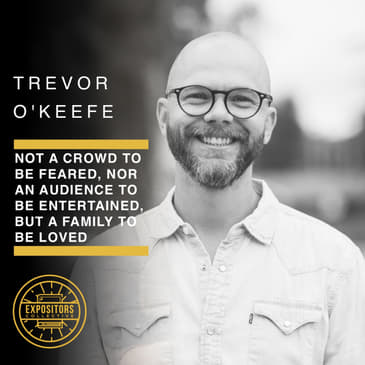
Trevor O’Keefe and Mike Neglia speak about Cillian Murphy’s recent Academy Award and other momentous moments in Irish history. Trevor also shares the wildest story about a debut sermon ever on the history of the podcast! (He nearly killed someone)
Trevor was a youth ministry for more than 17 years in Maranatha Chapel before transitioning in to the Lead Pastor role at Olive Branch Christian Fellowship in Poway, California.
In this stirring conversation they speak about boundaries in ministry, depression, anxiety, and the reality that a church gathering is not a crowd to be feared or an audience to be entertained but a family to love.
They have an extended conversation on the difference between vulnerability and honesty in the pulpit and oversharing and “bleeding all over your people.”
Resources Mentioned:
The Story of Michelangelo's David : https://www.vam.ac.uk/articles/the-story-of-michelangelos-david
Jim Wilson interview on why Pastors should never use their kids as sermon illustrations : https://open.spotify.com/episode/6fwGgfA2dHh3IbZeavlwwp?si=128eecb5dbec45e0
Access Mike's vulnerability hangover inducing sermon from the 2023 Calvary Chapel Conference : https://cgn.org/2023-archives/
For information about our upcoming training events visit ExpositorsCollective.com
The Expositors Collective podcast is part of the CGNMedia, Working together to proclaim the Gospel, make disciples, and plant churches. For more content like this, visit https://cgnmedia.org/
Join our private Facebook group to continue the conversation: https://www.facebook.com/groups/ExpositorsCollective
Click here to support Expositors Collective
[00:00:00] I mean still in the front cover of my Bible, I have a comment I wrote as a young man probably in my early 20s
[00:00:06] that just said this is not a crowd to be feared or an audience to entertain. This is a family to be loved.
[00:00:12] And I still in my mind often am playing that through as I walk up to teach
[00:00:18] that Lord this is not some audience for me to entertain or a crowd to fear.
[00:00:22] This is a family, your family that I'm here to love today.
[00:00:26] And I having that conviction still is what combats a lot of that anxiety.
[00:00:32] Hey, welcome to the Expositors Collective podcast episode 330. I'm your host Mike Neglia.
[00:00:39] The voice that you heard is that of our guest for this week, Trevor O'Keefe is pastor of Olive
[00:00:46] Branch Christian Fellowship in Poway, California, which is near San Diego.
[00:00:53] Trevor is a great man. I've known him for more than a decade and a half. I count him as a friend,
[00:01:00] a counselor, an advisor, a consultant. He is somebody who I've been learning from for quite
[00:01:06] a long time. And I know that you are going to benefit from listening in on this conversation.
[00:01:15] Before we get into it, I do want to say that this episode is sponsored by the Calvary Chapel
[00:01:22] Global Network upcoming pastors and leaders conference, which is taking place in Costa
[00:01:29] Mesa, California at the end of June. I'm going to let pastor Brian Brodersen give you an invitation
[00:01:37] and then I'm going to jump in once more at the end. Hi, Pastor Brian Brodersen here
[00:01:42] and I would like to invite those of you who are pastors, ministry leaders, anyone serving in the
[00:01:49] church to join us for this year's CGN International Conference. Our theme this year is hope, suffering
[00:01:57] and glory. And we're going to be studying through the first epistle of Peter. It's going to be
[00:02:04] a fantastic time. We've got nine speakers who are going to be our main session speakers.
[00:02:09] We've got a number of fantastic workshops caring for your own soul. It's going to be
[00:02:16] a fantastic time. The dates are June 23rd to the 26th and that's going to be held at Calvary
[00:02:23] Chapel Costa Mesa. So if you're interested and would like to find out more, you can go to
[00:02:29] conference.calvarychapel.com. That is conference.calvarychapel.com. God bless.
[00:02:35] All right. Well, thanks for listening to Brian and you know what? Myself and Brian are going to
[00:02:43] be doing a workshop together about, you guessed it, sermon preparation. So we'll be talking through
[00:02:51] some methods to make the most of our limited time to how we can go deeper into the Bible
[00:02:59] and how we can arrange notes or outlines or manuscripts in a way that really communicates
[00:03:07] God's truth to God's people. So I hope to see you at that conference. Well, anyway, back to the
[00:03:14] episode at hand. So Trevor and I were speaking in person during a visit that he had to my own
[00:03:23] church congregation here in the city of Cork in Ireland. We speak about his wild and crazy
[00:03:30] first sermon experience. We talk about lessons that he's learned in 17 years of youth ministry
[00:03:38] and how that transfers or what's the parallels or overlaps between now his ministry leading a
[00:03:46] multi-generational church and the bulk of our conversation has to do with like pastoral vulnerability
[00:03:53] in the pulpit. Listen, we all know that it's possible to go too far when it comes to vulnerability,
[00:04:00] but Trevor would also say that there's a danger of not going far enough. I know that this is
[00:04:05] going to provoke some thought and maybe even help you to think through carefully how vulnerability
[00:04:12] should not be withheld from the people to whom we preach. Here's my conversation with Trevor O'Keeffe.
[00:04:25] Hi, Trevor. How are you? Doing good. What is your Monday morning like?
[00:04:30] Today is a little different. Sitting with you in your office in Cork. Yes. The city was
[00:04:36] going wild last night because it's a big night for Cork. Did you even catch that in the news?
[00:04:39] Nope. Killian Murphy? Killian Murphy, of course. Yes. How could you forget? Yeah.
[00:04:45] I saw a headline in some Irish news publication today that said Cork will never shut up about this.
[00:04:52] Forgive me for not being aware. We had a big referendum a couple days ago,
[00:04:57] which I thought went well and even this is even more exciting news for the Irish landscape.
[00:05:02] Yes. This is a time stamp for Cork. It really is. Yeah. So Killian Murphy just won the best
[00:05:07] actor. Grammy? Wouldn't be a Grammy. Oscar. Oscar. Yeah. I'm super dialed in. Yeah. Obviously,
[00:05:14] I'm not that dialed in either. I saw the headline today left and then had to look to see what happened.
[00:05:19] Yes. But guess with you in Cork. Open in banter. Check. Check. Hey, Trevor, I know the story of your
[00:05:26] first sermon, but I've been hounding you for a year plus to come on the show and talk about
[00:05:34] it just because of the first sermon. Amongst other things. This will be a short episode as I
[00:05:38] share this story and then we move on and the rest of your audience can enjoy their week. My
[00:05:42] first sermon, I started assisting someone in youth ministry and he was going to be out of town.
[00:05:47] I think I was 20 years old and so he asked me to fill in. I think he was teaching a series
[00:05:53] on the gifts of the spirit. But the thing that I remember most is that in my introduction,
[00:05:58] I was kind of hedging my bets on not doing a great job and told students if they got bored
[00:06:03] that what they could do was what I would do in college courses. And that's if I felt like I was
[00:06:08] fading out, I'd give myself a jolt or I'd bite my lip or my tongue or something to try to keep
[00:06:13] myself alive. But the idea of a jolt was like if I just, you know, like when you start to fall
[00:06:18] asleep and you lunge where you fall over and then kind of gives you a rush of adrenaline.
[00:06:23] So I teased about that. So if you're falling asleep, just do this because, you know,
[00:06:26] it'll really hit my insecurities if I see you snooze in the day. So maybe 15 minutes in
[00:06:31] and this girl in the front row does a jolt. And I saw it out of the corner of my eye and was like,
[00:06:36] how that's funny? Like, okay, I get it. Like I'll move on. And then she jolts again.
[00:06:41] And then I noticed she's like constantly jolting. And I'm trying to talk over it like,
[00:06:45] ha ha funny, like now everyone sees because you're in the front row, but you're just like,
[00:06:51] you know, having to laugh at my expense. And then I realized she was having a seizure.
[00:06:55] So I hustled over and helped her out of her chair to lay down on the ground and then called
[00:07:00] for help. And I knew enough about what was going on to like hold her head up so it wasn't
[00:07:05] being on the ground. And then she quit seizing and then she looked at me and asked me who I was
[00:07:10] and I didn't know her. And it was this very interesting intense moment. And so then it was
[00:07:15] trying to go get help and get her connected with her family. And I think after that,
[00:07:20] I think I prayed three different times before restarting a message where it was like,
[00:07:24] we should pray for this girl. So we prayed and I said, amen. And then felt totally
[00:07:29] uncomfortable just jumping back into the message and like, we're going to pray again.
[00:07:33] I really struggled to recover. But yeah, my first sermon, I didn't put anybody to sleep,
[00:07:38] but I nearly put someone into a coma. You nearly killed someone. Yeah.
[00:07:42] Yeah. It's tough to recover from that one. Yeah. Were her parents like elsewhere on the
[00:07:47] church campus? Yeah. She was there with her grandma. Her grandma is like in the main
[00:07:51] service and it was a girl who'd never been to youth groups. So it was clunky trying to
[00:07:54] find out how to connect her with family. Never saw her again. Wow. Yeah. Wow. Maybe she was an angel.
[00:08:01] Maybe. I don't know if it was an angel. I don't know what their purpose was. Probably not,
[00:08:08] just to humble me. Yeah. Well, that's great. What was your second sermon like?
[00:08:15] I don't remember any medical emergencies. Yes. Any interruptions?
[00:08:19] Well, that's just, yeah, it's remarkable. I've asked hundreds of people that and yours,
[00:08:23] I think is one of the best, at least memorable first sermon. Traumatic actually more than memorable.
[00:08:30] Yeah. For me and for her. So you tried three times to finish it up. Did you actually kind of
[00:08:37] get through the rest of your notes? Yeah. I think it did like the quick sprint through
[00:08:41] the rest of the points and thoughts. It wasn't like, oh, and now I know I've got these.
[00:08:45] It's like we're just going to wrap this up real quick and we're going to move on with our
[00:08:48] lives and pretend like today never happened. Yeah. Yeah. Wow. So that was you as a substitute
[00:08:55] youth pastor for the day. Yeah. So, whichever I've known you for a long time. I know that
[00:09:00] you've been involved in various stages and kinds of youth ministry for quite a long time.
[00:09:06] How many years have you been involved in youth ministry? So between middle school
[00:09:10] ministry and then high school ministry and then young adult ministry,
[00:09:13] it's like over 17 years spent in those spaces before now a pastor in the church.
[00:09:17] Yeah. So that's a long time. Yeah. What is the average duration of a youth minister?
[00:09:23] Oh man, the shelf life's not good. I think it's just a couple of years. Okay. When I first started
[00:09:27] doing middle school ministry, I really had a conviction that I wanted to do it well and not
[00:09:32] just be another statistic that's a couple of years. I didn't want to see it as a stepping
[00:09:37] stone. I felt like students, I mean their souls, their eternal beings, they deserved
[00:09:42] better than just me mailing it in for 24 months or 36 months. So did seven years with middle school,
[00:09:49] did eight with high school at a separate church and then two with young adult at that church.
[00:09:54] Yeah. And did some extra teaching in the church during that season as well.
[00:09:58] It was a long stretch. Yeah. So what kept you there?
[00:10:03] Well, so born the son of a pastor and a church planter and didn't always see
[00:10:09] a church pastored in a way that I felt like was super balanced or healthy. And my dad would say that
[00:10:14] now that it was a struggle for him and lots of pressures and things. So I really was resistant
[00:10:19] to the idea of pastoring a church. Ironically, it wasn't until after suffering a gnarly stretch
[00:10:25] of depression and then of anxiety on the heels of that and then having to grow through
[00:10:31] that on the other side of real deep suffering was the first time that both my wife and
[00:10:36] I had said we felt like we could actually do this pastor church and felt like we could do it in a
[00:10:41] healthy way. So it wasn't until we suffered greatly that we actually thought we could do it until then
[00:10:46] I was so opposed to it that I thought it wasn't Peter Pan syndrome, like I don't want to grow
[00:10:50] up only be with students. It was me thinking I want to serve the Lord and serve families.
[00:10:54] I loved families more than even students. So this was a way for me to serve families
[00:11:00] and having a gift to teach it was a way for me to have a weekly rhythm of teaching.
[00:11:04] But that's why I stayed in youth ministry so long. I wasn't in a hurry to go
[00:11:08] pastor a church. It didn't happen often, but even at being asked like would you be a candidate at
[00:11:12] this church in such and such an area? I was always super fast to say like nope,
[00:11:18] not interested. It's not for me and it's not in the cards. So God did a great work
[00:11:21] in my heart to change that. But that's why I stayed in youth ministry so long.
[00:11:24] Yeah. So it sounds like you want to serve God and His people
[00:11:28] but we're reluctant to have that oversight role of the whole church community?
[00:11:33] Yes, definitely. Okay. And after suffering then you decided...
[00:11:39] Yeah. It may never... It's always lacked luster to me and it's never that it like all of a
[00:11:43] sudden became glamorous, seeming or looked like this beautiful desirable thing all of a
[00:11:48] sudden. It was just we had come through such a hard season and had really rebuilt our lives
[00:11:54] personally. My wife and I in our marriage that we felt like for the first time we could do this in a
[00:11:59] healthy way as a team and we're open then to walking through that door and excited about what
[00:12:06] that might look like. Okay. Well, to kind of like hone in on let's say even the preaching side of
[00:12:13] youth ministry, young adults ministry. I know that even now that you are no longer in that
[00:12:19] role the preponderance or the majority of your sermons have been preached to young people.
[00:12:24] Oh, absolutely. Yeah. And I know that there's a lot of like youth pastors and youth leaders who
[00:12:28] listen to this podcast. What are the things that you wish that you knew as a youth pastor?
[00:12:32] What are the... Because if somebody is going to be a youth pastor for a two-year stretch,
[00:12:36] they're never going to learn the sort of things that you learn four or five, six years into it.
[00:12:40] Is there any way you can give them a preview or help them out?
[00:12:43] Oh yes. I'll give you 30 seconds that'll sum up 15 years or more. No.
[00:12:47] It was humbling this last week. So here in Cork, Ireland now but last week in Vienna,
[00:12:52] Austria teaching at a school, they're teaching youth. It was the first time in a couple of years
[00:12:57] that I've spent a whole week teaching youth and it was humbling to get back into that mode
[00:13:02] and atmosphere recognizing that it's a change. But it was a good reminder of things that I did
[00:13:08] learn along the way and areas that I needed to grow and it was a great joy. Although you and
[00:13:13] I both we're teasing before hitting record, we're operating with about a half to three
[00:13:17] quarters of a brain. Yeah, because both of us have scratchy voices and head colds.
[00:13:22] Yes. I'm sick. You're sick. It's a joy. Well, let's get this on tape.
[00:13:27] Yeah, it'd be great. Let's record this moment in time. Yeah, teaching youth ministry was a great
[00:13:34] joy and I learned to say yes. And so if you're in youth ministry, I'd say yes to any opportunity
[00:13:39] you have to teach and to do your best in each of those situations, but I just didn't turn
[00:13:43] down opportunity. So I ended up teaching at a school when I first started doing youth ministry.
[00:13:47] So taught four or five days a week in classes and then taught in a youth group setting at least
[00:13:52] once a week. And then it became three Sunday morning services and one Wednesday night.
[00:13:58] So I taught four times a week in a school plus a weekend plus a Wednesday. So I was just
[00:14:02] constantly teaching. And I think you grow a lot just by having to get up and communicate
[00:14:08] and share. So I think saying yes to opportunity is a big deal. And for me, it's teaching is a
[00:14:15] difficult thing. I have a love hate relationship with it because it's challenging for me and my
[00:14:19] personality. I'm more introverted so it's pretty taxing. I do love it, but it's it exposes
[00:14:27] me to my own insecurities. And so it was hard to say yes to opportunity, but I'm really
[00:14:32] glad I did. I was terribly slow to find my own voice though for the first several years.
[00:14:39] Who's voice were you? I mean, it shifted too quick to even give you a list. Yeah, I think for all the
[00:14:46] right reasons. I mean, it was motivated by insecurity, but for all the right reasons of
[00:14:50] seeing people that I just so appreciated the gift that they have and the way that they
[00:14:55] talked about Jesus, the way that they ministered to my own heart. But I would hear myself
[00:15:00] long before anyone else could pick up that I was parodying somebody else. And I wasn't
[00:15:04] stealing their sermons. It was I'd hear myself the way it enunciates, the way I deliver a sentence
[00:15:10] really. And because of that up until just the last couple years, I quit listening to sermons.
[00:15:17] So for more than a decade, barely listened to anyone teach unless I was live in the room,
[00:15:22] because if I listened to them teach a couple times, I'd start to hear myself and go,
[00:15:25] ah, the way I said that is not Trevor, you know, that so and so. Okay. So it took me a
[00:15:31] long time to find my own voice. But I think it's really important, especially for a young preacher
[00:15:36] to and if need be to make hard decisions like I'm not going to listen, I'm just going to read.
[00:15:41] And that's what I've had to learn as a discipline to try to find my own way of teaching and
[00:15:46] communicating finding my own voice was a huge step. I mean, can you give us like,
[00:15:51] how did you do that? So you just stopped listening to certain people.
[00:15:54] And then then your voice just emerges out of the ooze. Yeah. I remember years ago hearing
[00:16:00] someone explain that like a truth plus your personality is like the way that you should
[00:16:06] communicate. And I think it was a real struggle for me to be okay with my own personality and my own
[00:16:13] voice. And so it was, it was having to get to the point where I could recognize this is how
[00:16:19] I would say this. This is the way that I would illustrate it. This is my own life and my story
[00:16:25] intertwined with this and not just me parroting somebody else or talking like them, or even it was
[00:16:31] funny. I was doing my notes like one friend because he had a half page of notes in his Bible
[00:16:36] and that's how I was teaching then it was another friend sat on the stool. So then I found
[00:16:40] myself on a stool with my Bible on my knee because he did that. And I just appreciated
[00:16:45] him as a person. I felt more comfortable hiding behind someone else than being myself.
[00:16:50] And it's pretty quirky. Yeah, but then isn't it hard to then those first steps into
[00:16:57] preaching as as Trevor, it is even more vulnerable because if they reject it, it's rejecting you.
[00:17:04] Oh yeah. I think that's why we hide behind those other people, at least for me. I know so much
[00:17:09] of it was motivated by insecurity. If someone didn't like my message or how I taught, I could in
[00:17:15] my mind at least be like, well, you know, they probably have an issue with someone. So
[00:17:18] basically right trying to be a mini version of yeah. Yeah, it's silly. But this is I think
[00:17:27] this is there's huge vulnerability in getting up to teach there's nothing like it. It's not just
[00:17:32] trying to give a persuasive argument. It's bearing your own heart and soul in front of people,
[00:17:37] sharing things that you're deeply passionate about that you believe have eternal impact asking
[00:17:42] the Holy Spirit to give life and power. My my words might have bone and structure and flesh on them,
[00:17:50] but I need him to breathe life into it for it to have impact in somebody's life. It's all of those
[00:17:55] pieces and knowing the whole time that like this could kind of fall apart in front of you. And
[00:18:01] yeah, it's it's an anxiety inducing process at times for me. I mean still in the front cover
[00:18:08] my Bible it I have a comment I wrote as a young man probably in my early 20s that just said this is
[00:18:14] not a crowd to be feared or an audience to entertain. This is a family to be loved. And I still in my
[00:18:20] mind often am playing that through as I walk up to teach that Lord, this is not some audience for
[00:18:26] me to entertain or a crowd to fear. This is a family your family that I'm here to love today.
[00:18:32] And I having that conviction still is what combats a lot of that anxiety. Yeah,
[00:18:39] that's that's that's real good. I think we'll title the episode after that. That's a
[00:18:44] well, did you Google it first? If it belongs to somebody else and not me, then give them credit.
[00:18:50] But yeah, yeah, Trevor O'Keefe, the guy who really believes in finding his own voice.
[00:18:55] Stole this quote from somebody else. That's yeah, I hope not. Well, yeah,
[00:19:00] and you mentioned some things about yeah, the the preaching is sharing a very personal part
[00:19:05] of yourself. And I'd love to come back to that in a few moments time, the idea of like,
[00:19:09] how much do we share oversharing versus undersharing? But I know that there's more lessons that you
[00:19:14] learned like in your years as a as a youth leader. Yeah, I guess, yeah, things that you did
[00:19:18] then that you've stopped doing now. Yeah, I think for a long time I man, I'd sit down
[00:19:24] to study and I'd get so excited about an illustration or a quote. And I found myself
[00:19:28] as I'd look back in those early handful of years, especially I was teaching and preaching
[00:19:35] illustrations and then using scripture to get from one illustration to the next versus the opposite.
[00:19:41] Because I get so excited about a story that I knew this will pull them in
[00:19:44] and this will capture their attention and they'll remember this. And then over time it was
[00:19:49] hearing students when they'd be so excited after a sermon saying like, Oh, you know,
[00:19:53] when you said this thing and realizing like, man, if the only thing that sticks with you as my
[00:19:58] funny story for my childhood, like what a waste of your time and your family's time who's trusting me
[00:20:03] to like partner with them to help to shepherd your soul. And so I had to learn to see it the
[00:20:09] opposite rather than just teaching an outline that outlined a text I needed to teach the text
[00:20:16] and I needed to have points from the text that weren't just an outline that were organizing
[00:20:20] thoughts, you know, creatively or whatever, and it needed to not just be driven by
[00:20:25] illustrations. But I think when you're first starting out, that's the tendency is you lean
[00:20:30] towards like, I'll find some good quotes and I'm going to make little comments from the text to
[00:20:35] leave from one quote to the next, or I'm going to find some good illustrations and do the same
[00:20:39] thing. I think, I think now at times I do a lousy job with illustration almost overcompensating
[00:20:45] for that. Really? Well, you had a killer illustration yesterday. You talked about
[00:20:52] a what like a flawed chunk of marble that was drug into the center of a town and then it was
[00:20:59] there for what 60 years. My only story, Mike, it's my one illustration. And there was different
[00:21:04] sculptors that looked at it and rejected it. And then it became Michelangelo's David. Yeah,
[00:21:09] it's a great illustration. It's a great illustration. You should Google it, look it up
[00:21:12] for the listening audience. It's a good one. Yeah, inside the flawed block that was rejected,
[00:21:17] the artisan saw something that was beautiful that we all appreciate, just like Levi, the tax
[00:21:23] collector. Jesus saw something in him that no one else did. He becomes Matthew, the gift of God who
[00:21:28] writes a gospel and we are indebted to it. It's a great illustration. Yeah, yeah. That's an
[00:21:32] illustration well used. And I remembered the illustration and you know, you didn't let me
[00:21:38] finish it. But you know, I also I know how that connected with what Jesus did and saw with
[00:21:43] that tax collector. So that was good. Thank you. I think I'm just far more purposeful and
[00:21:53] what would be the way to say it? Not reserved in using them, but just I'm very thoughtful and
[00:21:58] when I use them. Also the way I teach, I try to intertwine my own life throughout. So I'm not
[00:22:03] just teaching about the text, my own life, and it might not necessarily be illustration,
[00:22:07] but I'm talking a lot about in my own heart and reading this and this is how this week
[00:22:11] this has done this in my own heart or what it's reminded me of or given me confidence in.
[00:22:16] So it's not always just secondary stories like I used yesterday at the church,
[00:22:23] but trying to be more selective when I do rather than just hop skipping and jumping from one story
[00:22:27] or illustration in the next. Right, right, right. Okay. And anything else that you've learned?
[00:22:33] Oh man, the biggest thing? It's funny because I'm asking you questions about what have you
[00:22:37] learned in youth ministry? But I mean, again, the majority of your life in ministry has been
[00:22:43] in various youth capacities. So basically I'm saying what have you learned in ministry?
[00:22:48] Yeah, yeah. And in youth ministry, I always try to shoot slightly above the heads of my audience
[00:22:56] because I wanted them, I would tell them I'm asking you, I'm raising the bar for you,
[00:23:00] I'm asking you to come and meet me here. Like I need you to hang with me, but I think
[00:23:04] you're able to do this rather than me teaching to them or beneath them. And so it was me telling them
[00:23:10] that and teaching some theology or digging a little deeper. I mean, there are times,
[00:23:15] worked at a very large church that was, I was doing youth ministry, a youth group of a couple
[00:23:20] hundred students, but on the weekend got a call from the pastor saying that he was out because
[00:23:25] his mother was ill and it wasn't, it wasn't a good situation. And he asked that I'd fill
[00:23:30] in the message I was teaching a high school students was about a theology of suffering.
[00:23:33] I preached that weekend for the three weekend services and the main sanctuary. And I taught it
[00:23:39] slightly different, but the nuts and bolts were the same that I was teaching in youth group. I
[00:23:44] just would have communicated some of it different and I was, I could elaborate a bit more with
[00:23:49] the adults, but I always, although I did youth ministry for a long time, my preaching became
[00:23:57] what it is there and doesn't have much of a change over between youth group kids and now being an
[00:24:04] adult. Yeah, yeah. How like who helped you to I guess aim a little higher? Where did you get that
[00:24:11] idea to go a little bit over their heads? Well, to give to give room for people to reach up.
[00:24:18] I think that it's easy to ask somebody who's already a teenager wanting to be a young adult
[00:24:26] wanting to prove themselves. It's easy to ask them like him. I'm asking a lot of you, I know,
[00:24:30] but I think you want this. I think you want to be challenged and you want to grow. You want to be,
[00:24:35] you don't want to be talked to as a kid. You want to be they're always reaching for I'm trying to
[00:24:39] prove myself that I'm responsible, whatever it may be. So I just felt like it was a natural
[00:24:44] thing to do. And also I would listen sometimes to other people in my role and felt like
[00:24:51] felt like the way that they talked to the group. I just was like, I don't know,
[00:24:54] it almost feels condescending. For me, that was my take and I was like, I'm just going to do this
[00:24:59] different. Yeah. And so always tried to raise the bar some. Well, as a former youth, I visited
[00:25:08] various youth groups as a teenager. And, you know, I came under the ministry of Danny Ramos,
[00:25:15] who each of us have benefited from in the past. And that's one of the things that I really
[00:25:20] appreciated and always, and always have from him that he, he talked to us like we were like
[00:25:26] thinking, feeling intelligent human beings, you know, not buffoons to be entertained,
[00:25:33] but humans who could like think. And I really appreciated that I always have about him that
[00:25:41] there's something for everybody. There is, you know, as some would say, there's milk and meat
[00:25:45] and manna. There's something for everybody, but there's like the bulk of it is just like,
[00:25:49] you guys are going to be voting soon. You guys are gonna, you guys drive cars, you guys
[00:25:54] are making huge decisions in your life. And I want to communicate big truths about God to you.
[00:25:59] Yeah, I think it's great. And so that was always my goal as well. I want to lift the bar.
[00:26:04] I want to set it high. And I want to ask you will you meet me there?
[00:26:07] Yeah. And so I'd encourage guys definitely to do that, to try to lean on their groups and say,
[00:26:13] I'm going to ask a lot of you. Now, having said that, if I could go back in time,
[00:26:17] I probably would have taught shorter than I typically did with both junior high and high
[00:26:21] school. I wouldn't have asked them to sit for as long as I did. And I always knew I,
[00:26:26] I'm kind of, I think I did a good job as a youth pastor for all those years.
[00:26:30] I was not the quintessential youth pastor. I've never been a party in a box. I've never
[00:26:35] tried to be the hype man because it's just not in me. And so I knew I needed to pull
[00:26:40] leaders and volunteers around me to be that for the youth group to have that feel in order to,
[00:26:45] for me to feel comfortable just to be me teaching the way that I do, communicating the way that I do.
[00:26:51] And in youth ministry, especially, and still this way, pastoring a church, but
[00:26:55] I lean heavily on a relational ministry approach where I want students to know me.
[00:27:02] And because they knew me and knew that I cared about them and was a part of their life,
[00:27:06] they were willing to receive from a pulpit, not the opposite and not the other way around where it
[00:27:12] was like, well, they heard me preach and I'm worthy of admiration. And so they're stoked now to be
[00:27:16] around me. It was always the opposite approach. I think especially with youth ministry,
[00:27:21] it's slow plowing and it's not overnight success, but the willingness to do a relational
[00:27:27] ministry where you're with people because it then opens the door for them to receive
[00:27:31] as you teach and preach, I think goes a long ways and even allowed me, I think to teach longer
[00:27:37] than I otherwise could have because students were willing to hang with me because they knew me
[00:27:41] and loved me and knew that I really loved them as well.
[00:27:45] Okay, so speaking about people knowing you and then even getting to know you in the context
[00:27:51] of preaching, let's talk about how much do we disclose behind the pulpit or in our preaching
[00:27:58] and teaching. You mentioned that there's two dangers, there's people oversharing in the pulpit
[00:28:03] or undersharing, like where do you lean and help us think about that?
[00:28:08] Yeah, it's one of those areas that I think is morphed for me. Like there was a stretch of time
[00:28:12] where I once sort of student I had with me in youth ministry for years and then they were
[00:28:17] with another youth pastor and they commented after being, I think for four years with this
[00:28:22] other youth pastor, they said, you know, I've been with them for four years. I don't know
[00:28:25] that I know anything about. I don't actually know him. I thought that's too bad, not just in
[00:28:30] personal relationship but in a pulpit ministry. I do think people should feel as though they
[00:28:35] know us and they might not need to know everything about us. And there are things that I think
[00:28:40] don't belong in a pulpit. However, I don't think that they should be looking at us going,
[00:28:46] man, you're such a mystery. Like I've been here for years every week listening
[00:28:49] and I have no idea who you are or what you're passionate about. So there are moments in time
[00:28:55] like that that made me check myself and go, am I really sharing with some vulnerability?
[00:28:59] But I'd mentioned before like hitting an early season of depression. And when that happened,
[00:29:04] there are a lot of things I did to get healthy again, hitting it from every angle to work
[00:29:09] through that. But it lasted for like a solid three months and then a couple of
[00:29:12] months of pretty severe anxiety. And I had a month of vacation saved up I could
[00:29:17] I could utilize but I was still pastoring a group of people, of students during that stretch.
[00:29:23] After a month I came back and was still not well for several months. And when I had to
[00:29:27] re-engage with the group I told my wife I'm more afraid of what I could become if I can
[00:29:34] compartmentalize this and get in front of people and be whole and well and polished
[00:29:39] and have them think I'm good while feeling like I'm dying inside. I'm more afraid
[00:29:43] of what I could become if I do that successfully. Like looking ahead in years or decades,
[00:29:49] if I can compartmentalize and do this, what could I become in the future?
[00:29:53] That's that was more unnerving to me than standing in front of people and vulnerability
[00:29:56] and wiping a couple of tears and saying I'm a shell of myself today but I'm holding on to hope
[00:30:03] and holding on to faith that Jesus is good even though I'm hurting and have never been in
[00:30:07] this place before. So as my wife and I after a year or I'm sorry month off when we were talking
[00:30:13] about re-engaging we talked about how if we were going to re-engage and if I was going to get back
[00:30:19] into a pulpit it needed to be that I would teach and lead going forward with a new level of vulnerability
[00:30:26] that would let people see my woundedness and then that would let people see where God was healing
[00:30:32] that and restoring that which was painful and uncomfortable for me because I'm more of a
[00:30:37] private person. Sure yeah but even like it was sermon series during that stretch of time it
[00:30:41] was like doing a sermon series on on Christ wanting us whole not just healed physically but
[00:30:50] the shalom like us being whole and emotional health it was doing a series on forgiveness on
[00:30:55] the heels of that and letting people into some of my journey as God was walking me through things
[00:31:01] and it's dramatically shifted I think the way that I talked to people. I mean I was sharing
[00:31:05] with you yesterday and your wife that I had shingles in the fall because of yes church
[00:31:10] things but someone in our family had suffered a mental health collapse and I mean we stayed with
[00:31:17] friends in a hotel because of death threats and it's quite the gnarly stretch and then they were
[00:31:22] in jail and then when they got released they needed me to help them to get situated and so I had
[00:31:27] shingles break out and I got in front of the church and with permission from my wife for sure
[00:31:33] but got up and shared like this is what I'm personally carrying and I haven't carried it well and
[00:31:39] because of that like I've dealt with some severe anxiety in this stretch and I need to manage this
[00:31:44] better and humbly confess to you that I've really not I've not honored the Lord and taking rest
[00:31:49] because I've been too arrogant and I've not managed my stress well because I've tried to
[00:31:54] carry it rather than casting cares on him and talked through it with the church and so I've
[00:32:00] had to learn that I need to be willing to expose enough of my humanity to where I feel
[00:32:06] uncomfortable and know that some people won't like that but if I'm not sharing enough that I'm
[00:32:11] uncomfortable I don't know that I'm sharing enough and so I'm okay with letting people see that I'm
[00:32:17] just a human I get to be their pastor and shepherd and teacher which is a gift and privilege
[00:32:23] but I'm okay with them seeing that I'm still a frail human who deeply needs the love and
[00:32:30] grace of Jesus and who leans on the grace of Jesus so I don't just expose my vulnerabilities
[00:32:36] I'm always going to expose them in the context of talking about the grace of God being sufficient
[00:32:40] for those vulnerabilities so it always goes back full circle to that. Do you feel that you've ever
[00:32:46] overshared? Oh for sure and what happens after you when something comes out you ever think
[00:32:53] oops that was too much beyond the self loathing? I think there there have been moments in time
[00:32:59] where I've overshared and you know you learn the lesson early with your wife that like oh I get
[00:33:04] permission for anything that involves her that kind of thing so I've done that in the early years
[00:33:08] but I do think there are moments where I realized I'm bleeding in front of these people when I
[00:33:13] should be probably sitting with a counselor, a therapist or a friend because I think we've
[00:33:17] probably all sat and listened to somebody get in front of a crowd of people and share things
[00:33:22] and at least for me I'll sit there and think I think what you need today is not a pulpit
[00:33:25] you need a friend and I don't know that the pulpit should be utilized as a close confidant
[00:33:31] and friend for you to offload these things in process so it's one thing to verbally process
[00:33:36] in front of a crowd of people about your emotion or your hurt. I think it's a very different thing
[00:33:41] to let them into your vulnerability and hurt and let them see just oh I'm a broken human
[00:33:47] who deeply needs the grace of God and look at what God is doing in the midst of this.
[00:33:52] I might walk with a limp and people in my church know this that that limp is not a physical thing
[00:33:57] but it's that I've been deeply wounded and dealt with depression and anxiety
[00:34:02] and clinical stretches and because of that I do walk different than I used to
[00:34:08] but I'll tell our church I think that that limp has given me more than it cost me though
[00:34:13] because it's given me a real dependence on the grace and care of God
[00:34:17] and it's also given me a deep sense of compassion for people who are hurting. I think of like in the
[00:34:23] Old Testament Jacob and his encounter with God where God touches his hip and the Psalms it mentions
[00:34:27] he walked leaning on a cane really for the rest of his life like he was a changed man
[00:34:33] and that undoubtedly was uncomfortable and it slowed him down however the limp gave him
[00:34:38] more than it cost him because every day he'd limp it reminded him that was real
[00:34:43] like God really showed up in my life and not only did he show up but his promises he made
[00:34:48] I was afraid my brother who I was going to meet the next day that this was the end of my life
[00:34:52] that he was going to come after me and my life was over and instead God told me I had a future
[00:34:56] and my future descendants were going to be a part of his eternal plan
[00:35:00] and that wasn't too good to be true that was real and my limp reminded me of God's gracious
[00:35:05] plan for the ages and that I get to play a part in it. I think the same of Paul that
[00:35:09] I've got a thorn in the flesh but I learned through it that his grace is sufficient,
[00:35:13] his strength is made perfect in my weakness. Our people at our church would probably tell you
[00:35:20] if you ask like about me I would at some point I'll bet most of them would say like oh and you
[00:35:24] know what he's a guy who's been through some stuff but God's used it to shape his heart and
[00:35:31] make him a really compassionate person or God's used it to shape his heart to where he's drawn
[00:35:35] to people who are hurting or he would tell you that although maybe he wouldn't have chosen some of
[00:35:39] the things that he suffered through that he's come to see that it gives him more than it cost him
[00:35:45] to think vulnerability that lets people into that journey and then invites them to bring their own
[00:35:50] woundedness to the table I think is a gift. The like I'm bleeding in front of you I'm verbally
[00:35:56] processing I can't believe I've been wounded rejected people whatever I think is is messy.
[00:36:03] Yeah yeah so I asked you if you ever like overshared I guess the follow-up have you ever
[00:36:09] undershared have you ever maybe like sat down and think like you know I could have I could have
[00:36:13] said more and I appreciate what you said during that time of suffering coming back after a month
[00:36:19] of sabbatical and then making the decision that like I'm not going to pretend that I'm okay I'm
[00:36:24] going you know so thanks for letting us into that. Have there been times that you've
[00:36:30] you know you've been vulnerable up into a point and then felt that you should have done more?
[00:36:35] Yeah there've been moments where I'd look I'd finish a sermon and I'd look and go
[00:36:38] ah I missed an opportunity to invite people to be human and vulnerable and to accept grace
[00:36:47] and healing and peace and comforts. So times for sure were afterwards be like I it was a
[00:36:52] missed opportunity because my goal every week is not to like I'm gonna drag people into my
[00:36:58] emotional drama or issues like that's not my goal my goal in preaching really is I want to expose
[00:37:03] people to their own hearts and the heart of God and then I want them to make a decision can they
[00:37:08] trust the heart of God but I want them to see their own heart and if their heart is wounded
[00:37:12] in a need of healing or if their heart is wicked in line to them or it's drawn to things
[00:37:16] that are broken I want to help expose that and to in moments where I can say and this is my
[00:37:25] we're talking about a wounded heart here and in my own life it's looked like this and in yours
[00:37:29] I think sometimes we by not being vulnerable we miss the opportunity to invite people into that
[00:37:34] vulnerability yeah with us yeah so there are definite moments where I look back and go ah I missed
[00:37:40] I missed the chance. Yeah well there's actually another pastor here in Cork Tom Hoban he hasn't
[00:37:46] been on the show yet but he will be one day he and I were talking once and he kind of drew
[00:37:50] a triangle and he says that like true preaching it has it's the real God and it's it's the real you
[00:37:57] talking to the real them and you know God's real no matter what but kind of it's up to us
[00:38:04] whether we're going to bring our real self to that and then as we are real and honest that
[00:38:10] it can sort of unlock the real heart of other people and so there's that kind of three-dimensional
[00:38:15] aspect to that triangle triangulation of reality that comes across in good preaching you know and
[00:38:23] that happened yesterday at Calvary Cork when you you know you didn't actually go super deep into
[00:38:29] much of your do actually here's okay I have two different ways I can I can take this
[00:38:35] okay number one I'm not I'm not super like that I'm you're talking and I'm saying like yeah
[00:38:41] I'm giving like mms and maybe the listener is thinking oh yeah Mike is also one of those
[00:38:45] vulnerable guys I'm actually not like and I'm and in the past I think 12 months maybe two years
[00:38:53] I've been kind of working on it intentionally and thoughtfully and yeah I think even this you
[00:38:58] know lately I've talked about some pain points in my life that I usually don't in the pulpit
[00:39:05] like I would with a counselor I would with a friend and you're kind of both to me and then
[00:39:10] others but I've kind of kept it out of the pulpit because I don't want to bleed all over people and
[00:39:14] I don't want to manipulate but kind of one of the first times that I even kind of tried it was like
[00:39:20] at the June Calvary Chapel pastors conference in Costa Mesa you know kind of being like I'm
[00:39:26] actually going to try this whole vulnerability thing and I think it it was the real me and
[00:39:32] it was the real God and hopefully connect you with the real people that were there
[00:39:35] but like afterwards it just kind of sat down and just like this like
[00:39:40] I was like what have I done I can't I remember like feeling so heavy sitting down afterwards
[00:39:44] and being like I can't take that back and that was that that happened you know and so that was
[00:39:51] me kind of almost dabbling on a very public stage but it also it was public stage but it
[00:39:57] was also separate from the congregation that I live with and minister to and
[00:40:04] and living life together with so anyway I'm just kind of saying like I don't have even a question
[00:40:09] or anything I'm just saying like yeah I hear you I'm trying I'm working towards that yeah
[00:40:14] any advice or how can I keep at this um first exhausting driver it is actually you should list
[00:40:20] in the show notes a link to that message if there's a way to do it okay because your
[00:40:23] message was fabulous I think it's behind a paywall um what might be behind a paywall yeah
[00:40:28] and it may have cost you a vulnerability hangover yeah so where it was like yeah just feel wiped um
[00:40:34] I'm super sensitive to emotional and spiritual manipulation oh me too super sensitive probably
[00:40:40] more more than I need to be yes and I think almost to a fault for me and so I'm very careful
[00:40:46] that I'm not just throwing in the haymaker at the end of a mediocre message that's like
[00:40:50] let me drag you into an emotional thing yeah because I really struggle when I hear people
[00:40:56] that I even begin to feel like they might be doing that for me is I shut down real quick
[00:41:02] so I'm very careful not to do it and like my hobby horse is just Jesus I tell my church I teach
[00:41:09] the same message every week like I just I teach Jesus I teach the gospel I talk about grace
[00:41:15] it's not like I talk about Trevor's woundedness I've just learned that I should be human enough
[00:41:21] for people to hear me say if I'm talking about prayer they should know where I'm struggling right now
[00:41:27] in my prayer life uh and even if it's like my wife and I were in a weekly or a daily
[00:41:32] rhythm of praying together every evening and we're not in that rhythm now and we need to
[00:41:36] get back to it and maybe you do too but it needs to be little things like that it could be any
[00:41:41] topic so my my goal is not just to bleed about emotional health um it's to talk about Jesus
[00:41:48] and his great grace but I do think that people should see us as human and we get to be not just
[00:41:56] leaders who point to ourselves but we get to be leaders who point as humans to Jesus
[00:42:02] who is healing us and making us whole in the process and letting people know that we are
[00:42:07] still in process and because we are first in the pool in a sense in vulnerability like hey I'll be the
[00:42:14] first man in today yeah I get to say then would you come with me it was not that long ago teaching
[00:42:21] the church and talking about idolatry in a modern context you know here talking about I think
[00:42:25] idolatry can look like these things in our modern setting it's not just bowing to old idols
[00:42:30] and then it's taking a deep breath shifting the cadence of how I'm going to speak
[00:42:34] and shifting the tone that I'm speaking and saying to people you know I think I'd be selling
[00:42:39] you short if I wasn't honest with you to say that I know I have my own idols in my heart that I
[00:42:44] struggle with and I'll even be willing to share and be the first man in the pool and tell you
[00:42:49] like I have an idol of competency I want to be viewed as competent so much that my work week
[00:42:56] stretches beyond my work hours and it shouldn't that my days off are eaten up by pressure
[00:43:03] in preparation for a Sunday morning because although yes I desire God to be glorified here
[00:43:08] and him to have my best I also have this weird desire that's driven by insecurity for me to be
[00:43:14] viewed by you as competent and even if I reach that goal it's an empty and shallow one and I know
[00:43:20] that and yet I still struggle with it and so for me to Sabbath is an act of faith and it's also
[00:43:27] an act that's costly for me because I'm willing to lay down that idol and let it die every week
[00:43:33] that I'm willing to say you know what I'm home with my family today on a Saturday rather than
[00:43:38] prepping for the weekend and then to say to people and then in your life what does that look like
[00:43:43] what's idolatry in your heart because it's changed in different seasons for me but I know in this
[00:43:48] season this is one of the things God brought to the surface this week for me that I want to
[00:43:53] let you in on and even publicly confess and say I want to die to this and I want to I want to chop
[00:43:59] it up and burn it and I'm trying to do that with Jesus help okay yeah well that's a great yeah
[00:44:07] modeling of it yet not in such a way that draws undue attention towards towards you in your life
[00:44:15] but to say yeah essentially I'll put my cards down first and then people then in their own
[00:44:22] hearts or minds or perhaps even in a time of confession or prayer afterwards then they can
[00:44:26] follow suit yeah I once read somewhere it was in a marriage book that uh in a marriage where
[00:44:32] grace and forgiveness is expected in the culture then honesty is natural and I think the same is
[00:44:41] true in human relationships across the board and in a church if grace and forgiveness is
[00:44:47] the culture of the church and the norm and is and I think one of the ways that I can establish that is
[00:44:52] that if I demonstrate that I'm free to be human and real and broken and flawed publicly that I'm
[00:44:59] setting the culture for the church that's inviting them then to be honest about themselves
[00:45:06] so I think it's a cultural piece within our church yeah that I think is a is a beautiful
[00:45:11] thing it is a costly thing at times it's cringe and it's come back to bite me where people
[00:45:16] have used some of those things against me I'm very careful not to like oh vulnerability is I'm sharing
[00:45:22] these things about my kids issues like I don't think that that's mine to share I might share
[00:45:27] stories about our family or funny things or whatever yeah but vulnerability is not like oh and then
[00:45:31] I'm going to tell you my wife's idols like her her issues with idols yeah like nope not for me to
[00:45:36] share yeah that kind of vulnerability totally unhealthy and not great but I'm willing to do
[00:45:41] it for myself and I think it's building a culture for us where people are allowed to be human and to
[00:45:47] come knowing that they'll receive grace not just from God but even from us because we're a culture
[00:45:52] that says we're okay I like I I think I think prayer our relationship with God is ultimately
[00:45:59] answering God's original question in the garden where God asked Adam where are you
[00:46:03] I think we get to answer that and our choice is either to hide like cover up or be exposed
[00:46:11] and I don't think we just answer that between us and God I think we answer that between us in the
[00:46:15] church because it's his body like what a beautiful gift that we get to come so separate from coming
[00:46:23] you know into a workplace or a friend group like we're coming to be with the body of Christ
[00:46:30] and God is present when we're there and I think when we walk into a church we get to be real and
[00:46:35] answer that question with honesty rather than just being covered up to be willing to be exposed
[00:46:41] knowing that Christ provides a better covering than some itchy fig leaves right yeah now forgive
[00:46:47] like the the crassness of this question but I mean does does it work like as in like does it
[00:46:53] create that that that hoped for expectation of like other people feel they can do the same
[00:47:00] I'd like to think so okay yeah I do think so okay um you know you joke at times on this podcast
[00:47:06] that like you're not much for small talk like the opening banter we tried yeah and for me personally
[00:47:13] like the way God's made me as well like I'm not much for small talk like I love people just love
[00:47:20] people but I love depth of relationship or depth of conversation and so I don't want to just know
[00:47:26] like how you doing good okay like I want to know how science and so that carries into a pulpit for me
[00:47:34] and that's become the culture of our church I think because I'm willing to demonstrate
[00:47:39] that I'm here for something more than us just knowing each other's names I'm here to see
[00:47:45] God transform my life and us to do that together as a community so I'm willing to share where I'm at
[00:47:51] in that journey and I think it has effectively invited other people into it so there's a
[00:47:57] different depth to things in our church culture and community so I do think it's worked yeah yeah
[00:48:04] again is there a more crass way of putting it I don't know but um but yeah I think that
[00:48:09] you know because again we talked about you know youth ministry back there and then
[00:48:12] but here and now yeah you're leading a church that I that I love to to visit you know Olive branch is
[00:48:19] like one of our favorite churches to go to there's like a real kind of a uniqueness of like people's
[00:48:26] like sticking around afterwards I know that it's not the only church that does that but
[00:48:30] like people seem to really like each other and there really is um meaningful connections that
[00:48:35] take place like before and during and after and so I can't speak to all of the ingredients
[00:48:43] but I think that there's an ingredient that's gone into that and you're leading with vulnerability
[00:48:47] from the front and that does shape a culture oh absolutely I I agree too and maybe I'm biased
[00:48:53] or it's confirmation bias from like yeah see it's working yeah maybe there's other things but
[00:48:56] I do think it's at least a part of how God is developing our culture and community where
[00:49:01] people do love each other and hang around because there's a depth of relationship there
[00:49:05] where they're sharing burdens and they're caring for each other and they're involved in
[00:49:09] each other's lives and I think part of that is the byproduct of not just getting up to teach
[00:49:14] truth yeah but let's see our own hearts let's see gods and let's be willing to let our flaws
[00:49:21] and brokenness be seen so that Jesus can heal those yeah yeah okay well I'd love to ask kind
[00:49:27] of the final the final question of like how are you trying to improve but before that anything
[00:49:31] else like like we're talking about some some serious heavy issues like final thoughts on
[00:49:37] vulnerability in the pulpit um I mean always with permission for your wife especially if you're
[00:49:46] sharing more than just your own heart um I think is a big deal because I never want to drag her
[00:49:52] or my family in front of a church and have them feel exposed in a way that's not fair
[00:49:57] so I'm very careful I'm also very aware so I function as a pastor in our church and then
[00:50:03] as a chaplain in the community so working with first responders uh I'll give a short plug to say
[00:50:09] it's a great way even as a preacher it's a great way for me to have my hand on the pulse of not
[00:50:13] just a private study or my church congregation but the community outside of it that I know
[00:50:18] that I should have in mind as I'm preaching teaching but I'm exposed to lots of private
[00:50:22] moments in people's lives as a chaplain and then as a pastor as well I'm very careful not to expose
[00:50:32] people and their hurt their woundedness I'm willing to do that for myself but I'm not
[00:50:38] going to say you know just like I was with this couple this week who just miscarried and boy are
[00:50:43] they heartbroken um I'm very careful not to do that I try to do things in a way that would
[00:50:50] honor people and not make choices like that for them but at the same time I will use sometimes
[00:50:57] moments or things or situations as illustrations just very carefully tastefully and then with permission
[00:51:03] before using them because I never want to be and have been in front of people even using it as
[00:51:08] a nameless example of something and talk about someone's woundedness knowing that they're in
[00:51:13] the room even if I'm not using their name yeah all of a sudden they feel that the attention
[00:51:17] of the room is on them they didn't make that choice I did for them that's totally unfair
[00:51:22] so I just think trying to be careful that we're not just trying to expose other people's
[00:51:27] brokenness woundedness it's okay if I'm willing to walk in front of people and let them see it form
[00:51:33] in my own life but I shouldn't be just pulling up examples especially from our congregation or
[00:51:38] community yeah yeah real real wise sometimes I you know the church that I am part of
[00:51:45] it's the only church I've ever pastored you know sometimes I kind of wish like man I wish I had
[00:51:52] an old church you know that I could mine for stories but I don't I only have this own this church
[00:51:57] and what do you think about yeah telling stories from previous ministry locations do you feel that
[00:52:04] you have more permission to talk about anonymous people from your old church um I'm still careful
[00:52:10] I still so I've ministered over 20 years in San Diego County yeah and even in North
[00:52:15] County in North San Diego and so I still have so many relationships and connections and it's
[00:52:19] funny you don't know who's listening even via podcast good point and I mean I have former
[00:52:24] students who have a podcast that I came across just a couple weeks ago that's like a deconstruction
[00:52:28] podcast oh and it was heartbreaking to see like the list and recognize all the show guests were
[00:52:34] former students as well but I know that the guy who's hosting it listens at times to our church
[00:52:40] so I'm not going to mention those things I'm going to keep doing what I'm doing in the same
[00:52:45] way it's like in the city there are guys in fire service and who work in the city who now are listening
[00:52:49] to our church podcast and so I have to be very careful what I'm saying about some of the doors
[00:52:54] that God's opened there even or using those things as illustrations so I'm still very cautious
[00:53:00] and don't feel like I've got just some green light you know to use things maybe if I'd moved
[00:53:05] out of state or something I'd feel a little different yeah yeah maybe but you're right with
[00:53:10] podcasts they go they go everywhere yeah um yeah there's a guy he's um uh former member of our
[00:53:18] church he preached a couple times um I was gone once and then he preached about faithfulness
[00:53:25] in the workplace I think Colossians talking about being working unto the Lord and then he
[00:53:29] just kind of was just spitballing given some examples of ways that God's used him
[00:53:33] in the workplace and then talked about you know somebody who um you know had a cancer diagnosis
[00:53:39] and he talked about that and ways he's got to minister to him in the lunch room and uh yeah
[00:53:45] turns out that person found it listened to it lodged a HR complaint oh wow he lost his job
[00:53:53] because of that tough lesson yeah yeah so that's a real strong so I remember even
[00:53:59] listening to the audio of the record and I was like oh that's maybe a bit too much that's kind of
[00:54:04] crossed across the line and I should have I should have taken it offline but instead I kind of was
[00:54:10] like oh it's going to be a teachable moment oh yeah don't don't do that and then it started a HR
[00:54:15] issue so there's that and then secondly um Jim Wilson who wrote a great book called
[00:54:22] illustrating well um he was on this show and he very strongly thinks that pastors should never
[00:54:31] use their kids as illustrations at all ever what do you think your pastor's kid I am yeah and so
[00:54:40] and and thing is so is he and he says that it makes it very it made it very hard for him
[00:54:47] to listen to his dad's sermons because he never knew when he would show up in it and in what um
[00:54:54] whether it be a positive story or negative story and so he kind of vow vowed to not ever use his
[00:54:59] kids as illustrations it's funny yeah and he says he says also even if you get the kids permission
[00:55:07] yeah he says well the consent of somebody under 18 doesn't count yeah and they don't know what
[00:55:13] they're saying and there's power dynamics too because you know thoughts on that as a pastor's kid
[00:55:17] who also is a pastor who has kids yeah I do remember some moments where as a kid I was like man I kind
[00:55:23] of hate that these people think that they know me and that they know my issues because they'll
[00:55:29] come over to me at church and be like hey yeah I know you've got this you're giving your parents
[00:55:33] them grief lately huh like I hated that so cringe yeah um I'm very careful with my kids I will tell
[00:55:41] maybe heartwarming stories or silly moments that include us as a family but I I share so little
[00:55:49] about them that my kids at times will see me studying and say hey dad you want to use that
[00:55:53] story remember that funny thing I said recently yeah which I don't know how Jim would feel about
[00:55:59] that but um right I mentioned earlier I think saying yes to opportunity is a good thing and
[00:56:05] even for me still I do say no to a lot of opportunities but I say yes to ones that I know
[00:56:11] will stretch me like my kids go to Christian school teaching a chapel at their school is
[00:56:15] something I'll say yes to because it stretches me as a Bible teacher yeah in a way I don't like
[00:56:20] but uh in those settings they're quick to throw me hey dad remember this thing or this could
[00:56:25] connect to that um so it's funny that they almost clamor for it yeah weird way so I'm willing
[00:56:33] to share things if it's silly or lighthearted or if it's endearing an endearing moment for us
[00:56:39] as a family but otherwise typically try to steer away from it okay yeah I don't have a hard line of a
[00:56:48] viewpoint as uh brother Jim does but it's it's a notable one and I like to get people's thoughts
[00:56:55] on it when I get a chance yeah and he literally wrote a book about sermon illustrations so I think
[00:57:00] his opinion carries his might matter quite a bit it carries some weight yes all right so
[00:57:05] finally as promised last question so we heard about your first sermon long ago 17 plus years ago
[00:57:12] how do you want your next sermon to be better how do you want to be like continually improving
[00:57:17] is there something that you keep coming back to and think I want to get better at this yeah I
[00:57:24] always my struggle is with the length of a sermon and so it's the editing process is always
[00:57:29] a challenge for me because man sometimes I feel like on the cutting room floor of my office like
[00:57:34] I feel like I've I've lost children like I'm looking at the ground being like oh this is not just
[00:57:41] interesting information or important information this is these are true things that that mean
[00:57:46] something to me and have been life giving to my own heart and I think that whole process is painful
[00:57:52] so I'm always trying to do a better job with that um for years I've
[00:57:59] was preaching with two pages of notes and then it was a half page of notes and
[00:58:04] then it was an outline in my bible and sticky note and that's it and I'm almost a manuscript and the
[00:58:09] last I don't know five to ten years probably I mean it's been a chunk of time um because I think
[00:58:17] I can do much more with well thought out wording for how I say what I say yeah I can communicate
[00:58:24] much more in a shorter period of time because I can communicate it more effectively yeah without
[00:58:29] dancing around looking for the right way to say it or being like I don't know how clear that is let
[00:58:32] me try again so I write out quite a bit now and I think that that's been a good step for me but
[00:58:39] I still struggle with editing things down um the biggest shift that happened in my teaching
[00:58:46] was years ago I remember hearing someone as they were teaching a passage and they commented
[00:58:54] referencing the Old Testament in the Exodus story that the rock that provided water and the
[00:58:59] wilderness that that rock was Christ and remember thinking like wow that's a reach and then realize
[00:59:05] like he actually had read it from the text and so this was as a youth pastor hearing that and
[00:59:10] looking and being like what in the world Paul the apostle seeing this and then oh well Jesus
[00:59:14] saw himself in the Exodus story as well and it shifted like your Christ centered preaching
[00:59:20] module I think is so very good and helpful for people and something I wish I'd heard when I first
[00:59:24] started but it was God using just the text itself to show me that this is the way that the Bible
[00:59:29] views the Bible and so I had taught a lot of great moral talks for a long time that were true
[00:59:37] to a text and did not lead anyone to a savior and if anything crushed people under the weight
[00:59:44] of an example and I think Jesus was more than an example I think he was a savior I agree so I think
[00:59:50] I've done a much better job then in the second half of 20 years of teaching for sure but even maybe
[00:59:55] that was five or six or seven or eight years in um but still I feel like I'm constantly growing as
[01:00:01] a gospel centered not just that like my hook at the end is the Jesus juke that lands it across
[01:00:07] but that throughout the whole of a passage that again and again we're looking back towards Jesus
[01:00:12] as a person we're looking back towards grace as the gift that God gives us that's the that's the
[01:00:18] gospel's power life-giving power not just to save me but transform me and so I think that I'm more
[01:00:24] gospel saturated than ever and I hope to continue to grow in that yeah yeah um do you know something
[01:00:32] else well actually this is not a room for improvement just something I want to say
[01:00:37] one of the elders of the church he said this to me I think he told you too
[01:00:41] but he said that he loved your sermon because you just you smiled like almost the whole way
[01:00:46] through and especially when you talked about Jesus you smiled and he um he commented to me that like
[01:00:52] I think Trevor really believes this stuff yeah so that that really comes through as well you're
[01:00:57] like enjoying Jesus in front of people yeah I can be rather intense in teaching but man how do
[01:01:03] you like how do you talk about Jesus and his grace gracious care for us and the gracey
[01:01:09] extensors how do you do that with a scowl like how do you not have your body exemplify the truth
[01:01:16] that that not just warms my heart but transforms it how do I not do that like with my with my body
[01:01:22] and posture exemplifying it I'm not I'm not on a pogo stick bouncing up and down and like
[01:01:28] but man it how do I not speak of those things with people seeing the joy on my face yeah yeah
[01:01:35] well you're yeah Christ centered not just in your text or in your preaching but it comes through on
[01:01:40] your face so on that cheesy conclusion I think man put it in a hallmark card that'll sell yeah
[01:01:49] well thanks Trevor um and for the listeners of this podcast I hope that this episode and all the
[01:01:53] idiotic expositors collective helps you to grow in your personal study and public proclamation
[01:01:59] of God's word thanks again Trevor yeah thanks for having me all right well thanks for listening
[01:02:06] all the way to the end I really enjoyed my time with Trevor and you know I'm looking forward to
[01:02:13] seeing him at the end of June in Costa Mesa for the Calvary Chapel Global Network Passers and
[01:02:21] Leaders Conference and what you can do is you can follow a link in our show notes
[01:02:28] for how you can get registered and also when you're there you can find the previously mentioned
[01:02:35] message that I preached last year the message that gave me a vulnerability hangover there's a
[01:02:41] link to that in the show notes as well so thanks so much for listening you are investing into
[01:02:50] your pulpit ministry as a way to love the family of God remember it's not a crowd to be feared or an
[01:02:59] audience to be entertained but a family to love thanks for building this podcast into your week
[01:03:05] whether you listen every Tuesday or you dip in from time to time I know you're listening because
[01:03:11] you care about God's word and you care about God's people so thank you so much and I hope that
[01:03:18] this conversation and all that we do at expositors collective helps you to grow in your personal
[01:03:22] study and public proclamation of God's word this podcast is a part of cgn media a podcast
[01:03:28] network that points to Christ we are supported by listeners like you to help us create more
[01:03:33] great shows visit cgnmedia.org slash support