
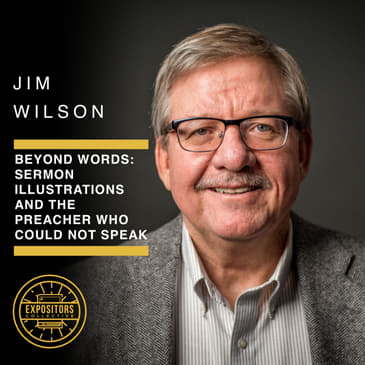
"In this touching episode, Brother Jim Wilson and Mike delve into the profound experience of losing one's voice as a preacher. Jim recounts a challenging nine-month period of voicelessness, sharing the emotional and practical hurdles he faced. They explore the paradox of a speaker unable to speak and a preacher unable to preach, touching on various sermon illustrations such as personal stories, fresh ideas, biblical references, hypothetical scenarios, and historical examples.
**Lowdown:**
**PART ONE: Exploring Sermon Illustrations:**
Jim discusses impactful sermon illustrations, including Personal Stories, Fresh Ideas, Biblical References, Hypothetical Scenarios, and Historical Examples.
**PART TWO: The Silence of the Preacher:**
Jim shares his rollercoaster journey of being voiceless for nine months, delving into the emotional and practical struggles. Mike adds his own challenges after a head injury affected his reading and speaking abilities. The discussion explores the frustration and profound insights that arise from feeling unable to fulfill one's calling.
Join Brother Jim Wilson and Mike for a heartfelt conversation offering a new perspective on the power of spoken words and the complexities of preaching and illustrating.
**Note:**
This episode is relevant to anyone interested in preaching, public speaking, and the impact of words. Whether you're a preacher, speaker, or simply curious about the challenges communicators face, this discussion provides valuable insights and inspiration.
Dr. Jim Wilson, a seasoned preacher and professor, shares his wealth of experience at Gateway Seminary and Lakeshore City Church. Despite being a full-time faculty member, he continues to serve local churches and speaks at various events.
**Resources Mentioned:**
- [Illustrating Well: Preaching Sermons that Connect](https://lexhampress.com/product/213956/illustrating-well-preaching-sermons-that-connect)
- [Fresh Ministry: Helping Pastors be More Effective](https://freshministry.org/)
- [Jim Wilson's Books](http://www.freshministry.org/books.html)
- [Sermon Preparation Reflection Loop](https://vimeo.com/299984821)
- [The Homiletical Plot: The Sermon as Narrative Art Form](https://www.goodreads.com/en/book/show/114821)
**Recommended Episodes:**
- [Rafael Manzaneres - The Power and Danger of Personal Illustrations](https://www.expositorscollective.com/podcast/2020/2/24/zj3d28nijrb4moagh63yp2znkqhijs)
- [Donald Sunukjian: Establishing Relevance by Rummaging through People's Lives](https://www.expositorscollective.com/podcast/2022/7/19/oral-clarity-and-establishing-relevance-by-rummaging-through-peoples-lives-with-don-sunukjian)
- [Adam Copenhaver: The Right and Wrong Ways to Tell Stories in Your Sermons](https://www.expositorscollective.com/podcast/2022/4/26/the-right-and-wrong-way-to-tell-stories-in-your-sermons-adam-copenhaver)
- [Tim Chaddick and Mike Neglia Talk about Identity Issues in the Life of a Preacher](https://cgnmedia.org/podcast/vox-hibernia/episode/episode-6-identity)
**For information about our upcoming training events, visit [ExpositorsCollective.com](https://expositorscollective.com/).**
**The Expositors Collective podcast is part of CGNMedia, working together to proclaim the Gospel, make disciples, and plant churches. For more content, visit [cgnmedia.org](https://cgnmedia.org/).**
**Join our private Facebook group to continue the conversation: [Expositors Collective Facebook Group](https://www.facebook.com/groups/ExpositorsCollective)."
[00:00:00] You never tell a story that came out of a counseling situation. You never tell a story that makes you the artificial hero. In fact, if you're telling multiple stories and the end of every story is
[00:00:14] and I put on my cape in flu by and super Christian saved the day, then your credibility's just out the door because your congregation is seeing you at your best. Yes, but they're also seeing you at your worst. Narcissism just doesn't smell good anywhere,
[00:00:31] not even in the pulpit and so, but never talk about counseling because if you do, you will not have a counseling ministry and that may be your goal, maybe you don't want one. But people need good biblical counseling and they need encouragement from their pastor.
[00:00:48] Hey, welcome to the Expositors Collective Podcast episode 309. I'm your host Mike Neglia. Happy New Year! If you're listening to this on the week that it's come out, wish you all the best as you are planning the new year or working your way into 2024.
[00:01:08] Well, this is a re-broadcast. This comes from the dark distant past of 2023. This is one of my favorite episodes from last year, had a fantastic and incredibly deep and I think stirring conversation with Dr. Jim Wilson.
[00:01:28] We speak about finding sermon illustrations and using the best kind of illustrative stories and examples for our messages in our preaching. Then in the second half, we get into some real
[00:01:41] heart issues. You see, Jim lost his voice for a period of I think eight or nine months. He wasn't able to speak. We talk about what that does to someone's heart and soul and mind when
[00:01:56] they've been called to preach the gospel and to teach God's Word but then are unable to use their words to do so. It's really soul stirring and I hope that it brings encouragement
[00:02:12] and perspective to you as you listen in. Either for the second time, if you heard it earlier in the year or if you want to have our new listeners, this is a great way to start the year, just
[00:02:26] appreciative of what we have and confident in our identity in Christ. Jim and I share about lessons that we learned through times of incapacitation and being unable to do what we're made to do.
[00:02:44] I'm going to let you listen to this blast from the past and at the end, I want to invite you to get involved in what expositors collective is doing. All right, hey, welcome to another episode of the expositors collective podcast
[00:03:04] honored to be speaking with Dr. Jim Wilson. Good morning. Welcome to the show. Oh, thank you, brother Mike. I've been looking forward to this day. You know what? I'm looking forward to being called brother Mike. Nobody, nobody ever calls me
[00:03:17] brother Mike. I think it's really nice. Well, it's a southern thing but I also am convinced that the highest title we have were brothers in Christ and sons of the living God and
[00:03:28] and so it's a respectful title. It feels that way, it really does. So apologies for referring to you as doctor. You'll be brother from from now on. That's a good day. Thank you. Brother Jim. Brother Jim
[00:03:43] when was your first sermon? I imagine it was quite a few decades ago but do you remember the first time that you preach God's word in public? Okay, in public. Yes, absolutely. I was a teenager
[00:03:56] in high school, preached on John 1224 about a corner of wheat falling the ground of dye and dyeing and the most memorable thing about the sermon was the experiencing of the text before I preached it
[00:04:13] and came under great conviction that the very thing that I was seeing in others that I was wanting to preach about was so evident in my own life. And so my sermon began with a sincere apology
[00:04:28] for the duplicitous way that I had been living and asked the church for prayer forgiveness. And then I preached on the importance of a genuine faith and dying to self and living for Christ.
[00:04:48] And it really was a turning point and it was, I mean it was a turning point in many ways. Everybody remembers their first sermon. Sure. But the thing that I learned from it most was I can never preach
[00:05:03] a text I haven't experienced. Understanding is one thing experiencing is another and trying to continue that discipline to this day. You know, I often would tell people never apologize at the start of a sermon. Oftentimes people out of insecurity or nervousness they'll kind of say,
[00:05:23] oh guys, I'm not really as prepared as I could be, you know, and they kind of apologize on behalf of their lack of preparation. I think that's a horrible way to start. But apologizing for failure
[00:05:35] to live up to this text, what an actual honest moment of vulnerability that hopefully set the stage for all those to come next. Well, I wasn't telling you what happened so that anybody would emulate it.
[00:05:48] I was just telling you what happened. Yeah. Yeah, no doubt. I think one of the biggest mistakes we make is wasting away that initial attention that we get. And oftentimes guys do that
[00:06:00] with their prayer where they get up and pray, oh Lord, let me let me not make any mistakes and let me be filled with your spirit and you know, and I tell my students and coaching clients, that prayer
[00:06:14] belongs on Saturday. If you're going to pray before you preach. So I mean your point is well taken in that case, it was not because I was practicing good homiletics. I didn't know any homiletics.
[00:06:30] Yeah. That was a teenager preaching and there you go. And certainly brother Jim, I'm not trying to correct you. I'm saying if there ever is an appropriate honest apology, it's that more than yeah,
[00:06:43] just kind of a nervousness or trying to kind of win the audience over on your side, which is what sometimes people are use those kind of well they're trying to get comfortable. Yeah, whenever we do
[00:06:53] that when we talk about ourselves at the beginning, and we're trying to get comfortable with the people and then that leads itself to oftentimes a triple introduction to where we introduce for 10
[00:07:04] minutes and we don't even read the text until minute 15. And you know, we've lost it by then. Anyway, good point. Of course, all right. So that was decades ago. In your growth as a preacher Bible teacher, what are some significant changes that have happened over these decades?
[00:07:25] Something that maybe you used to do but that you've consciously stopped or are there any practices that you've consciously added to your sermon preparation delivery? Okay, but the
[00:07:35] mic let me fast forward a little bit and to say, you know, that was in the 70s during the 80s and 90s, I was convinced that I needed to make the Bible relevant. And that when I preached in fact in college,
[00:07:50] I majored a double major religion and speech communication and really felt that I needed to preach in such a way that I made the text relevant. And today, I no longer believe that. I don't
[00:08:06] believe you can make the text relevant anymore than you can make water wet. It is relevant. Aban Hoffer says its relevance is axiomatic and so today I preached from the position believing
[00:08:21] that this text is relevant. It is life changing. It is going to transform lives and the best thing that I can do is get out of the way of the text. Now, that doesn't mean it doesn't need to be
[00:08:34] explained or applied or we don't need to help them experience the text. We need to do all of that. But when the starting point is in the efficiency of Scripture, it makes a big difference in the
[00:08:50] homoetics. Yeah. Well, what talked you out of that? What caused you to arrive at that conclusion? But maybe you had let's say in the 70s and then lost in the 80s and 90s. But yeah, what kind of alerted you to the reality of what you've just said?
[00:09:06] Well, just the coming to grips with the efficiency of Scripture. I mean, I'm an anerentist and I believe it and don't apologize for it. But then started applying that theology to homoetics.
[00:09:21] And brother Mike, the bitch, she asked, when I was working with some Bible scholars on my book impact preaching. I worked with three Bible scholars where we took the practice of hermanudics
[00:09:35] and the practice of homoetics and tried to marry them. Because what happens in the academy is one is an expert in one side of that line, but not the other. And maybe it's a secondary skill.
[00:09:54] And so as we struggled believing that we needed to be consistent, we needed to keep the shape of the sermon consistent with the shape of the text. And as we struggled together and went
[00:10:07] back and forth with drafts about how to do that, me knowing more about homoetics, them knowing more about harmonetics, we wrestled with it and then that truth just emerged that this text
[00:10:22] can be depended on and we need to preach it with confidence knowing that it will change lives and if we'll just get out of its way it'll do its work. So instead of believing that I can enhance
[00:10:36] the text, I now believe all I can do through my sinful, sin nature and fallen man, though redeemed, the only thing I can do the text is make it worse. I can't make it better. It is beautiful,
[00:10:55] it's pure, it is perfect. And so now my task is, okay, how do I stay out of its way? While I'm given the explanation, it needs why I give the cultural context that it needs,
[00:11:09] why do the task of the preacher? Because it is the power of God that transforms people's life. One way to put it is this past Easter when I preached we have been as a teaching team going through
[00:11:24] the Gospel of Mark and we highlighted the resurrection on Easter Sunday as I'm sure everyone else did. However, what I did was a quick survey recap of what we've been studying through Mark and how the disciples didn't get it. Three times Jesus total, he was going to die,
[00:11:45] he was going to be buried, he's going to raise from the dead, they didn't get it. The women that went to the tomb, they didn't get it either. They brought something spices to an ointem with.
[00:11:58] They weren't expecting to greet the resurrected Lord. They were expecting to find a corpse. And so when it came to the time where most of the time we give proofs for the resurrection,
[00:12:12] here's what I said. I said, I'm going to give you one proof because I had been highlighting Peter in Mark's story and I talked about how Peter, the church historian, tell us how he died
[00:12:26] and that he did not renounce his faith at the end as did, the other disciples did not either. But then here's what I said. I said, they only proof you really need is the spirit of God right now,
[00:12:40] testifying to you that this is true. And if you believe that it's true during the prayer time, just walk up to a member of the prayer team and say, God told me this is true, what do I do?
[00:12:56] And in the two services we had at least one person in each service to do that. Now that's trusting the word, trusting the work of the Spirit instead of believing I need to convince anybody
[00:13:09] about anything. And so that's the big change by the mic and it's been amazing watching how people respond when there's less of Jim and more of Jesus. Yes, so it sounds like you are pre-supposing that
[00:13:25] the power of the Word of God and the testimony of Jesus has its own internal apologetic power that it can convince more than an external kind of list of reasons why it's reasonable to believe.
[00:13:41] Well, I don't want to pit those two things in juxtaposition to one another because when you look at the proofs for the existence of God, why not just say all of them are functioning? Sure. But
[00:13:53] at that time we need to be there's nothing wrong with an apologetic approach and there is nothing wrong with showing it's reasonable to believe. However, people come to faith in Christ by the movement
[00:14:06] of the Spirit of God in their life. And so my position is that the Word of God and the testimony of the Holy Spirit is going to work to transform people's life, not three easy steps to that. But
[00:14:23] the mic, we minimize people's lives. When we take our our contrived systems and force them on the text and now we do a sermon on how to accomplish this or how to do that,
[00:14:40] when that wasn't the author's original intent, staying out of the way of the text means we let Mark speak when we're preaching from Mark. So one of the ways we do that is being careful
[00:14:55] how we use the synoptics when we're telling Mark's story. We use the synoptics not to help get at the truth. In other words, a lot of times when we preach we do this thorough study to say, okay,
[00:15:15] I want to preach the truth of this. So I need to get outside sources to do that. No, the fact that Mark didn't tell us that Joseph of Armathia was a follower of Christ and that he didn't agree with what the Sanhedrin said.
[00:15:40] Gives credence to Mark's story. It's like whenever we're at a dinner party and we start telling a story in a spouse, in a Rob'ss us, and adds other details. Well, we feel like,
[00:15:54] will you let me tell this story? And so if we trust the text, we let Mark tell the story. And if we mention those other things, it's only to highlight what Mark is doing in the narrative.
[00:16:07] So it's a real deep trust in the text. Is my answer to your question, Brother Mark? Yeah, yeah. And do you think even the title synoptic is a little bit unhelpful that it kind of implies that's only we have the three of them together. Do we understand everything?
[00:16:25] Well, of course, in a hermanutical spiral, we need to move out from the text that we have and so it is helpful. My point is to get back to the text. Yeah. So, you know, in a particular
[00:16:40] when you're preaching wisdom literature, this is a great challenge. I mean, there's a synoptic issue. But when you're looking at optimistic wisdom literature, you need to balance it with what other optimistic wisdom literature says and what the pessimistic wisdom literature says.
[00:16:58] Yeah. And then the greater counsel of God, but you got to end up back with the text. Yeah. Yeah, there's in my in my tradition or it was something that was somewhat popular maybe 20 years ago, people doing chronological studies through the life of Jesus, pulling in Matthew
[00:17:19] Mark Luke and John, and then you have kind of this two or three-year series that's pulling through all these things. And the chronology is the most important thing and the things are and I'll never do that. I don't think that's the most helpful. I think it's good. Maybe
[00:17:34] maybe somebody should do a read through of those, but yeah, I'd hold hardly agree. Yeah, let Mark speak. Mark's aware of these things. John was there and John chose to highlight certain
[00:17:45] things and not other things and so we should allow them to to speak and have to retain their voice. Will if Mark was of this turn your church and you were preaching from the gospel of Mark,
[00:17:56] would you turn the pulpit over to him? I think I would. I'm just saying we got to do that every Sunday to the extent that we can and you know, whether or not you can know on Thoroughland 10 or not
[00:18:10] you know there are critics of that approach. I think I think their view is overdone, it's a stretch. No, we can't totally know anybody's intent but we can't ignore what we do know.
[00:18:21] And so anyway that's the greatest thing that I've learned since then. Yeah, well that's a great contribution and you know we we scheduled this to talk about one thing and I certainly don't mind
[00:18:32] that we're talking about all of the things as well. What a welcome, what a welcome diversion. But I came here to talk to you about your book illustrating well preaching in sermons that connect
[00:18:45] published by our friends at that Lex and press. And I got to say this is kind of my introduction to your writing and it's been kind of the tip of the spear where I've learned about so much
[00:18:54] other stuff and I certainly plan on reading impact preaching and then who knows maybe grabbing you and getting you again for more conversations, but I'd love to speak at length if possible about illustrations. Sure. What's the sermons illustration and why do we need it?
[00:19:11] Well we need illustrations for several reasons because communicating is a difficult task. It's a difficult task just getting an idea from my head to your head and for the exact meaning that I intend to be experienced by you. I mean and that's the reason we do feedback loops
[00:19:37] and we ask clarifying questions is because it is just a difficult task. Well when you put on top of that that this is an ancient book that was written by multiple authors in different
[00:19:52] genres and different literary forms some of them not closely resembling our current version of that form he boo poetry is not modern poetry and so because of all of those things the customs are
[00:20:10] different the cultures are different it requires for the people to be able to experience the unfamiliar the bridge is often to give them that something that is familiar to them something they
[00:20:26] relate to currently to help them to be able to understand apply or experience the text and so we need illustrations to accomplish good communication. Yeah and what is there an argument or why should sermons include those so you mentioned you know communication needs it but we might
[00:20:53] agree that a sermon is a special or almost a unique term of communication what what's the case that a sermon teaching through a Bible passage should include these as well. Well because the Bible
[00:21:06] passage is going to have references to things that will not be familiar to your audience. Yeah, especially if if the audience is not they look literally literate and brother Mike I just assume
[00:21:22] that when I preached today and biblical literacy creates its own problem because people come with a pre-conceived notion of oh I've studied that before. Okay what are we gonna what what
[00:21:38] we need to pick up at the store after after church today so they they help with creating interest they help with shining the light on the text they help by having the people have a mental picture
[00:21:55] of what it is we're talking about they bridge build bridges from there to here they help bring a mental break from the rigorous work of exegesis so they function in many ways
[00:22:16] to help the sermon become more relatable. Okay and thank you I'm at first off I agree I just wanted to figure you could take some pushback you've obviously thought about this at length you mentioned
[00:22:31] a couple different kinds of illustrations you know like a bridge going back and forth you something shine light what are the the categories of illustrations that you think are are worth considering well anything that works in your in your congregational setting the study that we did for illustrating
[00:22:56] well sought to identify to define and then to study how popular each one of them are being used you know how often those are being used and so we were able to identify and define eight different types of illustrations for them fell into the frequently used cluster
[00:23:22] four of them were not being used as much and so of those top four of of those illustrations were a fresh illustrations or and the fresh illustrations purpose it is or or the fresh illustration helps to show an intersection between faith and culture
[00:23:47] that's what I call the secondary function of it also the biblical illustration which exposes the people to the full council of God because you're telling a story from the Bible and so you're not just illustrating the text but you're helping to teach more of the text
[00:24:06] there's personal illustrations for a preacher we'll talk about a life event that helps the audience to connect with the text and then hypothetical illustrations for you stimulate the imagination by raising a hypothetical issue or a series of hypothetical issues so those were the
[00:24:32] top four that we found that were being used yeah and this is not a competition you know but which of these are you most frequently grabbing will fresh illustrations is it's my default
[00:24:50] because you know for an illustration to be familiar to be effective it needs to be familiar it needs to be clear it needs to be interesting it needs to be appropriate and so because fresh illustrations are out of current events and should be in the congregations consciousness
[00:25:10] they're already familiar yeah so if you put that in juxtaposition with historical illustrations the big challenge in using them is now you have to describe and explain the context of that historical illustration you have to people aren't already familiar with it yes yes great point so my
[00:25:30] personal favorite is fresh illustrations and I've spent a good bit of energy in writing those and curating those and using those when I preach yes and on fresh ministry dot org is those illustrations that are there would would many of these fall in the fresh illustration category
[00:25:56] well when they were written they would okay but I've been doing it for 20 plus years and so and your listeners can go there there's no charge for using on my taken what I've been paid for
[00:26:09] multiple times and now are just making it free to people but those at one time were fresh so it's not how old it is but whether or not the people know about it yes yes for example I'm looking
[00:26:25] here at Da Vinci code so that was quite the talking points at one point yeah yeah yeah yeah but so yeah I think yeah I love what you're saying it's not necessarily that it comes from that week's paper
[00:26:39] but it's what is in the consciousness of of our people that we're able to just draw on that really quickly without having to explain well you know Caesar August or you know Alexander the Great
[00:26:54] was doing this in this and this and if to build a world for them to understand but you're able to just currently mention this celebrity or this event is that what you mean by fresh yes
[00:27:04] and so and so let me tell you how I use my own website so when I'm preparing a sermon I'll go there and it's got a topical listing and the freshest comes first and I start reading through
[00:27:18] them and then they remind me of something that I've seen in the news lately yeah and then or a current event and then I write a new one but it helps stimulate my thought so
[00:27:34] back when I started this at the turn of the millennium there were no illustration services you could you know the internet was in its infancy stage and the hope was that what I was using in my
[00:27:47] sermons other people could use and you know the scriber base grew quickly and before long I have folks around the world that was that was using it but then that became in my mind a bit unrealistic
[00:28:02] that they would be needing the same illustration I needed so what we did was we produced 30 of them a month and they were fresh and you know let me tell you the the real problem though is when you
[00:28:18] find a good illustration you try to force it into the text I see yes yes and so the way I use this now is it becomes an idea starter for me to go out and write my own so sometimes I reuse one that I've
[00:28:36] written and curated and edited you know some of mine or books or illustration books are published in low-guys so a lot of times they'll just pop up as I'm doing research on something and sometimes
[00:28:48] I can use a mic because some of them have a feel they stand the test of time yeah but more times than not they're just an idea starter for me okay well in the show notes they'll certainly be a
[00:29:04] link to this and yeah the the listeners can can peruse and either it will yeah as you mentioned spark something something better no offense to yours but something that's more suited to their own
[00:29:16] congregation and to the message that they're working on or they could certainly buy your book 300 illustrations which has more of the same now there's another category of illustrations which I think there's yeah fresh there's biblical and then there's personal illustration but personal
[00:29:37] illustrations has been somewhat of a of a frequent theme that's come up on this show over the years because it's powerful when done right and then can be quite cringy when done wrong
[00:29:50] jive any advice on true how to tell stories about ourselves in a way that actually does help the text because at the beginning of our conversation you talk about the importance of letting the text speak
[00:30:02] you know but then if we put ourselves right in the middle anyway I bet you have some thoughts sure and personal illustrations is a story that's based on the pre-tures on experience the position of the use of that illustration is very important so illustrations function
[00:30:22] in a large part to accomplish the goal of the portion of the sermon you're in in other words the introduction you know in the introduction of the sermon where established in connection we're creating interest we're orienting the listener the conclusion we have the big application
[00:30:44] the call to action the body of the sermon is usually more teaching more didactic and nature and so if you're at the beginning of the sermon you're wanting to create interest you want that
[00:30:59] connection with the people and you know there is a notion that one way to do that is to talk about yourself the problem with that is it splits the focus so especially if it's personal in nature
[00:31:20] if there's a hint of scandal in it if it is letting folks in to in deprived of portions of your life okay if if you go there then people may get hung up at that spot and so there's a special
[00:31:43] caution against using a personal illustration at the front of the sermon now standly in Jones and communicating for the change say the opposite of that they want to present themselves as someone that's entering into the same struggle as the people are and I think that humility needs
[00:32:03] to be present and are preaching all of the time but we need to take care not to distract from the text however rather my personal illustrations were used more than any other type of illustration in
[00:32:19] the sermons that we studied not wasn't a consequential amount but it was used very frequently so they are being used yeah why do you think so well because they want to preachers want to be
[00:32:35] relatable yeah and it helps to do that and also there has been a big push in the last 15 or 20 years towards transparency yeah and transparency is helpful but how transparent right yeah and there's limits to everyone's transparency and so how far do we go now if you're primary
[00:33:01] if the primary reason you're preaching the sermon is for transformation and it's necessary to demonstrate the transformation that is happening or has happened in your own life then fine yeah but there's just special caution and you know for an illustration to be effective it needs
[00:33:24] to be familiar clear interesting and appropriate and so with personal illustrations the question is how appropriate is it to share that information about yourself and is it going to take people offline now I know I'm I'm swimming upstream right now but on the mic because I know
[00:33:45] that personal illustrations are just so popular and I'm not saying don't use them yeah I'm saying use them well yeah yeah yeah hey listen I know you feel that way and I I set you up to save that
[00:33:58] so yeah and that's not for controversy say yeah I you're I appreciate even your optimistic view of personal illustrations you know trying to find the best motive which is people want to be
[00:34:12] relatable I suppose me a little bit more cynical I just think well it's because they're the easiest you know it doesn't involve having to to go reach for any books or or connect it with
[00:34:23] another passage of scripture is just it's just your own memory bank so you pull something out so let's harness that okay I don't think that's cynical okay I think that's helpful
[00:34:32] and I want to harness that so knowing that you can pull it quickly why not use it as a spontaneous illustration when you see that the one you plan didn't work okay in other words don't
[00:34:45] be intentional to bring it in the other thing that happens is that we have a cluster of major events in our life that we tend to talk about often sure absolutely yep and one of the ministries
[00:35:02] I have is I as I coach preachers and in my my coaching clients when I'm with them for six months I already know all their stories yeah and then by the seventh and eighth month or the third
[00:35:14] year you know I've had some clients for that long I know where they're going well what about their congregation yep yep and you also mentioned in your chapter you mentioned that it's not only their story
[00:35:29] because so many of our personal illustrations rarely do they take place between us and God alone usually it involves us and our spouse or us and our kids or us or our family of origin
[00:35:43] so that is a whole separate level of ethical caution because if we're telling stories that involve other people we're we're trying basically trying our kids up in front of the the church again and again so any thoughts or about using stories that are stories but they're actually not
[00:36:02] only our stories are others stories as well I have strong convictions about that that the story needs to have actually happened yeah friends it hopefully that's not controversial but of course well
[00:36:14] it needs to have happened you need permission to tell it yeah you never tell a story that came out of a counseling situation yep you never tell a story that makes you the artificial hero in fact if you're telling multiple stories and the end of every story is
[00:36:36] and I put on my cape in flu by and super christian saved the day yeah then your credibility's just out the door because your congregation is seeing you at your best yes but they're also seeing
[00:36:48] you at your worst and it's just you know narcissism just doesn't smell good anywhere not even in the pulpit and so but never talk about counseling because if you do you will not have
[00:37:01] a counseling ministry yeah and that may be your goal maybe you don't want one but people people need good biblical counseling and they need encouragement from their pastor and never never never never
[00:37:15] did I mentioned that you should never talk about your kids never you say but I asked their permission and I'll just tell you your minor children don't have the capacity to consent yeah the power dynamic
[00:37:30] is such out of balance that they'll say yes but you can't and if you're going to talk about your wife then she better not have made any mistakes in that story yeah yeah yeah yeah and you're speaking
[00:37:45] as as a pastor's son yourself yeah so I think that's probably some of the passion about not being uses an illustration make him from experience I don't want to prior or but I sure and I write
[00:37:58] about that some and most of the time it didn't matter to me but you know there's some stories that bothered me and I don't you know I don't want to pay a therapist to find out why it bothers me
[00:38:08] but I shouldn't have to pay a therapist to listen to my daddy preach right yeah so and I've asked my own children about this and most of the time it didn't bother them but sometimes
[00:38:19] it did so I say guys let's just not do it it's just not doing yep and so again again maybe the the cynic in me is like well it's just the easiest thing and that's why why people use it but I
[00:38:31] think and you know you're more optimistic but I think that it takes a little bit a few extra steps but it's just a more ethical all around to not have this be the first go to and it's not
[00:38:44] something cute your kid said at breakfast yesterday morning that is easiest because it's just right there the forefront of your brain but serve everyone help as many people understand this and it's
[00:38:56] not about what was easiest for you good communication is making it easy for the hero to understand not just easy for you to get off things off your chest well and brother Mike you cannot not tell
[00:39:06] your story and that's one of the difficult things with this issue is your story is gonna come out if you're doing well it's gonna come out if you're not doing well it's gonna come out you cannot
[00:39:18] not tell the story all I'm saying is let's not do it on purpose sure yeah and certainly let's not do a tour to our family we just don't need to go there yes all right well this is something that
[00:39:32] I talk to you a lot longer about but I want to maybe move like you you mentioned you know speaking of personal illustrations in sermons in in the book towards towards the end something really gripped
[00:39:47] when you mentioned like something that took place in your own life that impacted I suppose your ability to preach for a period of time and I remember exactly where I was when I read that
[00:39:59] and I remember just like you know the deep connection that I had with with you I never met you and ever knew the sound of your voice but the story that you told about was a period of months
[00:40:11] where you were unable to speak at all I was on the edge of my seat reading it and you encouraged me by the work of God not in a miraculous healing but in him looking after you and and helping
[00:40:27] with your heart and dealing with identity issues in that so would you mind sharing a little bit of some of the things that you learned as a preacher with no voice sure brother Mike I love my voice
[00:40:38] to a surgery to correct cancer to remove a thyroid and the surgeon tapped on the recurrent laryngeal nerve and today I'm speaking to you with one working vocal cord the other one is paralyzed I've had two surgeries to correct that involve putting in a silicone implant that pushes
[00:41:00] the paralyzed vocal cord over and a stitch that pulls it tight and because all the surgeon did was to tap on it he didn't cut it which in the illustration I mentioned that twice he positioned
[00:41:17] his scissors to cut it and his hand wouldn't move. It was a miraculous thing in my view because he didn't cut it there's enough energy flowing there that the vocal cord is healthy the doctor said
[00:41:33] it's you know it's there's blood flow there and so you know that's still happening however I could not speak without this the surgery and so I was young I had finished my doctor it by
[00:41:48] then I was in a church that was picking up steam it was a turnaround church situation that was was plateaued and needed to grow you know as young and ambitious and full of them and vigor
[00:42:06] and I thought you know I was all that and God's gift and felt a lump had the surgery lost my voice and so for nine months I was unable to speak and it was it was a difficult time in not just
[00:42:34] because of hey what am I going to do but my preaching wasn't what I did it was who I was you know you asked me at the beginning when did I first preach in public
[00:42:51] well the first time I preached what in public it was to my cousins and my siblings and to the chickens and I mean since I was about nine or ten I knew that's who I was and so there is just this real
[00:43:08] identity crisis that I faced that if I can't preach won't good am I and now became a stimulus from more of my writing ministry and I kind of leaned into that because I was thinking you know I'm
[00:43:25] going to need I'm going to need to develop this skill and that's how I communicate so just describing it it was a very dark time and I didn't just thought I was losing my ministry I floored it was
[00:43:48] walking away from faith period and I remember walking right up to the edge of unbelief and trying to take the step over and I just couldn't I mean like the disciples where
[00:44:06] where would I go I just couldn't and I learned about the goodness of God and I met the God I'd been preaching about and I pressed into him and I cried out and he met me in my pain and so
[00:44:40] I mean the story unfolds in my my voices restored I'm able to preach again I prayed Jeremiah the first chapter of Lord Putcher words in my mouth and brother Mike every Sunday when it's my turn to preach I'm just so grateful one of our elders this week
[00:45:09] preached and I coach all the preaching team and I've done three coaching sessions with him in each before this sermon in each time I give him an assignment and in this assignment I gave him okay here's
[00:45:22] what we're going to work on this week I want you to work on enjoying yourself when you preach and so after the service was over I we did such a marvelous job preaching it was so good
[00:45:39] I put my hands on his arms and looked in the eyes and I called him by name I said did you feel God's pleasure did you feel God's pleasure? I said I know that sermon was your gift to us and it was
[00:45:57] your gift to God but it was God's gift to you did you feel God's pleasure and he smiled and he said yes I did but Mike I feel that pleasure every time I preach because I know that God doesn't put his word in my
[00:46:15] mouth literally I'm not going to be able to preach and so the doctor did a surgery God did a jerk after me on me he changed my heart and I'm just so grateful
[00:46:39] every time I get to stand in and deliver God's word and fully expect that somebody's life is going to change not because of me but because of the text yeah yeah brother Jim I read that and it was
[00:46:57] you know about a page and a half and I just and there's there's so much more to that you know nine months is a long time and I I didn't know about the the edge of faith I think I don't think
[00:47:08] that was included in there thank you for bringing bringing this into that that wholly experience and I'm I for one I'm thankful that you have that vocal cord singular left so that's
[00:47:22] too but you're doing more with one than many people do with both of them and you're using the out those words that yeah as he did with Jeremiah he's doing with you and you're delivering his word
[00:47:36] with power and clarity I appreciate that I was jogging five years ago six years ago now and I got hit by a car and so I had a very you know dangerous head injury and so in the recovery months
[00:47:59] I could like I could read but I could only just you know I'd get a headache if I read more than a page and I could speak but I found my words all jumbled up so I think that's maybe why I was so on the
[00:48:12] edge of my seat with your with your story going through that little bit of existential crisis similar and probably a miniature version of your own where it's like well listen like I what do I do for
[00:48:28] I read and I talk for a living and now like I can barely read and I can barely talk and so in addition to the thoughts of like well how am I gonna provide for my family it also is like
[00:48:39] well good amount of the kingdom of God if I can't read or talk that's what I do the answer is because you're his son exactly exactly exactly and that's one of those wonderful
[00:48:51] gifts from that very painful season it's that I'm not here to create contents I'm here to be beloved of God but rather my let me comment on what just happened because this is the power of a
[00:49:03] personal illustration I tell my story at triggers yours and so when we use personal illustrations well when we preach the focus is not on me but it becomes on the person that's listening
[00:49:20] and the relationship with God and so the way that I try to use these well is to weave them into a narrative and the you read the illustration of a sermon about Zachariah who couldn't speak for
[00:49:34] nine months and I couldn't speak for nine months and so I married the stories together and it's last time I preached on the text I didn't preach it that way it was one time I
[00:49:46] preached on the text I preached it that way now they're powerful and because the powerful they should be used sparingly yeah because if you use it in consequently and it's your golf game your last fishing trip it's something that really doesn't matter
[00:50:07] then when you do need to talk about yourself it it doesn't have the same impact as it does when you really do when you really do need to self disclose and you need to tell your story
[00:50:25] and that is a function of the Holy Spirit in the preparation stages. In fact what I'm going to work on right after we finish this is next Sunday sermon and I've got an illustration I've been working on for four hours already this week and I'm
[00:50:42] going to finish writing it and then I'm going to decide whether or not to use it and the most courageous thing I can do is to delete it if it's not going to be helpful.
[00:50:54] Yeah and and I believe you would right you have to yeah you have to yeah because when illustrations are done poorly they hijack the event and do an anti-teaching they do not invite people in the gods presence
[00:51:19] and so I mean these are the best of times in the worst of times illustrations or the most effective tools and the thing that's wrecking our preaching we got to get it right.
[00:51:30] Yeah so handle with care huh? Yes sir yes sir yeah and I'd rather not do it than do it poorly yeah and you know I had a few more questions but I think it also be kind of crass to
[00:51:45] to go more into the nuts and bolts of of this or that. Thank you kind of like let us up to like the precipice of worship could I ask you to just to pray? You do the course like pray for
[00:51:59] you know for me and pray for those that are listening that that are hearing this and we want to do it right but more than anything maybe that identity piece of even if we do even if we
[00:52:11] mess up the next six Sundays in a row doesn't cause us to become unchilded or unadopted God's kind of. Exactly and I'm going to exactly what you said I'm going to pray for you it's
[00:52:24] going to be my great honor I'm also going to give you a piece of unsolicited advice. Remember not every sermon is your best sermon just get over yourself if you mess up move on
[00:52:40] because not there's by definition not every sermon is your best sermon and you are a child of God attempt to do your best and then you fall short do better next week because it will be a life time
[00:52:57] of a learning it's a lifetime of learning and the day I stop learning please please don't invite me into the pulpit again. I actually have people that I've given permission to watch me
[00:53:12] and tell me when it's time really so it's not just up to the elders at Lake Shows City Church but you've you've pulled in yes okay yes tell me when it's time tell me tell me if I'm no longer
[00:53:26] benefiting the work because that's the goal let's pray as you ask yeah father I'm so grateful for better Mike and his ministry to continue a conversation about effective preaching
[00:53:42] we thank you Lord for the high call and you have on his life and on the life of his listeners I thank you Lord for their desire to rightly divide the word of truth and our pray Lord
[00:53:56] that all of us will be faithful to the text that we will be spirit field that we will be guided that we will stay out of the way of the text so that it can do its work
[00:54:09] that will not be a bullfighter trying to distract an instead Lord that will be pointing to the cross that people can see the only hope that is there father I receive upon those who are listening
[00:54:27] the power of your Holy Spirit to help them to discern and give them strength give them courage give them purpose and when they stand to preach Lord give them a single minded vigor
[00:54:44] that they do their best work and then leave it all out there and then depend upon you to do your work of moving in the lives and the hearts of the listeners father we thank you for the
[00:54:59] transformative power of your word and we thank you for the honor and the privilege and the joy of being able to stay in before your people and declare it to them father we are so grateful
[00:55:16] for the high call and you have given us we are grateful Lord to be in your core work that you are working through us to bring redemption to the world but father I am most grateful
[00:55:34] to be the object of your redemption to be your child to have experienced the grace that you so freely give and I'm grateful Lord for the mercy of the Lord and the Lord and the Lord
[00:55:49] brother Mike and his listeners and pray that they will preach and teach and minister out of that sunship and it's in Jesus name we pray amen amen amen amen amen thanks again brother Jim
[00:56:10] thank you for your honesty and openness you've served me well and all who are listening and we've benefited from this and and from you well hey as we're beginning 2024 expositors collective has plans we're we're taking this show on the road we've got some dates on the calendar
[00:56:35] and if you're interested I'd love to tell you about some of them later on in this month myself and the rest of the leadership team Dr John Whitaker Dr Alan Stoddard Brian Stupar
[00:56:48] Nick Katie we're going to be gathering together for a time of prayer and planning we're also going to be recording some pretty cool like training video resources something that your church might be able to benefit from as we work through content to help local up-and-coming teachers possibly
[00:57:10] in your church we want to help them grow in their personal study and public proclamation of God's Word so be on the lookout for our online video curriculum content that we're going to be
[00:57:22] making available soon then in February myself and Nick we're going to be going to Velgrade Serbia and doing kind of a a smaller version of our in-person training event we want to be investing in some
[00:57:37] Serbian pastors some Hungarian and Romanian leaders we want to help them grow in their personal study in public proclamation of God's Word and then we're going to the Bay Area of California and then
[00:57:50] we're going to Campalla Uganda and then we're going to New England that's kind of the 2024 plans I am working on putting together an Irish version of the expositors collective that we're
[00:58:03] going to host in our own church since now we have our own facilities and so we're able to do that so there's a lot of excitement about 2024 and I would love for your prayers I would love for
[00:58:16] your likes and follows and all that but if you want to get involved in funding some of this there are some activities that we do for example in California or New England those tend to pay for
[00:58:31] themselves the registration fees of the attendees cover the costs that have to do with putting those events on but as we're going to Eastern Europe and Africa those are things that we want to
[00:58:45] give us a gift to those local leaders and so I'm asking you if you are listening all the way to the end why don't you pray about visiting our website expositors collective.com or expositors.co
[00:59:01] and visiting our donation page maybe you can invest in us as we invest in Eastern European and African leaders to help them grow in their personal study and public proclamation of God's word
[00:59:16] and then it's going to create healthy disciples and flourishing churches. I would love for you to consider partnering with us in this maybe even we could be part of your church's missions giving
[00:59:31] in 2024 we want to steward your money well and I believe in vesting in new and upcoming Bible teachers and preachers and leaders is a fantastic way to expand God's kingdom in Eastern Europe
[00:59:46] and the US and Western Europe we want to do all that we can to help people grow in their personal study and public proclamation of God's word check out the links in the show notes we would love
[00:59:57] for you to join us and partnering to do just that. All right God bless you new episode coming out next week and I can't wait for you to listen it's Tim Chatek speaking about finding our own voice as
[01:00:13] teachers and preachers and how results are up to God. All right God bless.